Karnataka govt politicising ethanol blending row to impress Rahul Gandhi: BJP's R. Ashoka
Synopsis
Karnataka's ethanol blending row has turned sharply political: BJP's R. Ashoka says the Congress government launched Operation Nikhar not to protect consumers but to perform for Rahul Gandhi. With oil companies and the Centre disputing the state's test methodology, and samples allegedly showing ethanol levels as high as 31.2%, the row has become a proxy battle over jurisdiction — and political signalling.
Key Takeaways
Ashoka accused the Karnataka Congress government of politicising the ethanol blending issue to 'impress' Rahul Gandhi on 9 November 2026 .
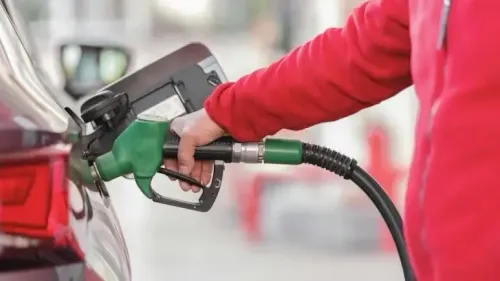
The state's Operation Nikhar collected fuel samples across districts including Bengaluru , Mangaluru , and Tumakuru to check E20 compliance.
Tests via NABL-accredited labs allegedly found ethanol levels as high as 31.2% in IOCL petrol and 30.5% in HPCL petrol, against a mandated ceiling of 20% .
The Union Petroleum Ministry and oil firms disputed Karnataka's testing methodology, saying it did not follow prescribed statutory procedures.
Ashoka also alleged rampant corruption under Chief Minister D.K.
Shivakumar , citing a ₹75 lakh corruption case in Hassan district .
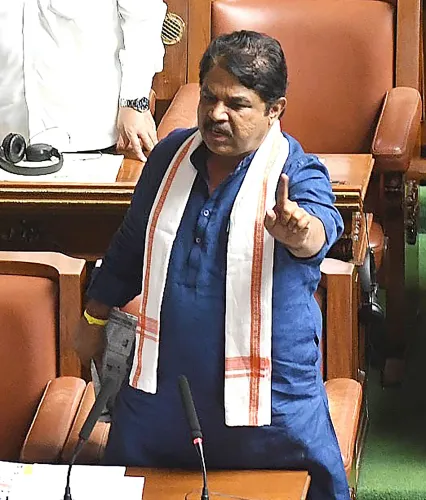
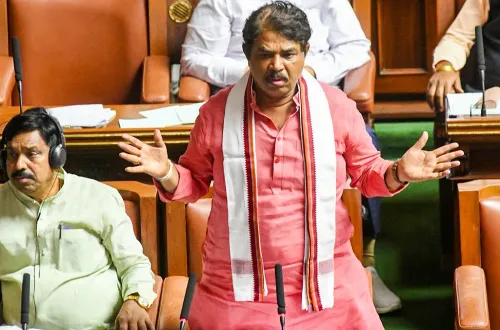
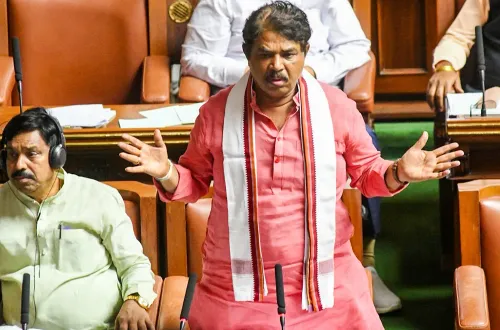
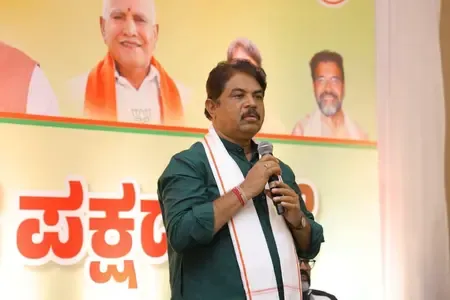
R. Ashoka, senior Bharatiya Janata Party (BJP) leader and Leader of the Opposition in the Karnataka Assembly, on Monday, 9 November 2026, accused the state's Congress government of weaponising the ethanol blending controversy to score political points against the Centre and demonstrate loyalty to Congress leader Rahul Gandhi, rather than resolving pressing civic problems in Karnataka.
What Ashoka Alleged
Reacting to Consumer Affairs Minister Rizwan Arshad's allegations over excess ethanol concentrations in petrol, Ashoka challenged the state government's authority to conduct such tests. He argued that fuel quality regulation falls squarely within the Centre's jurisdiction and that Karnataka lacks the laboratory infrastructure to test petrol and diesel.
'What is the minister doing? His responsibility is to address issues concerning the state. There are concerns over contamination in milk, drinking water, food and vegetables. He should first look into these issues and discharge his responsibilities properly. Instead, he is pointing fingers at the Central government,' Ashoka alleged.
He further claimed the state government was raising the ethanol issue solely to show Rahul Gandhi that it was confronting the Union government — a charge the ruling Congress has not yet formally responded to.
Governance Failures Cited by the Opposition
Ashoka broadened his attack to encompass what he described as a pattern of administrative neglect across Karnataka. He alleged that prices of milk, curd, ghee and other essential commodities had risen sharply, transport fares had been hiked, and roads remained pothole-ridden — all during the festive season of Kannada Rajyotsava and Deepavali.
He also alleged that farmers were not receiving adequate financial assistance while several districts faced drought and drinking water shortages. Ashoka claimed the High Court had expressed disappointment over the state government's functioning, though he did not cite a specific order.
Corruption Allegations Against the State Government
Targeting Chief Minister D.K. Shivakumar, Ashoka alleged that corruption and commission-seeking had become rampant in the state administration. He pointed to alleged corruption charges involving ₹75 lakh against a Deputy Commissioner and a sitting minister in Hassan district as a reflection of the broader rot in governance. 'Wherever you go in Karnataka, nothing moves without corruption,' he alleged.
What Operation Nikhar Found
The Karnataka government had launched Operation Nikhar to investigate ethanol concentrations in E20 petrol supplied at fuel stations across the state. Fuel samples were collected from major oil brands across multiple districts, including Bengaluru, Kolar, Chikkaballapura, Bengaluru Rural, Ramanagara, Mangaluru, and Tumakuru.
Laboratory tests conducted through NABL-accredited and ISO-certified facilities, according to Minister Arshad, revealed ethanol levels exceeding the mandated 20 per cent ceiling. Certain samples recorded significantly higher concentrations — 31.2 per cent from Indian Oil Corporation (IOCL) and 30.5 per cent from Hindustan Petroleum Corporation (HPCL), with other brands ranging between 25.5 per cent and 26.5 per cent.
Centre and Oil Firms Push Back
The oil companies and the Union Petroleum and Natural Gas Ministry questioned the testing methodology adopted by Karnataka, stating the findings were not based on statutory and technical procedures prescribed under the Motor Spirit and High Speed Diesel Control Order, 2005, and the Marketing Discipline Guidelines, 2024. This jurisdictional dispute now sits at the heart of the political row, with both sides claiming the other is acting in bad faith.
How the Centre and the state navigate this standoff — particularly given the upcoming state budget session — will determine whether the controversy escalates into a formal regulatory or legal dispute.
Point of View
But the Union's rebuttal on methodology is not trivial — if the testing protocol does not comply with the Motor Spirit Control Order, the findings carry limited legal weight. Ashoka's broadside is strategically timed, redirecting the narrative from possible fuel adulteration — a consumer harm story — to Congress political theatre. The more uncomfortable question, which neither side wants asked, is whether IOCL and HPCL actually supplied non-compliant blends, and what the Centre intends to do if independent verification confirms it.
NationPress
9 Nov 2026
Frequently Asked Questions
What is Karnataka's Operation Nikhar?
Operation Nikhar is a Karnataka government initiative to test ethanol concentrations in E20 petrol supplied at fuel stations across the state. Samples were collected from major oil brands across districts including Bengaluru, Kolar, Mangaluru, and Tumakuru, and tested through NABL-accredited and ISO-certified laboratories.
What did the ethanol blending tests in Karnataka find?
According to Consumer Affairs Minister Rizwan Arshad, lab tests found ethanol levels significantly exceeding the mandated 20 per cent ceiling in E20 petrol. IOCL samples allegedly recorded 31.2 per cent ethanol, HPCL samples 30.5 per cent, and other brands ranged between 25.5 per cent and 26.5 per cent.
Why are oil companies and the Centre disputing Karnataka's findings?
The Union Petroleum and Natural Gas Ministry and the oil companies argued that Karnataka's testing methodology did not follow the statutory procedures prescribed under the Motor Spirit and High Speed Diesel Control Order, 2005, and the Marketing Discipline Guidelines, 2024. They maintain the findings are therefore not legally or technically valid.
What is BJP's R. Ashoka's objection to Operation Nikhar?
R. Ashoka argued that fuel quality regulation is a Central government responsibility and that Karnataka lacks the laboratory infrastructure for such testing. He alleged the state government launched the operation not to protect consumers but to signal opposition to the Centre and impress Congress leader Rahul Gandhi.
What other issues did Ashoka raise against the Karnataka government?
Ashoka alleged price hikes in milk, curd, ghee, and transport fares during the festive season, widespread pothole-ridden roads, drought, drinking water shortages, inadequate farmer support, and rampant corruption — including a ₹75 lakh corruption case in Hassan district involving a Deputy Commissioner and a sitting minister.