K'taka Home Minister Kharge orders strict age checks at pubs, bars
Synopsis
A study of 4,093 Bengaluru students found 33% consume alcohol — four times the national rate — and some started as young as age 8. Karnataka Home Minister Priyank Kharge has responded with a sweeping 'No ID, No Entry' directive, holding owners and managers personally liable and requiring CCTV preservation. The numbers expose a city nightlife economy that has outpaced its safeguards.
Key Takeaways
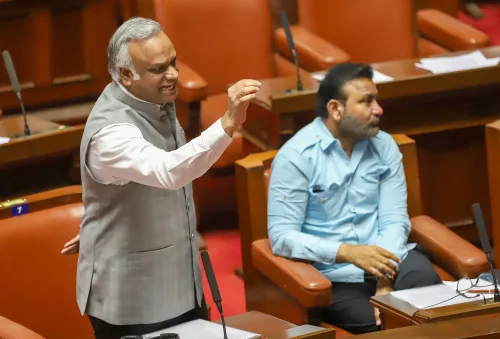
Karnataka Home Minister Priyank Kharge on 8 June directed police to issue notices to all liquor-serving establishments mandating strict age verification.
A study of 4,093 students across four Bengaluru institutions found 33% consumed alcohol — well above the national rate of 7.9% .
The median age of alcohol initiation in Bengaluru was found to be 17 years , with some exposure reported from as young as 8 years .
Under the directive, no entry is permitted without valid government-issued ID; owners, managers, and event organisers face personal liability for violations.
Entrance CCTV footage must be preserved for a minimum defined period for compliance verification.
Police will coordinate with schools, parents, and resident welfare associations to prevent minors' exposure to alcohol, tobacco, and narcotics.
Karnataka Home Minister Priyank Kharge on Monday, 8 June directed senior police officials to issue formal notices to all pubs, breweries, bars, clubs, lounges, restaurants, and other liquor-serving establishments in the state, mandating strict prevention of entry and alcohol service to underage persons. The directive follows alarming findings from a local study that found one in three adolescents in Bengaluru at risk of health complications linked to alcohol or tobacco use.
What the directive says
Under the new instructions, no person may enter a pub, brewery, bar, club, or any liquor-serving establishment without presenting valid age proof. Establishments are required to verify government-issued identification before permitting entry or serving alcohol. Owners, managers, licence-holders, and event organisers will be held personally responsible for any violations on their premises.
Entrance CCTV cameras must remain functional and footage preserved for a minimum defined period to enable compliance verification during investigations. Police have been asked to coordinate with educational institutions, parents, resident welfare associations, and citizen groups to shield minors from exposure to alcohol, tobacco, and narcotics.
The study behind the crackdown
An official statement from Kharge's office cited research conducted among 4,093 students from pre-university courses, undergraduate colleges, and higher secondary classes across four educational institutions in Bengaluru. The study — carried out by researchers from St. John's Medical College, Bengaluru, CHRIST University, Bengaluru, and Kasturba Medical College, Manipal — found that 33 per cent of young adults surveyed consumed alcohol, while nearly 18 per cent were addicted to tobacco.
These figures are significantly higher than the national prevalence rates of 8.7 per cent for tobacco use and 7.9 per cent for alcohol use, and also above Karnataka's own reported prevalence of 4.7 per cent for tobacco and 8.5 per cent for alcohol. The study further noted that the median age of alcohol initiation among Bengaluru adolescents was 17 years, with some reporting first exposure as early as 8 years of age.
Zero-tolerance stance
Kharge made clear that Karnataka will adopt a zero-tolerance approach towards establishments that enable or encourage underage drinking. 'Children and young people must be protected from alcohol and substance abuse. Commercial establishments cannot place profit above the safety and future of our youth. The rule is simple: No ID, No Entry. Any establishment abetting underage drinking will face severe action,' he said.
He also appealed to parents, teachers, citizens, and establishment owners to actively cooperate with police. The Home Minister instructed officials to treat underage drinking not merely as a licensing violation but as a youth safety and public health concern.
Broader context and what's next
This comes amid growing concerns over underage drinking and substance exposure among adolescents and young adults in Bengaluru, a city with a rapidly expanding nightlife economy. The directive places compliance obligations squarely on establishment owners, signalling a shift from reactive enforcement to pre-emptive accountability. How consistently the notices are enforced — and whether licence suspensions follow — will determine the real-world impact of the crackdown.
Point of View
And prior licensing frameworks have been inconsistently applied. The study data — 33% adolescent alcohol use against a national average of 7.9% — is a damning indictment not just of establishments but of the regulatory vacuum that allowed the gap to widen. Holding owners and managers personally liable is the right structural move, but without a credible and publicised penalty register, the 'zero-tolerance' framing risks becoming another announcement cycle. The real test is the first licence suspension.
NationPress
26 Oct 2026
Frequently Asked Questions
What has Karnataka Home Minister Priyank Kharge directed regarding underage drinking?
Kharge directed senior police officials on 8 June to issue notices to all pubs, bars, breweries, clubs, and liquor-serving establishments in Karnataka, requiring them to enforce strict age verification and deny entry or alcohol service to underage persons. Owners and managers face personal liability for violations.
What did the Bengaluru adolescent alcohol study find?
A study of 4,093 students from four Bengaluru educational institutions found that 33% of young adults consumed alcohol and nearly 18% were addicted to tobacco — significantly higher than national averages of 7.9% and 8.7% respectively. The median age of first alcohol use was 17 years, with some exposure reported from age 8.
Who conducted the study on underage drinking in Bengaluru?
The study was conducted by researchers from St. John's Medical College Bengaluru, CHRIST University Bengaluru, and Kasturba Medical College Manipal, covering students from pre-university, undergraduate, and higher secondary levels.
What are the specific rules establishments must now follow?
Establishments must verify government-issued ID before entry or alcohol service, ensure entrance CCTV is functional and footage preserved for a defined minimum period, and hold owners, managers, licence-holders, and event organisers responsible for any underage drinking on their premises.
What penalties do establishments face for non-compliance?
According to the directive, any establishment found serving alcohol to underage persons or enabling underage drinking will face severe action under applicable law. The Home Minister has described Karnataka's stance as zero-tolerance.