Karnataka Police mandate FIRs in revenge porn, sextortion cases
Synopsis
Karnataka has drawn a firm legal line: if you shared it without consent, it does not matter that the recording was consensual. A new statewide standing order forces police to register FIRs in all revenge porn and sextortion cases — and threatens departmental action against officers who delay or refuse on grounds of prior consent.
Key Takeaways
Karnataka Police issued a statewide standing order on 25 June mandating compulsory FIR registration in all revenge pornography and sextortion cases.
The order clarifies that consent to record does not amount to consent to publish or share — unauthorised distribution is a cognisable offence regardless.
Offences are to be registered under Section 77 of the BNS, 2023 and Sections 66E, 67, and 67A of the IT Act, 2000 .
Zero FIR must be filed when jurisdictional issues arise, with immediate transfer to the appropriate station.
Officers must coordinate with Cyber Crime Police Stations and the CID Cyber Division for digital forensic analysis and content removal.
Failure to register FIRs or unjustified delays may attract departmental action against the concerned officer.
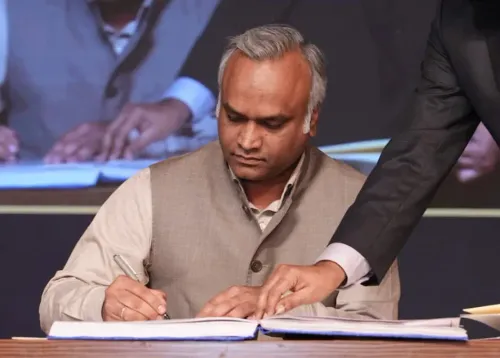
Karnataka Police have issued a statewide standing order requiring all police officers to compulsorily register First Information Reports (FIRs) in cases involving revenge pornography, sextortion, and the unauthorised sharing of private photographs and videos. The directive, announced on Thursday, 25 June, was issued following instructions from the Home Department under Home Minister Priyank Kharge.
The Core Principle: Consent to Record Is Not Consent to Share
A pivotal clarification in the standing order draws a clear legal line: consent given to capture or record intimate content does not constitute consent for its publication, forwarding, or dissemination. Any unauthorised distribution of such material will be treated as a cognisable offence, irrespective of whether the original recording was made with the individual's knowledge or agreement.
This provision directly addresses a common procedural gap — the tendency of some officers to decline complaints on the grounds that the victim had initially agreed to the recording. The order explicitly prohibits such refusals.
Legal Provisions to Be Invoked
Depending on the facts of each case, officers are directed to register offences under the Bharatiya Nyaya Sanhita (BNS), 2023, and the Information Technology (IT) Act, 2000. Specific provisions cited include Section 77 of the BNS and Sections 66E, 67, and 67A of the IT Act. Where threats, demands for money, sexual favours, or other forms of coercion are involved, officers must additionally invoke provisions relating to extortion, criminal intimidation, and coercion.
Procedural Safeguards and Victim Protection
To eliminate jurisdictional delays, the order mandates that police stations register a Zero FIR when the incident falls outside their territorial jurisdiction, and transfer the case to the appropriate station without delay. Officers are also required to take immediate steps to remove or block objectionable content, preserve electronic evidence, and coordinate with Cyber Crime Police Stations and the CID Cyber Division for technical investigation and digital forensic analysis.
The directive places strong emphasis on a victim-centric approach. Officers must treat complainants with dignity and sensitivity, protect the identity and privacy of victims, and avoid any form of victim-blaming. Wherever possible, complaints by women are to be recorded by women police officers.
Consequences for Non-Compliance
Karnataka Police have warned that failure to register an FIR — or any delay rooted in the erroneous assumption that prior consent to recording negates the offence — will be treated seriously and may attract departmental action against the officer concerned. Officials said the directive is intended to strengthen the constitutional right to privacy and ensure a uniform, legally compliant response across all police stations in the state.
This comes amid a broader national conversation on digital safety for women, with multiple states having faced criticism for inconsistent enforcement of cyber laws in cases of image-based sexual abuse. Karnataka's standing order is among the more structured state-level responses to the issue, setting clear procedural obligations rather than leaving enforcement to individual officer discretion.
Point of View
Victims being turned away or shamed at the station. By making FIR registration compulsory and threatening departmental action for non-compliance, the directive attacks that gap directly. The test will be implementation: standing orders have been issued before without materially changing ground-level behaviour. Whether this one does will depend on whether the threat of departmental action is actually enforced the first time an officer refuses.
NationPress
24 Sept 2026
Frequently Asked Questions
What does Karnataka's new standing order on revenge pornography say?
The standing order directs all Karnataka police officers to compulsorily register FIRs in cases involving revenge pornography, sextortion, and unauthorised sharing of private intimate content. It was issued on 25 June under instructions from Home Minister Priyank Kharge's department.
Does prior consent to recording affect whether a case can be filed?
No. The order explicitly states that consent to record or photograph does not amount to consent to share, publish, or forward that content. Officers are prohibited from refusing or delaying FIR registration on grounds that the victim originally agreed to the recording.
Under which laws will these cases be registered?
Cases will be registered under Section 77 of the Bharatiya Nyaya Sanhita (BNS), 2023, and Sections 66E, 67, and 67A of the Information Technology Act, 2000. Additional provisions on extortion, criminal intimidation, and coercion apply where threats or demands are involved.
What is a Zero FIR and why does the order mention it?
A Zero FIR can be filed at any police station regardless of jurisdiction, ensuring victims are not turned away on procedural grounds. The order mandates its use when the incident falls outside a station's jurisdiction, with the case then transferred to the correct station without delay.
What happens if a police officer refuses to register an FIR?
The standing order warns that failure to register an FIR, or unjustified delays based on the assumption that prior consent to recording negates the offence, will be treated seriously and may result in departmental action against the concerned officer.