Does K'taka Survey Challenge Congress' EVM Claims?
Synopsis
A recent survey challenges Congress' claims about EVMs, revealing voter confidence in the electoral process. As tensions rise, Priyank Kharge questions the survey's credibility amidst allegations of collusion and voter fraud. What does this mean for Karnataka's political landscape?
Key Takeaways
High voter confidence in the electoral process and EVMs.
Concerns about the influence of money and muscle power.
Survey included 5,100 respondents across 102 Assembly segments.
Effective grassroots engagement noted among rural voters.
Need for transparency in electoral practices highlighted.
Bengaluru, Jan 2 (NationPress) The Congress government has raised objections regarding a survey conducted by the State Election Commission, which was released by the Karnataka Monitoring and Evaluation Authority under the Department of Planning, Programme Monitoring and Statistics. They claimed that the survey lacked state government approval.
To the dismay of Congress President Mallikarjun Kharge and his son, Minister Priyank Kharge, the survey's findings indicated, "While recognition of the significance of each vote (over 81.39%), and confidence in the electoral process and EVMs was substantial (over 83.61%), concerns regarding inducements and the influence of money and muscle power persisted, particularly in areas such as Kalaburagi."
It's worth noting that Kalaburagi is Mallikarjun Kharge's hometown.
"Rural voters generally view the electoral process as fair, thanks to effective BLO engagement at the grassroots. However, urban youth have concerns about elite dominance in electoral processes and a lack of transparency in the voting system, leading to evident apathy among them," the findings revealed.
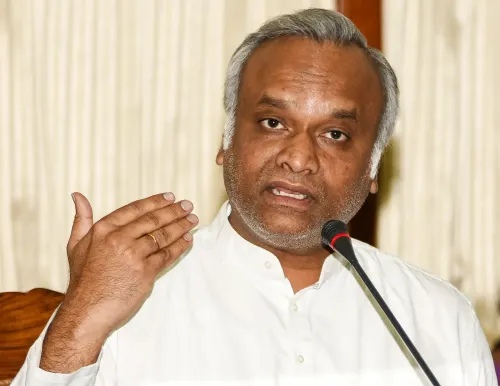
In response, Minister for RDPR, IT, and BT Priyank Kharge questioned the agency that conducted the survey, asserting that the Election Commission of India had approached the State Election Commission and sought the assistance of an NGO closely associated with the Prime Minister's Office.
Minister Kharge stated, "What can be expected from this survey? It involved a sample size of 5,000 individuals across more than 100 constituencies. The BJP must answer for the reported voter fraud in Kalaburagi's Aland Assembly segment."
He further emphasized that, as Rahul Gandhi previously stated, the Election Commission and the BJP collaborated to execute mass deletions of votes prior to the 2023 Assembly elections and the upcoming Lok Sabha elections in 2024 in Karnataka.
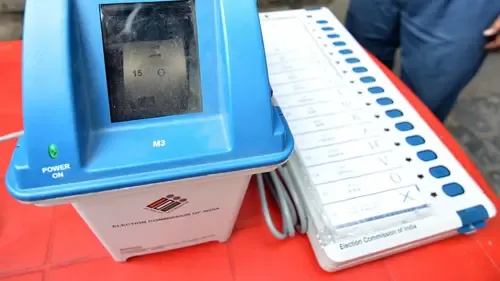
The survey, commissioned by Chief Electoral Officer V. Anbukumar, revealed that the majority of voters believed that elections in India are free and fair, highlighting an increased trust in Electronic Voting Machines (EVMs).
This survey encompassed 5,100 respondents across 102 Assembly segments in the administrative divisions of Bengaluru, Belagavi, Kalaburagi, and Mysuru.
Dubbed "Lok Sabha Elections 2024 - Evaluation of Endline Survey of KAP (Knowledge, Attitude, and Practice) of Citizens", the study was overseen by the Karnataka Monitoring Authority, Department of Planning, Programme Monitoring and Statistics, Government of Karnataka.
Conducted by the Grassroots Research and Advocacy Movement, Bengaluru, the evaluation utilized a mixed-methods approach based on the KAP framework. A total of 5,100 respondents were surveyed across 102 Assembly Constituencies, encompassing all 34 election districts in Karnataka, representing rural, urban, and reserved constituencies across the state’s four divisions.
The methodology featured structured questionnaires for quantitative analysis, alongside 23 in-depth interviews with various key informants, 57 focus group discussions with diverse voter groups, and 16 booth-level case studies in urban, semi-urban, and rural settings for qualitative assessment.
Findings indicate that awareness of the voter list is at 85.31% among surveyed individuals. High levels of EPIC possession (99.02%) and voter list inclusion (98.18%) were also noted, although gaps in awareness regarding the voter registration process were identified, particularly in urban areas.
The evaluation aimed to provide a comprehensive understanding of how electoral awareness, attitudes, and practices have evolved in Karnataka under the SVEEP framework. The findings are intended to shape future strategies that are evidence-based, inclusive, and contextually relevant, ensuring that electoral literacy leads to meaningful, sustained, and equitable democratic engagement for all segments of society.
Point of View
It is crucial to remain unbiased and focus on the facts. The recent survey findings indicate a growing trust in the electoral process, despite the objections raised by the Congress party. This situation reflects the ongoing political tensions in Karnataka and highlights the need for transparency in electoral practices. Our priority is to provide our audience with accurate and comprehensive information while ensuring that all voices are heard.
NationPress
20 Sept 2026
Frequently Asked Questions
What were the main findings of the Karnataka survey?
The survey revealed high voter confidence in the electoral process and Electronic Voting Machines (EVMs), with 81.39% recognizing the importance of each vote.
Why did the Congress government object to the survey?
The Congress government claimed that the survey was not sanctioned by the state government and questioned its credibility.
What concerns did the survey highlight?
The survey indicated concerns about the influence of money and muscle power in elections, particularly in regions like Kalaburagi.
How many respondents were surveyed?
A total of 5,100 respondents were surveyed across 102 Assembly segments in Karnataka.
What methodology was used in the survey?
The survey employed a mixed-methods approach, combining structured questionnaires with in-depth interviews and focus group discussions.