KTR Slams Congress Over Idle Pumps, Tanker-Fed Crops
Synopsis
BRS working president K. T. Rama Rao charges Telangana's Congress government with failing to run pumps at both Kaleshwaram and Palamuru-Rangareddy lift irrigation projects during a high-flood season, leaving farmers in drought-like distress and relying on tanker water for standing crops.
Key Takeaways
KTR accused the Telangana Congress government on 23 October 2026 of not operating lift irrigation pumps during peak flood season.
He alleged 250 TMC of Krishna river floodwater went unused due to Palamuru-Rangareddy project pumps being idle.
He further alleged 750 TMC of Godavari floodwater was not lifted through the Kaleshwaram project this season.
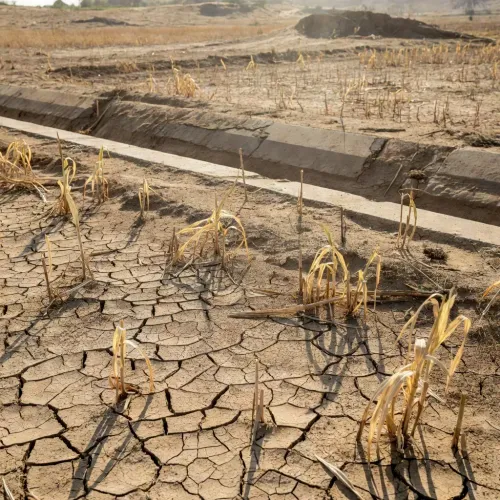
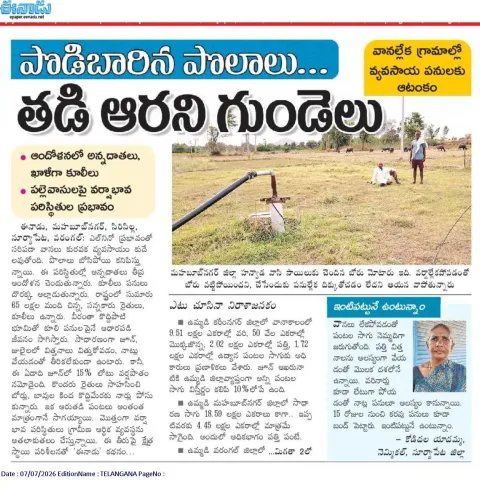
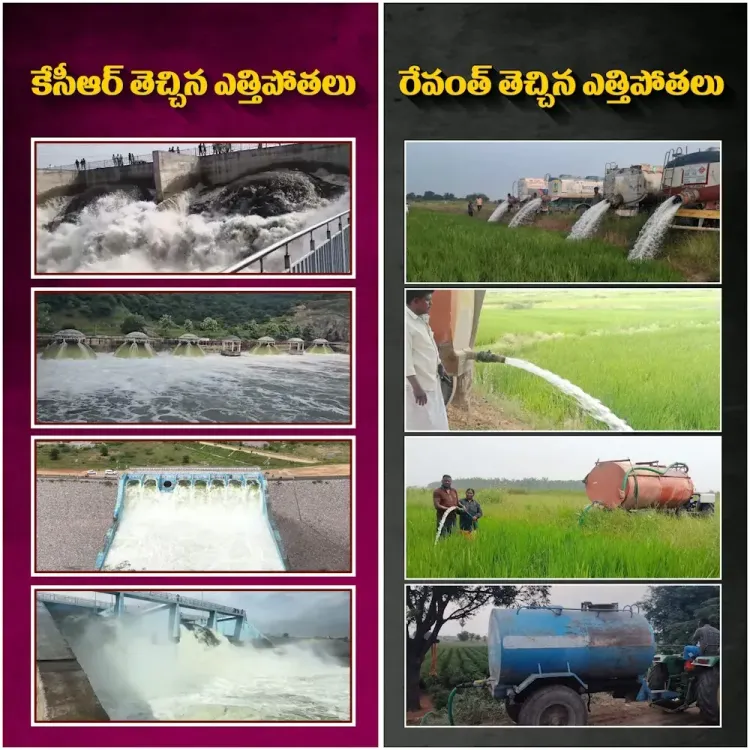
KTR claims farmers are now buying tanker water to irrigate dying standing crops — an extraordinary cost for an irrigated-farming state.
Both projects were built under the BRS government between 2014 and 2023 and have been contested between BRS and Congress on cost, safety, and operational grounds since the December 2023 election.
The Telangana irrigation department has made no public statement on pump-operation status for the current flood season.
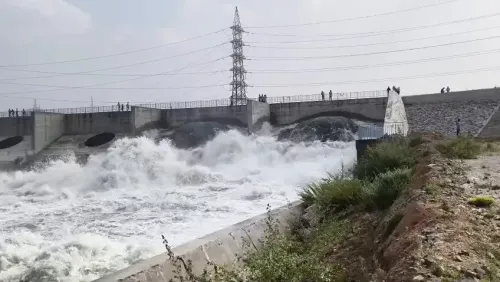
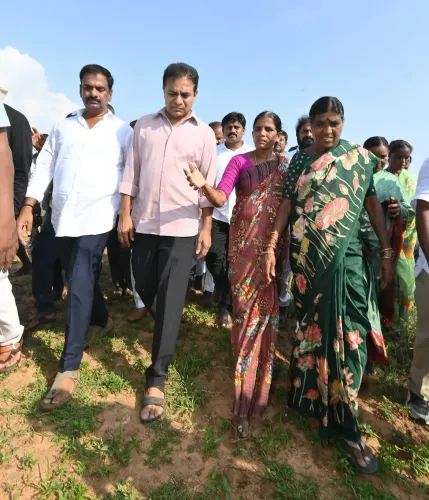
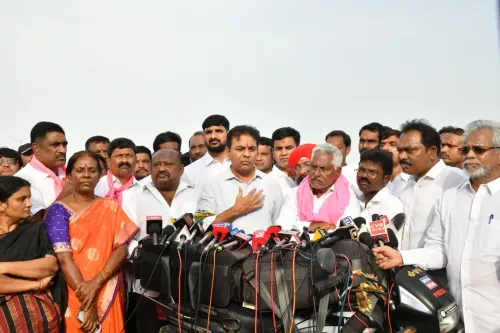
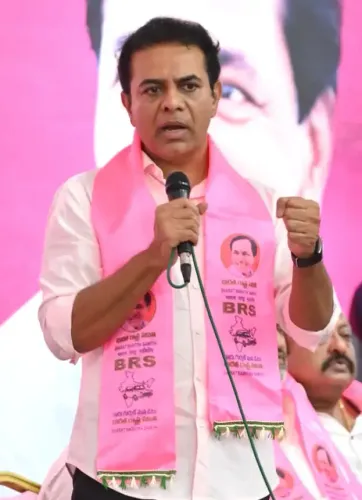
While floodwaters swept through the Krishna and Godavari river basins this season, Telangana farmers are reportedly buying water by the tanker to save their dying crops — and BRS working president K. T. Rama Rao wants everyone to know exactly who he holds responsible. In a pointed post on 23 October 2026, KTR accused the Congress government in Telangana of letting two massive lift-irrigation projects sit idle even as rivers ran flush with water.
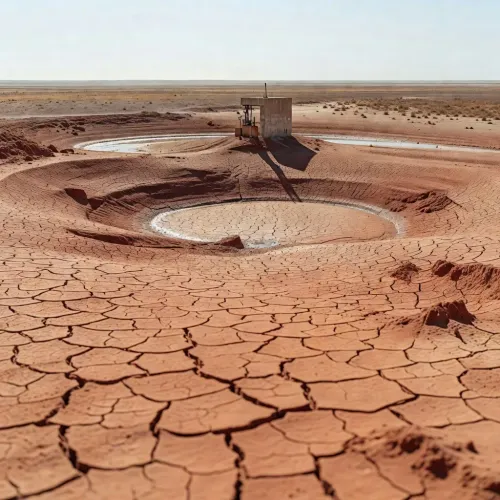
Translating his Telugu post: 'ఇది కాలం తెచ్చిన కరువు కాదు కాంగ్రెస్ తెచ్చిన కరువు!' — 'This is not a drought brought by time; this is a drought brought by Congress!' KTR alleged that despite 250 TMC (thousand million cubic feet) of floodwater flowing down the Krishna this year, the pumps of the Palamuru-Rangareddy Lift Irrigation Project were not run. Similarly, he claimed 750 TMC of Godavari floodwater went unused because the Kaleshwaram Lift Irrigation Project pumps sat silent. The result, he says: Telangana farmers buying tanker water to pour on withering standing crops.
Two flagship projects, one damaging allegation
The Kaleshwaram Lift Irrigation Project — built on the Godavari river between 2015 and 2019 under the BRS government — was conceived as one of the world's largest multi-stage lift irrigation schemes, meant to carry water across drought-prone Telangana districts. The Palamuru-Rangareddy project, targeting historically water-scarce districts including Mahbubnagar and Rangareddy, received its major administrative and financial push under the same BRS administration after state formation in 2014.
Both projects represent enormous capital investment and political capital for BRS. Allegations that their pumps are lying idle during a high-flood season cut at the heart of what the Congress government, in power since December 2023, is doing with the infrastructure it inherited.
The Congress counter-narrative — and what it cannot answer
Since taking office under Chief Minister Revanth Reddy, the Telangana Congress government has consistently questioned the costs, structural integrity, and operational efficacy of Kaleshwaram in particular — a project that faced engineering scrutiny even before the election. That critique gave Congress a political cushion: if the projects are flawed, running them is irresponsible. But KTR's post flips the frame sharply. When rivers are in flood and farms are in crisis simultaneously, the question of 'why aren't the pumps running' becomes harder to deflect.
The broader pattern here is well-established: since the December 2023 election, BRS and Congress have been locked in a grinding war of attribution over Telangana's irrigation legacy — who built it, who broke it, who benefits from it. Farmers caught between the two narratives are, according to KTR's account, currently paying cash for tanker water.
Why flood season pump-operation matters
Lift irrigation projects are designed to pump river water — especially during high-flood periods when surface levels are naturally elevated and pumping costs are lower — into reservoirs and distribution networks that feed farms weeks or months later. Missing a flood window does not just mean missing water today; it can mean empty reservoirs heading into the dry season. If KTR's claim holds, the cost to Telangana's kharif crop calendar could extend well beyond this season's damaged fields.
The Telangana irrigation department has not issued a public statement on pump-operation status during the current flood season, and legislative scrutiny of project maintenance remains a key watch-point in the coming assembly session.
The image of a farmer pouring tanker water onto a dying crop, in a state that built two of India's most ambitious river-lift systems, is the kind of political picture that outlasts any press conference — and KTR knows it.
Point of View
He shifts the debate from sunk costs to present-day governance failure. This is a high-stakes move: if the pump-operation claims are substantiated, they give BRS a durable accountability line ahead of the next electoral cycle. Conversely, Congress will likely counter by pointing to ongoing structural and financial investigations into both projects, making the factual record — not the rhetoric — the decisive battleground.
NationPress
23 Oct 2026
Frequently Asked Questions
Why did KTR criticise the Congress government over irrigation projects?
KTR alleged that the Telangana Congress government failed to operate pumps at the Kaleshwaram and Palamuru-Rangareddy lift irrigation projects during the 2026 flood season, even as major volumes of water flowed in the Krishna and Godavari rivers, leaving farmers to buy tanker water for their crops.
What is the Kaleshwaram Lift Irrigation Project?
The Kaleshwaram Lift Irrigation Project is a large multi-stage scheme built on the Godavari river by the BRS government between 2015 and 2019 to carry water to drought-prone areas of Telangana. It has been at the centre of a political dispute since the Congress government took office in December 2023 .
What is the Palamuru-Rangareddy project?
The Palamuru-Rangareddy Lift Irrigation Project is a scheme designed to supply Krishna river water to historically drought-affected districts including Mahbubnagar and Rangareddy . It was initiated and developed under the BRS administration after Telangana's formation in 2014 .
Is there a drought in Telangana in 2026?
KTR framed the current agricultural distress as a 'Congress-made drought' — meaning his charge is that policy inaction, not rainfall failure, is behind crop distress. Rivers reportedly received significant flood volumes this season; his claim is that water was not pumped into farms due to government inaction.
What has the Telangana government said about the irrigation pumps?
As of KTR's post on 23 October 2026 , the Telangana irrigation department had not issued a public statement on the operational status of pumps at either project during the current flood season. Any official response is expected to form part of the broader legislative and political debate on project maintenance.