Kumaraswamy alleges poll irregularities in Karnataka Council election, seeks probe
Synopsis
Kumaraswamy turned CM Siddaramaiah's own anti-bribery rhetoric against the ruling Congress, alleging that far more than Rs 10 changed hands in the Karnataka Legislative Council election. The challenge: will the government probe its own poll conduct by the standard it publicly demands of its officials?
Key Takeaways
Kumaraswamy alleged irregularities in the Karnataka Legislative Council election and demanded a formal investigation.
He invoked CM Siddaramaiah 's own anti-bribery standard, suggesting 'much more than Rs 10' may have changed hands during the polls.
Kumaraswamy clarified his remark to JD(S) MLAs — he urged transparency about political intentions, not a directive to leave the party.
JD(S) contested the Council election not to win, but to assess internal party strength and the prevailing political situation, according to Kumaraswamy.
He acknowledged cross-voting is common in such contests and said the party would focus on future political challenges.
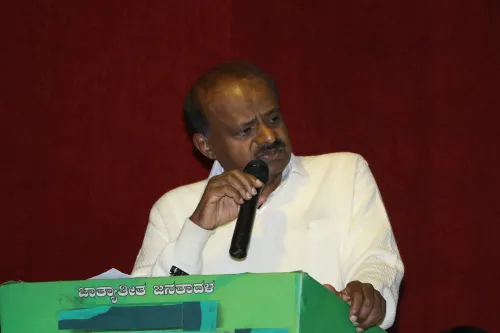
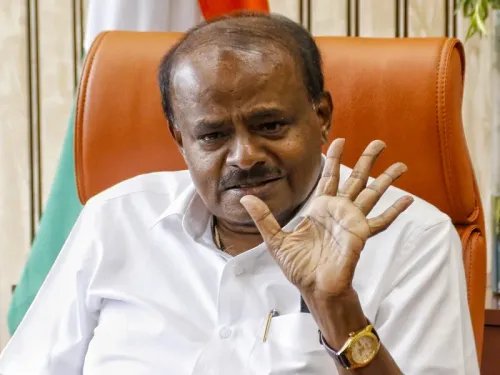
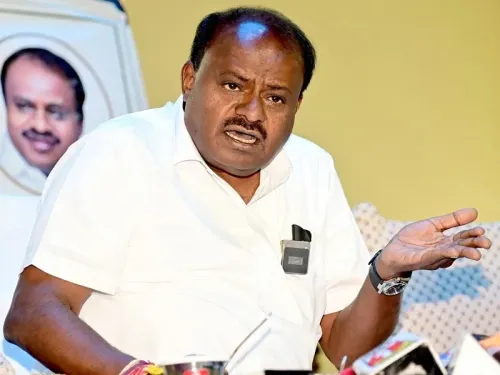
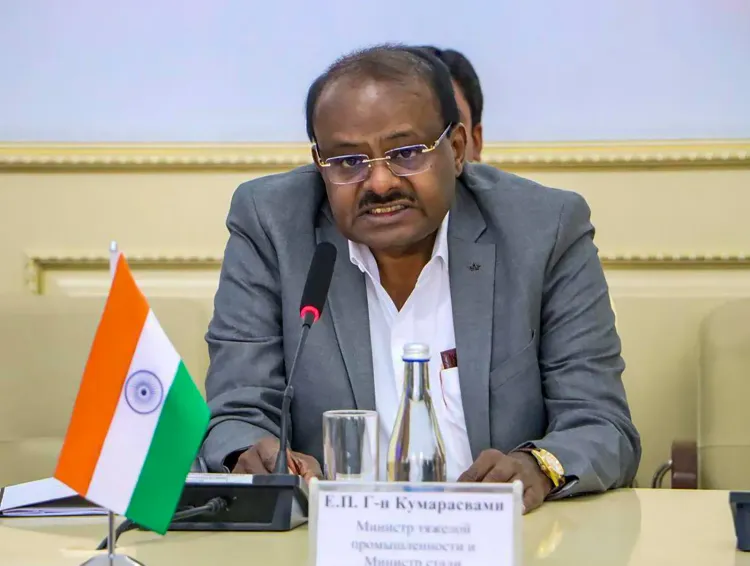
H.D. Kumaraswamy, Union Minister for Heavy Industries and Steel and Janata Dal (Secular) State President, on Saturday alleged serious irregularities in the recently concluded Karnataka Legislative Council election and demanded a thorough investigation into the poll process. Speaking to reporters in Bengaluru, Kumaraswamy questioned whether the same accountability standards the state government applies to bureaucratic corruption would be extended to the Council polls.
The Bribery Comparison
Kumaraswamy drew a pointed contrast with Chief Minister Siddaramaiah's recent public call urging citizens to report any instance of bribery by government officials. 'The Chief Minister has said that people should report if anyone asks for even Rs 10 as a bribe. If that is the standard, then much more than Rs 10 may have changed hands during this election. The government should investigate to whom such complaints can be made,' Kumaraswamy said. The remark was widely seen as a direct challenge to the ruling Congress government to apply its own stated anti-corruption benchmarks to its own electoral conduct.
On Legislators' Freedom to Leave JD(S)
Kumaraswamy also addressed reports that he had told party legislators 'their path is theirs' at a recent internal meeting. He clarified that his message was one of transparency, not abandonment. He explained that he had urged JD(S) MLAs to be candid about their political ambitions — if remaining in the party was seen as a hindrance to their future, they should say so openly and leave with dignity rather than engage in political double standards. 'I said this directly to them,' he added. He maintained that he was willing to let any legislator leave the party amicably if they believed their future lay elsewhere.
Why JD(S) Contested Despite Low Expectations
Kumaraswamy acknowledged that the party had not entered the Legislative Council election expecting to win. According to him, the decision to field a candidate was a deliberate exercise in gauging internal party cohesion and reading the broader political landscape. 'I did not enter the race believing we would win. The purpose was to assess the political situation that may emerge in the future and to test whether leaders in the party would take decisions with conviction under the current circumstances,' he said. This candid admission underscores the strategic, rather than electoral, intent behind JD(S)'s participation.
Cross-Voting and the Road Ahead
Commenting on the outcome, Kumaraswamy noted that cross-voting and unexpected results were not uncommon in Legislative Council contests, which are decided by elected MLAs rather than the general public. He signalled that the party intended to move forward rather than dwell on the result, focusing instead on future political challenges. This comes amid broader questions about JD(S)'s footprint in Karnataka following its alliance with the Bharatiya Janata Party (BJP) at the national level, even as it contests the Congress government in the state.
Point of View
Forcing the Chief Minister to either investigate his own party's conduct or expose the limits of his anti-corruption posturing. The more revealing admission, however, is Kumaraswamy's own: that JD(S) entered the Council election not to win but to test internal loyalty. That is a frank acknowledgement of the party's eroding base in Karnataka, where the BJP alliance at the Centre has complicated its positioning as an independent state force. The real story here is not the poll irregularity allegation — which remains unsubstantiated — but the quiet unravelling of JD(S) as a cohesive state-level player.
NationPress
19 Sept 2026
Frequently Asked Questions
What irregularities did Kumaraswamy allege in the Karnataka Legislative Council election?
Kumaraswamy alleged that money changed hands during the Karnataka Legislative Council election, invoking Chief Minister Siddaramaiah's own anti-bribery standard to demand a government probe. He did not specify the exact nature or amount of alleged payments, but suggested the scale far exceeded the Rs 10 bribery threshold the CM had publicly cited.
Why did JD(S) contest the Karnataka Legislative Council election if it did not expect to win?
According to Kumaraswamy, the decision was strategic — aimed at assessing the party's internal cohesion and understanding the political landscape ahead of future contests. He stated explicitly that winning was not the objective.
What did Kumaraswamy mean when he told JD(S) MLAs 'their path is theirs'?
Kumaraswamy clarified that the remark was a call for transparency, not a dismissal. He urged legislators who felt that staying in JD(S) would harm their political future to say so openly and leave with dignity, rather than engage in political double standards.
Who is H.D. Kumaraswamy?
H.D. Kumaraswamy is the Union Minister for Heavy Industries and Steel in the central government and the State President of the Janata Dal (Secular). He is a former Chief Minister of Karnataka and a prominent political figure in the state.
What is the Karnataka Legislative Council and how are its members elected?
The Karnataka Legislative Council is the upper house of the state legislature. Unlike the Legislative Assembly, its members are elected by elected MLAs, local body representatives, and other designated groups — not by the general public — making it susceptible to cross-voting and backroom deals.