Kumaraswamy questions Shivakumar on Karnataka river-linking consent
Synopsis
Union Minister H.D. Kumaraswamy has put Karnataka CM D.K. Shivakumar on the spot over a claim that the state has consented to the Krishna-Godavari-Cauvery river-linking project — pointing out that a 2023 DPR initially gave Karnataka zero water allocation, and that even after intervention by former PM H.D. Deve Gowda, the state received only 15 TMC, restricted to drinking use.
Key Takeaways
Kumaraswamy on 10 July challenged CM D.K.
Shivakumar over Karnataka's reported consent to the Krishna-Godavari-Cauvery river-linking project.
Kumaraswamy alleged a 2023 DPR allocated 247 TMC total — 90 TMC to Andhra Pradesh, 60 TMC each to Telangana and Tamil Nadu — with no initial share for Karnataka .
Karnataka was later allocated 15 TMC from the Malaprabha River , restricted to drinking water, reportedly after efforts by former PM H.D.
Kumaraswamy questioned Shivakumar's reported readiness to invest ₹1 lakh crore and demanded to know whether the Central Water Commission or National Water Board had cleared the proposal.
The Union Minister also raised concerns over Karnataka's spending on the Tungabhadra reservoir crest gates when neighbouring states would benefit from the water.
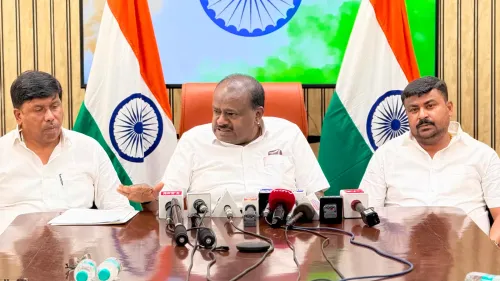
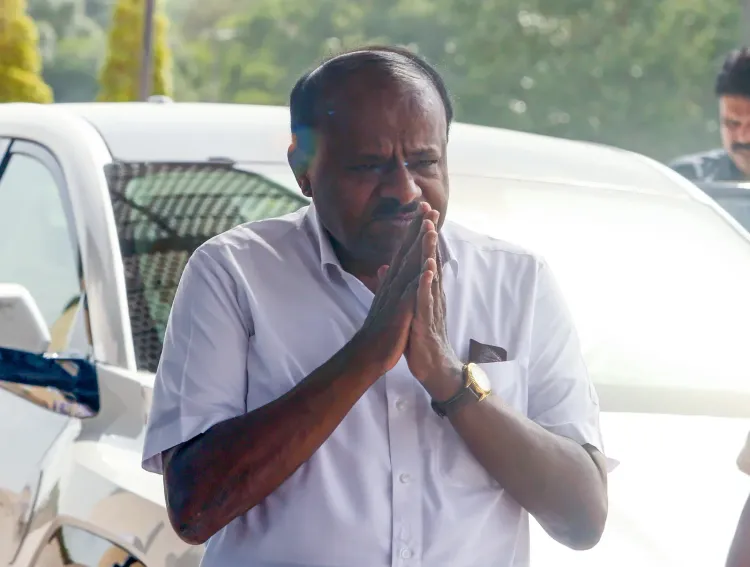
Union Minister H.D. Kumaraswamy on Friday, 10 July sharply criticised Karnataka Chief Minister D.K. Shivakumar for reportedly declaring that the state had consented to the proposed interlinking of the Krishna, Godavari, and Cauvery rivers — questioning how such consent could be extended before Karnataka's own water allocation under the project had been settled.
Addressing reporters in Bengaluru, Kumaraswamy alleged that Shivakumar was acting irresponsibly on a matter of vital importance to Karnataka's irrigation interests.
The Core Objection
Kumaraswamy made clear he does not oppose river-linking in principle. His objection, he said, is procedural and substantive: the state government must first determine how much water Karnataka will actually receive before publicly endorsing the project or committing funds.
He alleged that Shivakumar lacked adequate knowledge of Karnataka's irrigation concerns and had made public statements without grasping the underlying facts. In a pointed remark, Kumaraswamy said that water-sharing and river-linking cannot be handled the way one conducts real estate business in Bengaluru.
He added that if the Chief Minister was unfamiliar with technical details, he should have consulted irrigation experts, engineers, or Karnataka's legal team before speaking publicly.
What Shivakumar Said
The controversy stems from remarks Shivakumar reportedly made in Belagavi, where he stated that a decision had been taken to link the Krishna, Godavari, and Cauvery rivers and that Karnataka had already conveyed its consent. Kumaraswamy demanded a formal clarification on the basis for that statement.
He also objected to the Chief Minister's reported claim that the Union Government would declare the river-linking project a national project, and questioned whether the proposal had been examined by the Central Water Commission or the National Water Board before Karnataka's consent was announced.
Water Allocation: The Numbers in Dispute
Kumaraswamy cited a Detailed Project Report (DPR) prepared in 2023, which he said envisaged the utilisation of 247 TMC of water under the Krishna-Godavari-Cauvery interlinking project. Under that proposal, he claimed, Andhra Pradesh was allocated 90 TMC, while Telangana and Tamil Nadu were each assigned 60 TMC. Karnataka, he alleged, was initially given no allocation at all.
He said that only after sustained efforts by former Prime Minister H.D. Deve Gowda was Karnataka later allocated 15 TMC from the Malaprabha River — and even that, he noted, came with the condition that it be used exclusively for drinking water purposes.
Against this backdrop, Kumaraswamy questioned how the Chief Minister could claim that Karnataka supports the project and is prepared to invest ₹1 lakh crore, and on what basis that figure was arrived at.
Tungabhadra Reservoir Row
Kumaraswamy also raised a separate but related grievance: the recent inauguration of the Tungabhadra reservoir crest gates by the Chief Ministers of three states. He questioned why Karnataka was bearing the expenditure when neighbouring states would be primary beneficiaries of the water.
He further criticised Shivakumar for reportedly holding discussions with neighbouring states on desilting the Tungabhadra reservoir without consulting opposition parties or informing the people of Karnataka.
What Comes Next
Kumaraswamy's remarks signal that the river-linking project is set to become a flashpoint in Karnataka's inter-party politics, with the opposition pressing the state government for a detailed accounting of water rights before any further commitment is made. The ball is now in Shivakumar's court to clarify the terms on which Karnataka's consent — if formally given — was extended.
Point of View
Not just a political one. The 2023 DPR figures he cites, if accurate, reveal a stark asymmetry: Karnataka, a co-basin state, was initially left out entirely while downstream states secured tens of TMC each. The Tungabhadra expenditure question compounds the optics. Shivakumar's silence on the specifics — no rebuttal on the DPR numbers, no clarification on what 'consent' formally entails — leaves the government exposed on a water issue that Karnataka voters have historically treated as non-negotiable.
NationPress
9 Oct 2026
Frequently Asked Questions
What is the Krishna-Godavari-Cauvery river-linking project?
It is a proposed inter-state river-interlinking project aimed at transferring surplus water from the Krishna and Godavari basins to the Cauvery basin. A Detailed Project Report prepared in 2023 envisaged utilising 247 TMC of water, distributed across Andhra Pradesh, Telangana, Tamil Nadu, and Karnataka.
Why is H.D. Kumaraswamy opposing Karnataka's consent to the project?
Kumaraswamy does not oppose the project in principle but argues that Karnataka should not have extended consent before its water allocation was formally determined. He cited the 2023 DPR, which he claims initially gave Karnataka no water share at all, with only 15 TMC later added — restricted to drinking use — after intervention by former PM H.D. Deve Gowda.
What did CM Shivakumar reportedly say about the river-linking project?
Shivakumar reportedly stated in Belagavi that a decision had been taken to link the Krishna, Godavari, and Cauvery rivers and that Karnataka had already conveyed its consent. He also reportedly indicated that the Union Government would declare it a national project, and that Karnataka was prepared to invest ₹1 lakh crore.
What is the dispute over the Tungabhadra reservoir?
Kumaraswamy questioned why Karnataka was spending money on the inauguration of the Tungabhadra reservoir crest gates when neighbouring states would be the primary beneficiaries of the water. He also criticised Shivakumar for holding discussions on desilting the reservoir with neighbouring states without consulting opposition parties.
Has the Central Water Commission reviewed Karnataka's consent?
Kumaraswamy raised this as an open question, demanding to know whether the Central Water Commission or the National Water Board had examined the proposal before Karnataka's consent was publicly announced. No confirmation of such a review has been reported.