KYS condemns Delhi University SOL for 'profit-driven' vocational courses
Synopsis
Students' group KYS has taken direct aim at Delhi University's open learning wing, calling its new vocational courses — nail art, AC repair, RO repair — 'profit-driven' offerings that trap disadvantaged students in low-horizon certifications while charging extra fees. The demand: shut down CISBC and invest in real education.
Key Takeaways
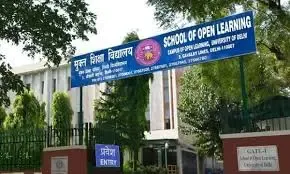
Krantikari Yuva Sangathan (KYS) on 15 November 2026 condemned Delhi University's School of Open Learning (SOL) for introducing vocational courses under CISBC .
Courses flagged include nail art , AC and refrigerator repairing , and RO repair , visible at the Keshavpuram campus .
KYS alleged students face substantial additional fees for these courses, raising access and equity concerns.
Python programming , despite appearing in CISBC's own catalogue, is reportedly absent from campus facilities.
KYS demanded immediate discontinuation of these courses and disbanding of CISBC , calling for a focus on quality education instead.
Students' organisation Krantikari Yuva Sangathan (KYS) on Sunday, 15 November 2026, condemned Delhi University's (DU) School of Open Learning (SOL) for introducing vocational courses — including nail art, AC and refrigerator repairing, and RO repair — under the Centre for Innovative Skill-Based Courses (CISBC), calling them 'profit-driven' offerings that shortchange students from disadvantaged backgrounds.
What KYS Objected To
KYS Convenor Bhim Kumar, in a formal statement, said the new courses appeared to be 'narrowing the educational and professional horizons of students from disadvantaged backgrounds.' The group argued that students enrolled in SOL — many of whom are pushed there due to a chronic shortage of seats in regular colleges — deserve the same breadth of academic and professional opportunities available to their counterparts in DU's mainstream institutions.
The contrast, KYS noted, is 'particularly telling' at DU-SOL's Keshavpuram campus, where facilities for AC and refrigerator repair, nail art, and RO repair are 'visibly housed and advertised.' At the same time, courses with broader academic value — such as Python programming, which appears on CISBC's own skill-course catalogue — are reportedly absent from the campus facilities on display.
Fee Concerns and Access Questions
KYS raised pointed questions about accessibility, noting that students are 'expected to pay substantial additional fees' for several of the listed courses. The group contended that this raises serious concerns about the actual availability of these offerings and the university's underlying priorities. It characterised the push as reducing educational possibilities to 'narrowly defined, high-fee, short-term certifications' while denying students the academic support, internships, placement opportunities, and institutional resources they deserve.
The Structural Argument
The students' organisation drew a sharp distinction between skill development and what it described as institutionalised inequality. 'The SOL students' inability to access regular college education cannot become an excuse to institutionalise unequal educational and career prospects,' KYS said. Critics argue that vocational certifications, without an accompanying investment in academic infrastructure, risk creating a two-tier university system — one for those who secure regular admission, and another for those who do not.
KYS Demands and What Happens Next
KYS has called for the immediate discontinuation of the contested courses and the disbanding of CISBC altogether. 'Distance learning must not mean distance from quality education and equal opportunities,' Bhim Kumar said. The organisation demanded that DU instead redirect its focus toward ensuring quality education, expanding institutional support, and providing SOL students with equal access to internships and placement networks. Delhi University had not issued a public response to the demands at the time of reporting. The protest adds to a broader national debate about the direction of open and distance learning in Indian higher education.
Point of View
And who gets left behind. SOL students are, by definition, those DU's regular system could not absorb — and offering them high-fee short certifications in lieu of degree-track education is not inclusion, it is substitution. The absence of tech-oriented courses like Python from actual campus facilities, while they appear in the catalogue, points to a gap between what is advertised and what is delivered. DU has yet to respond publicly, which itself signals a governance posture that treats open learning students as an afterthought rather than a constituency.
NationPress
15 Nov 2026
Frequently Asked Questions
Why is KYS opposing Delhi University's new vocational courses?
KYS argues the courses — including nail art, AC repair, and RO repair — are 'profit-driven' and narrow the educational and career prospects of disadvantaged students who enrol in SOL due to a shortage of regular college seats. The group says these offerings deny students the academic breadth and institutional support available to DU's regular students.
What is the Centre for Innovative Skill-Based Courses (CISBC) at DU?
CISBC is a unit under Delhi University's School of Open Learning that offers skill-based certifications. KYS has called for it to be disbanded, alleging its courses are high-fee, narrowly defined, and inaccessible to the students they are meant to serve.
Where are the contested courses physically located?
According to KYS, facilities for AC and refrigerator repair, nail art, and RO repair are visibly housed and advertised at DU-SOL's Keshavpuram campus in New Delhi.
What has KYS demanded from Delhi University?
KYS has demanded the immediate discontinuation of the contested vocational courses and the complete disbanding of CISBC. It has called on DU to instead invest in quality education, academic infrastructure, internships, and placement support for SOL students.
Has Delhi University responded to KYS's criticism?
Delhi University had not issued a public response to KYS's demands at the time of reporting. The university's silence leaves open questions about its plans for CISBC and the future direction of SOL's academic offerings.