Ladakh civil society body accuses Sonam Wangchuk of hijacking talks agenda
Synopsis
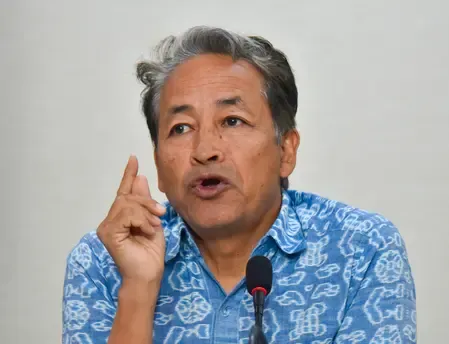
A prominent Ladakh civil society body has publicly broken ranks with the Leh Apex Body and Kargil Democratic Alliance, accusing activist Sonam Wangchuk of steering the MHA dialogue away from core issues of land, jobs and cultural protection. The split could complicate Centre-Ladakh negotiations at a critical juncture — and hands the government a political opening.
Key Takeaways
The Civil Society Forum of Ladakh accused activist Sonam Wangchuk of hijacking the core agenda of land, jobs and culture in talks with the Centre.
The Forum alleged that the LAB and KDA rejected the MHA's draft proposal without adequate examination and misrepresented earlier meeting outcomes.
Former MP Thupstan Chhewang linked the 'non-holding' of the MHA meeting scheduled for 22 October in New Delhi to misinformation and confrontational tactics.
The Forum demanded early Panchayat and LAHDC elections and reconstitution of the LAB with democratically elected representatives from all districts.
The Forum insisted dialogue must continue, but said the LAB and KDA can no longer claim to represent the whole of Ladakh.
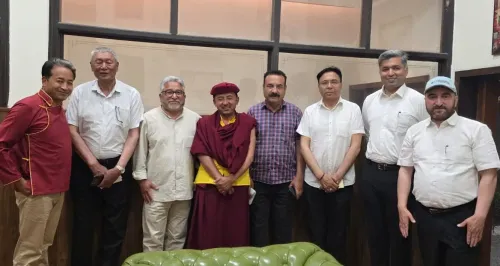
The Civil Society Forum of Ladakh has accused activist Sonam Wangchuk of hijacking the original agenda of land, jobs, and cultural safeguards in the ongoing dialogue with the Centre, and alleged that the Leh Apex Body (LAB) and the Kargil Democratic Alliance (KDA) no longer represent the voices of all districts in the region. The Forum's concerns were raised at a meeting held in Leh that drew prominent former officials and religious leaders.
Key Allegations Against LAB and KDA
The Forum expressed deep concern over recurring delays in the talks between the Union Home Ministry (MHA), the LAB, and the KDA. It alleged a deliberate deviation from the original agenda of safeguarding Ladakh's land, jobs and culture, and criticised what it described as a confrontational attitude adopted by some negotiators during the dialogue process.
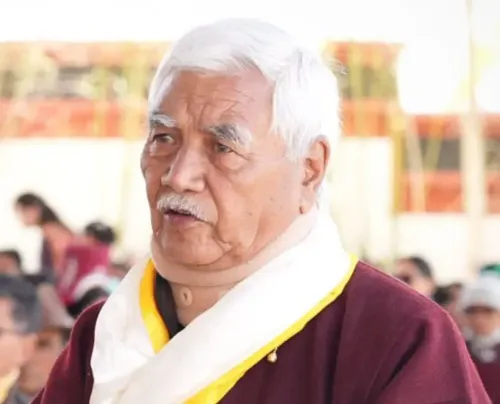
Former Member of Parliament Thupstan Chhewang alleged that the LAB and KDA leaders rejected the MHA's draft proposal without adequately examining the options presented, and misrepresented the outcomes of earlier meetings, thereby creating public confusion. He further blamed repeated delays, misinformation, and disregard for earlier consensus for the 'non-holding' of the MHA meeting that had been scheduled for 22 October in New Delhi.
Who Was at the Meeting
The Leh gathering was attended by former Chief Executive Councillor Rigzen Spalbar, former MLC Tsering Samphel, representatives of Thiksey and Thuksey Rinpoche, monks from various monasteries, members of the Ladakh Buddhist Association, nambardars, retired officers, and other civil society members. The broad-based participation signals that the Forum's concerns extend beyond narrow political groupings.
Demands Raised by the Forum
The Forum demanded the early conduct of Panchayat and Ladakh Autonomous Hill Development Council (LAHDC) elections across all districts, along with enhanced powers for elected councils. It also called for the reconstitution of the LAB with democratically elected representatives from across all districts of Ladakh, arguing that the current composition does not reflect the region's diversity.
Crucially, the Forum stopped short of withdrawing from the dialogue altogether. It appealed for talks to continue, while insisting that the process should not be held hostage to delaying tactics and confrontational politics.
Why This Matters
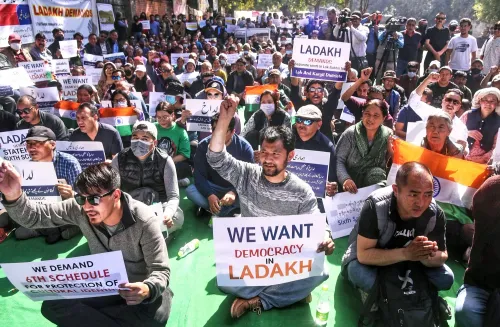
This comes amid a prolonged standoff between Ladakh's civil society groups and the Centre over the region's political status — a dispute that has simmered since Ladakh was carved out as a Union Territory without a legislature in 2019. Demands for full statehood and inclusion under the Sixth Schedule of the Constitution have been central to the LAB-KDA platform, and were championed loudly by Wangchuk during his high-profile hunger strikes and long marches. The Forum's dissent now introduces a fracture within Ladakh's own advocacy space, potentially complicating the Centre's negotiating calculus. How the MHA responds to these competing voices — and whether fresh dates for talks are announced — will determine the near-term trajectory of Ladakh's political future.
Point of View
The Forum hands the MHA a wedge — and potentially a pretext to defer or dilute concessions. The deeper irony is that this split may ultimately undermine the very safeguards — land, jobs, Sixth Schedule protections — that the Forum claims to be defending. A divided civil society rarely extracts more from the Centre; it typically extracts less.
NationPress
23 Oct 2026
Frequently Asked Questions
What has the Civil Society Forum of Ladakh accused Sonam Wangchuk of?
The Civil Society Forum of Ladakh has accused activist Sonam Wangchuk of hijacking the original agenda of land, jobs, and cultural safeguards in the ongoing dialogue with the Centre. The Forum alleged that this deviation, along with confrontational tactics by some negotiators, led to the collapse of an MHA meeting scheduled for 22 October in New Delhi.
Why did the MHA meeting on 22 October not take place?
According to former MP Thupstan Chhewang, the meeting did not take place due to repeated delays, misinformation, and disregard for earlier consensus among the LAB and KDA leadership. He alleged that misrepresentation of earlier meeting outcomes contributed to the breakdown.
What are the Forum's demands from the Centre and the LAB?
The Forum has demanded early Panchayat and Ladakh Autonomous Hill Development Council elections across all districts, enhanced powers for elected councils, and reconstitution of the LAB with democratically elected representatives. It has also called for the dialogue with the Centre to continue without further delay.
Who attended the Civil Society Forum's meeting in Leh?
The meeting was attended by former MP Thupstan Chhewang, former Chief Executive Councillor Rigzen Spalbar, former MLC Tsering Samphel, representatives of Thiksey and Thuksey Rinpoche, monks from various monasteries, members of the Ladakh Buddhist Association, nambardars, and retired officers.
What is the background to the Ladakh dialogue with the Centre?
The dialogue stems from Ladakh's reorganisation into a Union Territory without a legislature in 2019. Civil society groups have since demanded full statehood and Sixth Schedule protections to safeguard land, jobs, and cultural identity. The LAB and KDA have led those negotiations, but the Forum now questions whether they represent all districts.