Ladakh talks: Key gains locked in, but power-sharing deadlock stalls statehood push
Synopsis
Ladakh's constitutional talks have delivered more than the headlines suggest — a directly elected territorial body, Article 371 protections, and steep local reservations are all on the table. But an all-or-nothing negotiating stance and a fresh agitation deadline threaten to stall wins that took years to extract, while ordinary Ladakhis wait for panchayat elections, recruitment notices, and district councils.
Key Takeaways
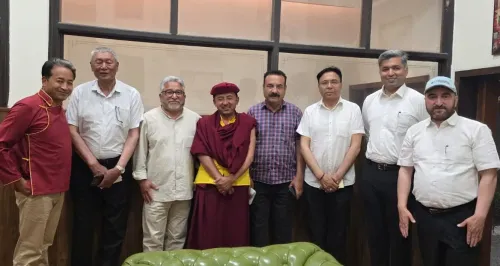
The Home Ministry sub-committee met Ladakh representatives on 9 September 2026 ; former MP Thupstan Chhewang called the talks fruitful, while the Leh Apex Body and KDA said nothing new was produced.
The Centre accepted a directly elected Union Territory legislature with legislative, executive, and financial powers, plus separate delimitation and Article 371 safeguards for land, culture, and environment.
Earlier rounds had already secured 85% local reservation in government posts ( 80% for Scheduled Tribes), a domicile framework, five official languages , and one-third women's reservation in hill councils.
Sonam Wangchuk set a one-week deadline after 9 September , threatening a padyatra from 19–24 September if no assurances followed.
The unresolved question is the division of powers between the territorial assembly and existing hill councils — a disagreement partly internal to the movement itself.
The next round of talks is expected in early October 2026 ; a draft on powers, policing, and delimitation methodology is the key outstanding deliverable.
A sub-committee of the Union Home Ministry met representatives from Ladakh in New Delhi on 9 September 2026, producing sharply divergent accounts of what was achieved — and reigniting a debate over whether the region's constitutional future is being advanced or squandered by an all-or-nothing negotiating stance.
What the September 9 talks settled
Despite conflicting public narratives, the meeting did deliver concrete ground. The Centre accepted that Ladakh will have a Union Territory-level elected body with legislative, executive, and financial powers, with members chosen through direct election from constituencies — a demand every representative from the Leh Apex Body and the Kargil Democratic Alliance (KDA) had pressed for. Delimitation will be conducted separately for Ladakh, and constitutional protection for land, culture, heritage, environment, and natural resources has been accepted under a special provision of Article 371.
Earlier negotiating rounds had already produced measurable outcomes: 85% of government posts are now reserved for locals, with 80% of those earmarked for Scheduled Tribes. A domicile framework is in place, five official languages have been notified, and a third of hill council seats are reserved for women.
Why the two sides see the same table differently
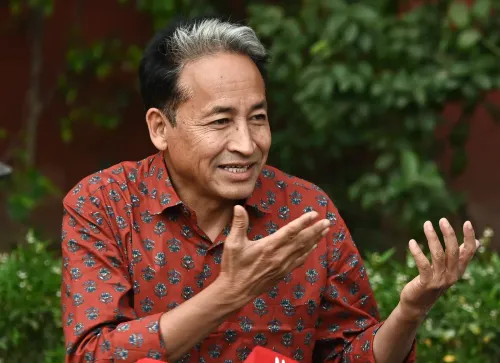
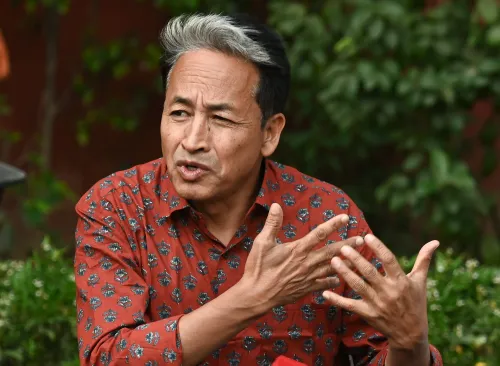
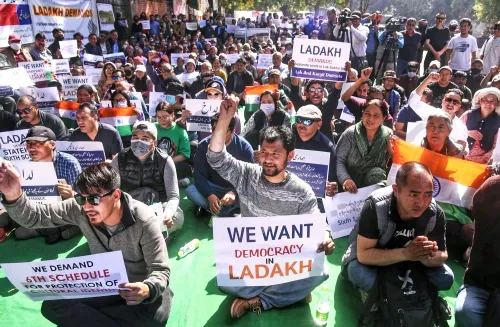
The day after the talks, activist Sonam Wangchuk gave the government one week to deliver assurances, warning that a padyatra would begin on 19 September through 24 September, followed by a wider agitation. The Leh Apex Body and the KDA declared the talks had produced nothing new.
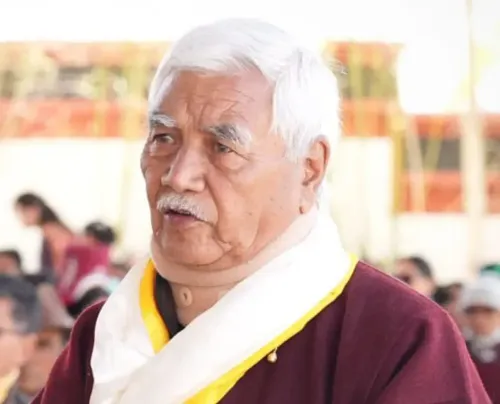
Others in the same room offered a starkly different account. Thupstan Chhewang, a former Member of Parliament who led the Leh Apex Body before resigning last year, described the talks as fruitful. He argued that points of consensus were never placed before the people, and that delays stemmed not from the Home Ministry but from internal differences between the Apex Body and the KDA over sequencing. He questioned the necessity of a fresh agitation while dialogue was, in his assessment, yielding results.
Ladakh's Member of Parliament, Mohmad Haneefa Jan, said the Home Ministry was serious about the legislative framework and Article 371 safeguards, and stressed the urgency of restarting recruitment for young people who had waited years for examination notifications.
The one issue genuinely unresolved
What the meeting could not resolve — and what no draft legislation has yet addressed — is the division of powers between the proposed territorial assembly and the existing hill councils. Both a strong territorial assembly and strong hill councils claim jurisdiction over the same subjects: land, forests, and local administration. Until Ladakh's own representatives reach internal consensus on which powers belong at which tier, the constitutional clause cannot be written.
This is not, as some portrayals suggest, a government evasion. It reflects a genuine disagreement inside the movement itself.
The cost of a freeze on governance
In August 2026, the administration began the panchayat election process with a revision of electoral rolls. Ladakh has 193 panchayats — 95 in Leh and 98 in Kargil — and hill council elections are also due. Sections of the movement, including Wangchuk, have argued these polls should be deferred until the territorial body is established. Critics of that position argue it conflates two separate processes.
Ladakh's governance structure has three tiers: panchayats at the base, hill councils above them, and the proposed territorial body on top. Leh has had a hill council since 1995 and Kargil since 2003. Neither tier was created by the current negotiation, and neither depends on its conclusion. Delaying panchayat elections, by this reasoning, would leave village seats empty, halt funds that flow through those institutions, and further postpone councils for the five new districts — Zanskar, Drass, Sham, Nubra, and Changthang.
A demand that the administration take no major decisions until a final settlement is reached would also freeze recruitment under the hard-won reservation rules, stall domicile certification, road tendering, and winter health postings — gains that took years of agitation to win, and that now risk being held hostage to negotiations over a different matter entirely.
Sixth Schedule vs Article 371: Which protection holds
The longstanding demand for inclusion in the Sixth Schedule is often treated as the natural solution. But critics of that route point out that the Sixth Schedule creates district councils, not a legislature — and Ladakh has had district councils for decades. Adding the Schedule would still leave Ladakh without an assembly or territorial law-making power.
There is also a durability argument. Parliament can amend the Sixth Schedule through ordinary legislation, without treating the change as a constitutional amendment. A special provision under Article 371, by contrast, can only be altered through a constitutional amendment requiring a two-thirds majority in both Houses. On the question of how easily a future government could reverse the protection, the familiar instrument — the Sixth Schedule — is, by this measure, the more vulnerable one.
What comes next
The next round of talks is set for early October 2026. The substantive ask — a concrete draft on powers, policing, and delimitation methodology — remains outstanding. Analysts and some negotiators argue the productive path is to formally lock in what has already been agreed: the elected body, direct elections, separate delimitation, and the Article 371 safeguards, while continuing to negotiate the unresolved power-sharing question. Whether Ladakh's negotiating coalitions can consolidate those wins — rather than treating every partial outcome as a concession withheld — may determine the pace of the next phase.
Point of View
Article 371 protections, steep local reservations, and a domicile framework represent a substantial concession stack — one that earlier rounds of agitation could not extract. The genuine sticking point is internal to the movement: the Apex Body and the KDA have not resolved which powers should sit at the territorial level and which should remain with hill councils, and no government can legislate that answer for them. The risk of the all-or-nothing approach is not principled — it is strategic: every gain already achieved remains uncodified and reversible, while ordinary Ladakhis — young people waiting for recruitment, villages without panchayats, five new districts without councils — pay the price of an extended deadlock between negotiators, none of whom were elected to their current role.
NationPress
13 Sept 2026
Frequently Asked Questions
What was agreed at the 9 September 2026 Ladakh talks?
The Centre accepted that Ladakh will have a directly elected Union Territory-level body with legislative, executive, and financial powers, along with separate delimitation and constitutional safeguards under Article 371 for land, culture, heritage, environment, and natural resources. Earlier rounds had also delivered 85% local reservation in government posts and a domicile framework.
Why did Sonam Wangchuk threaten a padyatra after the talks?
Wangchuk and sections of the Leh Apex Body and KDA said the talks produced nothing new and gave the government one week to provide concrete assurances. If no assurance was received, a padyatra was set to begin on 19 September and run through 24 September, with a wider agitation to follow.
What is the key unresolved issue in the Ladakh negotiations?
The main unresolved question is how powers will be divided between the new territorial assembly and the existing hill councils. Both claim jurisdiction over land, forests, and local administration, and internal disagreements within the Apex Body and KDA over sequencing have complicated the drafting process.
Why is Article 371 considered stronger protection than the Sixth Schedule?
A special provision under Article 371 can only be changed through a constitutional amendment requiring a two-thirds majority in both Houses of Parliament. The Sixth Schedule, by contrast, can be amended by ordinary legislation without triggering that threshold. Critics of the Sixth Schedule demand argue this makes it the weaker long-term safeguard.
What happens if panchayat and hill council elections are delayed further?
A delay would leave village and hill council seats empty, halt funds that flow through those institutions, and further postpone the establishment of councils for five new districts — Zanskar, Drass, Sham, Nubra, and Changthang. Recruitment under the new reservation framework and domicile certification would also stall.