Ladakh to get elected CM, legislature and Article 371 protections in Centre deal
Synopsis
After five years of protests and negotiations, Ladakh is set to get an elected Chief Minister, a UT-level legislature, and Article 371-style constitutional protections — a governance overhaul the Centre and local bodies agreed to in principle at an MHA meeting on 23 May. Full statehood remains conditional on revenue generation, but the framework marks the most consequential shift in Ladakh's political architecture since 2019.
Key Takeaways
The Centre , Ladakh Apex Body (LAB) , and Kargil Democratic Alliance (KDA) reached an in-principle agreement on 23 May at the MHA in New Delhi .
Ladakh will get a UT-level legislature with legislative, executive, and financial powers, and an elected head with the status of Chief Minister .
All bureaucrats, including the Chief Secretary , will report to the elected Chief Minister.
Constitutional safeguards modelled on Article 371 A, F, and G and the Sixth Schedule will be extended to Ladakh.
Seven district councils (Zila Parishads) will be set up, reflecting the recent expansion of Ladakh's districts from two to seven .
Full Statehood is linked to Ladakh meeting a revenue generation threshold; no implementation timeline has been set by the MHA.
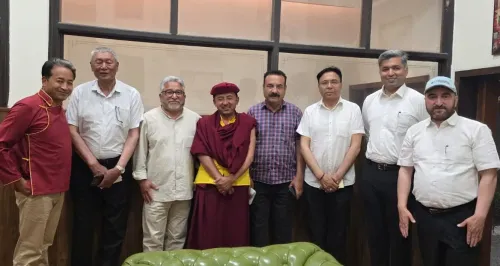
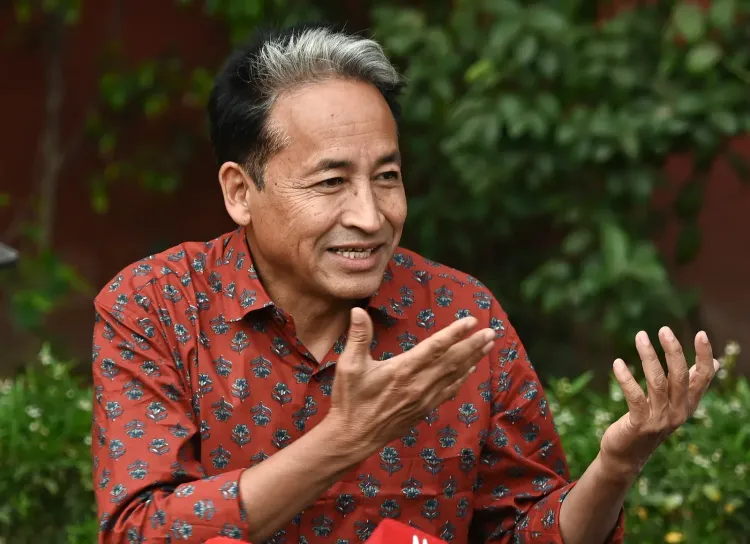
The Centre and representatives of the Ladakh Apex Body (LAB) and the Kargil Democratic Alliance (KDA) have reached an in-principle understanding that would grant the Union Territory an elected legislature with legislative, executive, and financial powers, an elected head with the status of a Chief Minister, and constitutional safeguards on the lines of Article 371. The breakthrough emerged from a Sub-Committee meeting held at the Union Ministry of Home Affairs (MHA) in New Delhi on 23 May, marking the most significant development in Ladakh's political status since it was carved out as a UT in 2019. Climate activist Sonam Wangchuk was among those present at the deliberations.
Key Developments from the MHA Meeting
Under the proposed framework, a UT-level legislative body will be established with legislative, executive, and financial authority vested in elected representatives. Crucially, all bureaucrats of the UT — including the Chief Secretary — will report to the elected executive head, who is proposed to be designated as the Chief Minister. A joint statement by Chering Dorjay Lakrook and Asgar Ali Karbalai, co-chairpersons of LAB and KDA respectively, confirmed that 'both sides have arrived at an in-principle understanding on several critical points.'
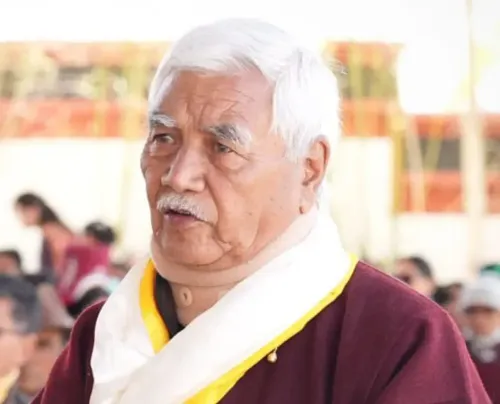
In addition to the UT-level legislature, seven district councils will be established across Ladakh — reflecting the MHA's recent expansion of the region's districts from two to seven. Each of the seven districts will have a Zila Parishad with appropriate autonomy, particularly in matters of culture and land, according to two-time Ladakh MP Thupstan Chhewang.
Article 371 Protections and the Statehood Question
The constitutional safeguards envisaged are modelled on Article 371 A, F, and G — provisions that currently apply to Nagaland, Sikkim, and Mizoram respectively — and will incorporate elements of the Sixth Schedule. The joint statement by LAB and KDA noted that both bodies 'look forward to closely working out the finer operational details with the MHA in consultations with legal and constitutional experts.'
On the question of full Statehood, the MHA reportedly explained that Ladakh currently lacks adequate revenue generation to meet revenue expenditure requirements such as employee salaries. However, the understanding is that this arrangement will serve as a pathway to full Statehood once Ladakh meets the revenue criteria, according to the joint statement.
What the Stakeholders Said
Thupstan Chhewang described the agreement as 'a historic step forward,' saying it secures Ladakh's status under Article 371, incorporates Sixth Schedule provisions, and provides meaningful financial and administrative empowerment to local institutions. He added that finer details will be worked out by the Home Ministry, with all stakeholders given the opportunity to submit written suggestions.
Bharatiya Janata Party (BJP) leader and former Chairman-cum-Chief Executive Councillor of the Leh Autonomous Hill Council, Tashi Gyalson, confirmed that the name, mode of elections, and other specifics of the UT-level legislative body will be decided through further stakeholder consultations. No timeline for implementation has been given by the MHA, though the Ministry assured it would act 'as early as possible,' according to sources.
Five Years of Agitation Behind the Breakthrough
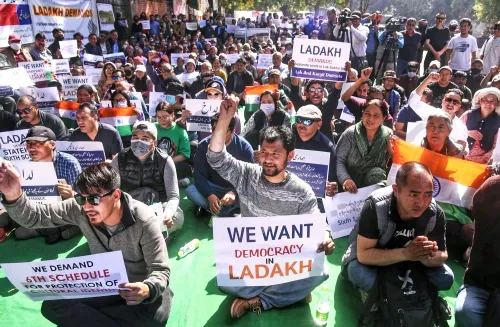
The LAB and KDA had been agitating for more than five years, demanding Statehood and Sixth Schedule status for Ladakh following its bifurcation from the erstwhile state of Jammu and Kashmir in August 2019. A series of MHA-level meetings — including a High Powered Committee (HPC) chaired by Union Minister of State for Home Nityanand Rai — had previously addressed issues of domicile and reservation. This in-principle agreement represents the first time a concrete governance architecture has been proposed in response to those demands.
The MHA is expected to prepare a draft framework for the UT-level legislative body, incorporating suggestions from LAB and KDA, before moving toward implementation. How quickly that draft materialises will be closely watched by Ladakh's political leadership and civil society.
Point of View
But the absence of a timeline is a red flag — Ladakh's political leadership has heard assurances before. The revenue-generation threshold for statehood is a convenient escape clause that the Centre can invoke indefinitely, given that most small UTs and hill states depend heavily on central transfers. The Article 371 protections are meaningful, but their precise scope — especially on land and employment — will be decided in the fine print that legal and constitutional experts are yet to draft. The real test of this understanding will be whether a gazette notification follows within months or whether it joins the long list of political promises made at MHA conference tables that never reached Parliament.
NationPress
16 Sept 2026
Frequently Asked Questions
What did the Centre agree to give Ladakh in the 23 May MHA meeting?
The Centre reached an in-principle understanding with the Ladakh Apex Body and Kargil Democratic Alliance to grant Ladakh a UT-level legislature with legislative, executive, and financial powers, an elected Chief Minister who will have authority over all bureaucrats including the Chief Secretary, and constitutional safeguards modelled on Article 371 A, F, and G. Seven district-level Zila Parishads will also be established.
What are Article 371 protections and why do they matter for Ladakh?
Article 371 and its sub-clauses (A, F, G) grant special constitutional protections to states like Nagaland, Sikkim, and Mizoram — covering land rights, local employment, and cultural safeguards. For Ladakh, these protections would shield indigenous communities from demographic and cultural pressures, a key demand since the region became a UT in 2019.
Will Ladakh get full statehood?
Not immediately. The MHA explained that Ladakh currently lacks sufficient revenue generation to meet its own revenue expenditure, including employee salaries. The in-principle understanding frames the new UT-level legislative arrangement as a pathway to full statehood once Ladakh meets the revenue criteria, but no specific threshold or timeline has been announced.
When will the new governance framework for Ladakh be implemented?
No timeline has been set. The MHA is expected to prepare a draft framework incorporating suggestions from the LAB and KDA before implementation. Ministry officials assured stakeholders it would be done 'as early as possible,' but gave no specific date, according to sources familiar with the meeting.
Who attended the MHA Sub-Committee meeting on Ladakh?
The meeting was attended by senior MHA officers, UT administration officials, and leaders from both the LAB and KDA — including Thupstan Chhewang, MP Haji Hanifa Jan, Tashi Gyalson, Chering Dorjay Lakrook, Sonam Wangchuk, Dorjey Stanzin, Asgar Ali Karbalai, Sajjad Kargili, and Ghulam Rasool Nagvi, among others.