Ladakh financial powers shift to elected leaders, says Sonam Wangchuk
Synopsis
For the first time since Ladakh was carved out as a UT without a legislature in 2019, elected representatives will control 100% of its budget and have authority over the bureaucracy. The Centre-LAB-KDA understanding, confirmed by Sonam Wangchuk, stops short of full statehood but marks the most substantive shift in Ladakh's governance architecture in six years.
Key Takeaways
The Central government , Ladakh Apex Body (LAB) , and Kargil Democratic Alliance (KDA) reached an in-principle understanding on 23 May 2025 .
Ladakh will get a UT-level legislature , an elected chief minister with authority over the bureaucracy, and Article 371 protections.
Elected representatives will control 100% of Ladakh's budget , up from roughly 10% previously — with 90% formerly decided by the unelected Lieutenant Governor .
Sonam Wangchuk called the outcome 'progress in the right direction' but noted 'details are yet to be worked out.' Studies will be conducted to assess whether Ladakh has sufficient revenue to support full statehood — leaving that question open for future review.
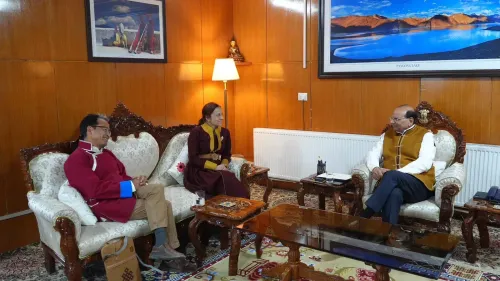
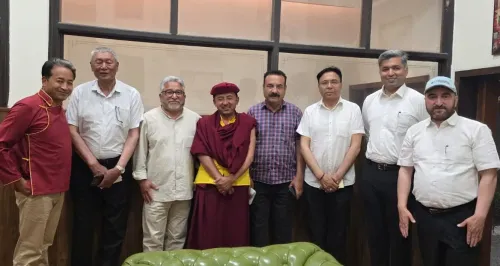
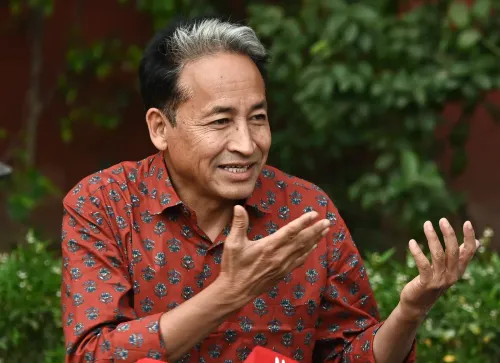
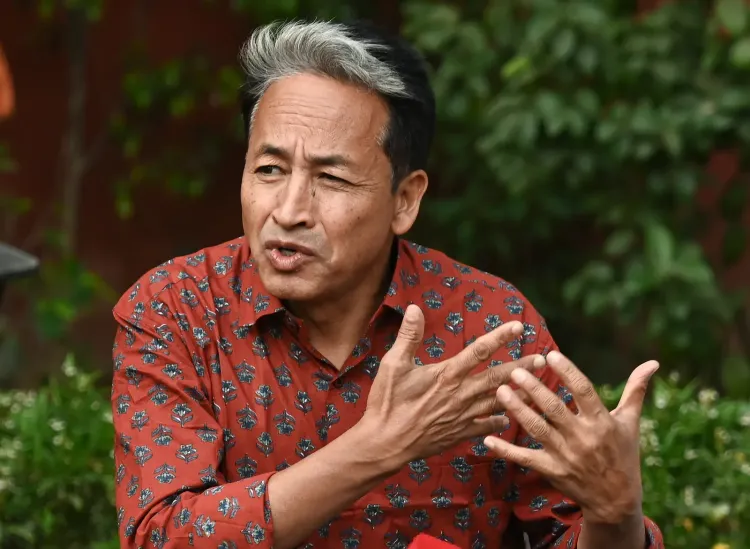
Climate activist and Ladakh rights campaigner Sonam Wangchuk on Saturday, 23 May confirmed that a landmark understanding between the Central government and representatives of the Ladakh Apex Body (LAB) and the Kargil Democratic Alliance (KDA) will transfer financial, executive, and law-making powers in the Union Territory (UT) of Ladakh to elected representatives — ending the near-total fiscal authority of the Lieutenant Governor (LG).
Key Terms of the Agreement
Under the understanding reached in principle, Ladakh will get a UT-level legislative assembly, an elected chief minister with control over the entire bureaucracy — including the chief secretary — and constitutional protections under Article 371 covering environment, land, culture, and natural resources. Wangchuk, who participated in the discussions, described the outcome as 'progress in the right direction', while cautioning that 'details are yet to be worked out.'
What Changes on Finances
The shift on fiscal authority is among the most consequential elements of the deal. Wangchuk noted that earlier, 90 per cent of Ladakh's budget was decided by the LG, who is an unelected appointee. Under the new arrangement, 100 per cent of the budget will flow to the elected legislative body. 'Financial, executive and law-making powers will rest with this legislative body,' he said.
The Centre's position, as relayed by Wangchuk, was that Ladakh currently lacks the revenue base to sustain full statehood expenses such as salaries and pensions independently, and that a state must generate its own resources before bearing those costs. This framing explains why the agreement stops short of full statehood for now.
Article 371 as a Safeguard
The inclusion of Article 371 protections is significant. Similar provisions exist for several northeastern states and Andhra Pradesh, shielding specific local interests from legislative override. For Ladakh — a high-altitude region with a fragile ecosystem and distinct tribal communities — these protections are intended to guard land rights, cultural identity, and environmental regulations from being diluted by future legislative action.
Statehood Question Remains Open
Wangchuk indicated that studies will be conducted to assess whether Ladakh genuinely lacks the fiscal capacity to support full statehood. 'If it does, then these things may change, but if it does not then this is the mechanism that we have worked out,' he said. This leaves the door open for a future renegotiation should Ladakh's revenue position improve — a point that LAB and KDA representatives are expected to monitor closely.
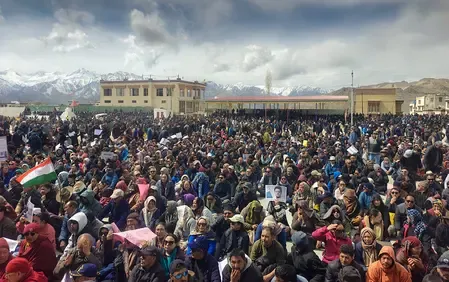
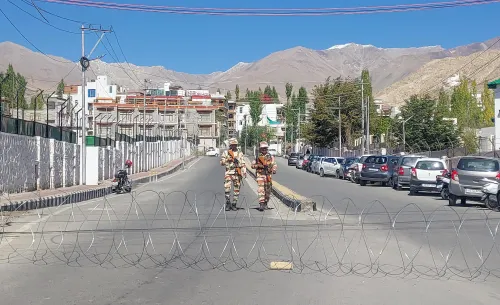
The agreement marks a significant shift from the status quo that followed Ladakh's bifurcation from Jammu and Kashmir in August 2019, when it was made a UT without a legislature. Demands for statehood and greater autonomy have since been a persistent flashpoint, with Wangchuk himself leading high-profile hunger strikes and public campaigns to press the Centre. Whether this in-principle understanding translates into enacted legislation will be the defining test of its durability.
Point of View
But it is not statehood — and that distinction matters. Ladakh has been governed without a legislature since 2019, an arrangement that critics consistently argued was constitutionally anomalous for a territory of its size and strategic sensitivity. The Centre's fiscal argument — that Ladakh cannot sustain its own salary bill — is worth scrutinising: Ladakh's budget is heavily defence- and tourism-dependent, and independent assessment of its revenue capacity has never been made public. The Article 371 peg is smart politics, giving Ladakh symbolic parity with protected northeastern states, but the real accountability test is whether the legislative body, once constituted, can actually override LG discretion in practice. Past UT arrangements have shown that constitutional text and administrative reality can diverge sharply.
NationPress
7 Oct 2026
Frequently Asked Questions
What did the Centre agree to give Ladakh in the new understanding?
The Centre agreed in principle to give Ladakh a UT-level legislative assembly, an elected chief minister with control over the bureaucracy, and constitutional protections under Article 371 for land, environment, culture, and natural resources. Elected representatives will also control 100% of the UT's budget, replacing the earlier arrangement where the Lieutenant Governor decided 90% of it.
Why has Ladakh not had an elected legislature since 2019?
When Ladakh was bifurcated from Jammu and Kashmir in August 2019, it was constituted as a Union Territory without a legislature — unlike Puducherry or Delhi, which have elected assemblies. This left governance largely in the hands of the centrally appointed Lieutenant Governor, a structure that LAB and KDA have long challenged.
What is the significance of Article 371 protections for Ladakh?
Article 371 provisions, used in several northeastern states and Andhra Pradesh, shield specific local interests — such as land rights, cultural identity, and environmental rules — from being overridden by ordinary legislation. For Ladakh, with its fragile high-altitude ecosystem and distinct tribal communities, these protections are intended to prevent future dilution of local safeguards.
Does this agreement mean Ladakh will get full statehood?
No. The agreement stops short of full statehood. The Centre's stated reason is that Ladakh currently lacks the revenue base to independently cover operational expenses like salaries and pensions. However, Sonam Wangchuk confirmed that studies will be conducted to assess Ladakh's actual fiscal capacity, leaving the statehood question open for future review.
Who is Sonam Wangchuk and what role did he play in these talks?
Sonam Wangchuk is a climate activist and social reformer from Ladakh who has been a leading voice in demanding statehood and greater autonomy for the region. He participated directly in the discussions with the Centre alongside representatives of the Ladakh Apex Body and Kargil Democratic Alliance, and has previously led hunger strikes to press these demands.