Lalan Singh Launches Livestock Insurance Portal in New Delhi

Synopsis
Union Minister Rajiv Ranjan Singh launched the Livestock Insurance Portal in New Delhi on September 29, 2026, bringing the Central Sector Livestock Insurance Scheme — active since 2005-06 — onto a digital platform to ease farmer enrollment and claims.
Key Takeaways
Union Minister Rajiv Ranjan Singh launched the Livestock Insurance Portal in New Delhi on September 29, 2026 .
The portal is anchored in the Central Sector Scheme on Livestock Insurance , first introduced in 2005-06 .
The scheme provides cover against animal death due to disease, accident, or natural calamity.
Key beneficiaries include livestock farmers and dairy cooperatives across rural India.
The portal is managed by the Department of Animal Husbandry and Dairying under the Union Ministry.
State-level rollout and farmer enrollment figures in coming months will determine the portal's real-world impact.
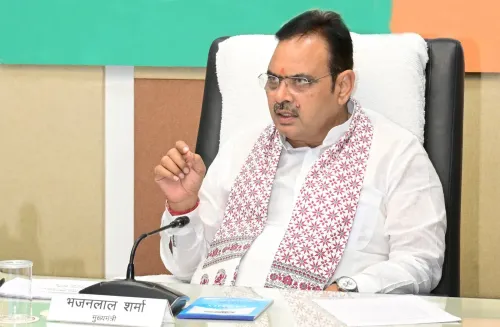
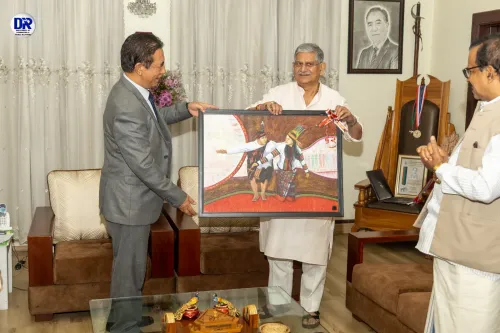
A digital bridge between India's livestock farmers and financial protection went live in New Delhi on Tuesday, September 29, 2026, as Union Minister of Panchayati Raj, Fisheries, Animal Husbandry and Dairying Rajiv Ranjan Singh launched the Livestock Insurance Portal — a move aimed at streamlining access to one of the government's oldest risk-cover schemes for animal rearers.
What the portal is built on: the 2005-06 scheme goes digital
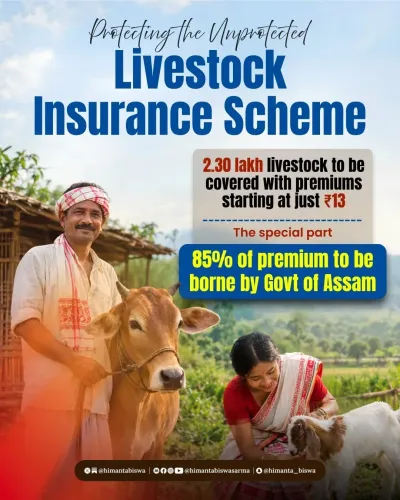
The portal rides on the backbone of the Central Sector Scheme on Livestock Insurance, first launched in 2005-06 to provide financial cover to farmers when animals die from disease, accident, or natural calamity. For two decades, that safety net existed — but delivery remained largely paper-driven and uneven. The new portal is the government's attempt to close that gap with a digital interface managed by the Department of Animal Husbandry and Dairying.
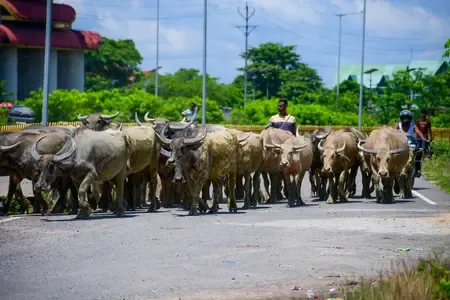
The broader logic mirrors what has already happened in crop insurance: centralise, digitise, and push the benefit directly to the farmer's fingertips. Livestock — cattle, buffalo, sheep, goats, and poultry — represents the primary livelihood asset for millions of rural households, particularly in states like Bihar, Rajasthan, Uttar Pradesh, and Madhya Pradesh. A single disease outbreak or flood can wipe out a family's only capital. Insurance, when it actually reaches them, changes that calculus.
Dairy cooperatives and farmers: who stands to gain
The immediate beneficiaries are livestock farmers and dairy cooperatives that aggregate smallholder producers. For cooperatives, a portal-based system means faster claim processing and better herd-level record-keeping — both of which feed into credit and procurement pipelines. For the individual farmer, enrollment and claim filing moving online reduces dependence on intermediaries who historically ate into both awareness and payouts.
The government's push to digitise allied-sector welfare is not isolated. It slots into a wider pattern of extending the digital-public-infrastructure model — already visible in direct benefit transfers and crop insurance portals — into animal husbandry, a sector that contributes significantly to agricultural GDP but has lagged in technology adoption.
What the rollout will actually test
The portal's real measure will be in the months ahead: how many states integrate it into their own livestock welfare machinery, how quickly farmer enrollment climbs, and whether claim settlement timelines actually shorten. State-level implementation has historically been the weak link in centrally sponsored livestock schemes — a strong digital front end still needs last-mile veterinary infrastructure and insurance company responsiveness to deliver on its promise.
Singh, a senior Janata Dal (United) leader from Bihar, has overseen the ministry through a period of heightened focus on non-crop agricultural income as a buffer against farm-distress cycles. The portal launch extends that focus into the digital domain.
Millions of Indian households rear animals not as a sideline but as their primary hedge against income volatility — the question now is whether a portal can turn a two-decade-old promise into a two-minute enrollment.
Point of View
Which has historically operated in the shadow of the larger crop-focused agriculture ministry, it signals a push to bring allied-sector farmers into the formal financial-protection net. The real political and policy test, however, lies downstream: Bihar and other livestock-heavy states will face scrutiny on enrollment velocity and claim settlement ratios. For Singh, a JD(U) leader from Bihar where livestock rearing is a key rural income source, the portal also carries an implicit constituency dividend.
NationPress
29 Sept 2026
Frequently Asked Questions
What is the Livestock Insurance Portal launched by Lalan Singh?
The Livestock Insurance Portal is a digital platform launched on September 29, 2026 by Union Minister Rajiv Ranjan Singh to streamline enrollment and claims under the Central Sector Scheme on Livestock Insurance , which covers animal deaths due to disease, accident, or natural calamity.
When was India's Central Sector Livestock Insurance Scheme first launched?
The Central Sector Scheme on Livestock Insurance was originally launched in 2005-06 to provide financial protection to farmers who rear livestock.
Who benefits from the Livestock Insurance Portal?
Livestock farmers and dairy cooperatives are the primary beneficiaries, gaining easier access to insurance cover and faster claim processing for cattle, buffalo, and other animals.
Which ministry manages the Livestock Insurance Portal?
The portal is managed by the Department of Animal Husbandry and Dairying under the Ministry of Fisheries, Animal Husbandry and Dairying , headed by Union Minister Rajiv Ranjan Singh.
What is Rajiv Ranjan Singh's political background?
Rajiv Ranjan Singh , popularly known as Lalan Singh, is a senior leader of the Janata Dal (United) from Bihar and currently serves as Union Minister of Panchayati Raj, Fisheries, Animal Husbandry and Dairying.