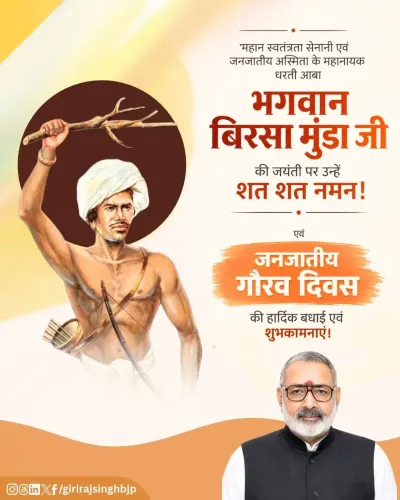
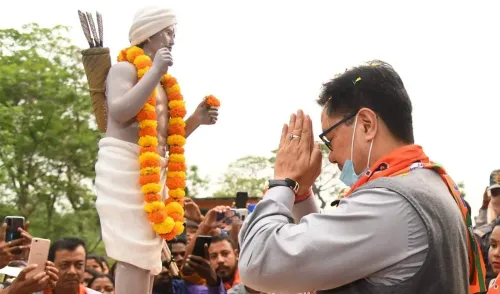
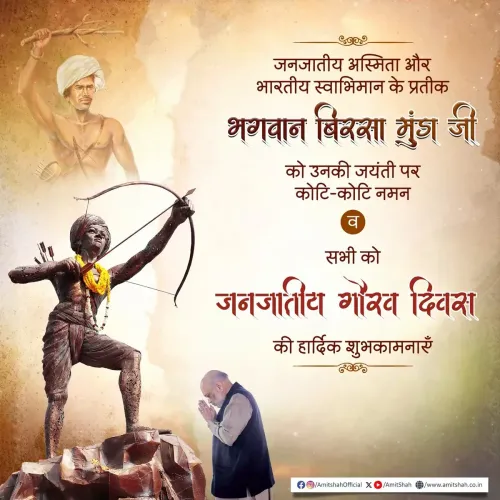
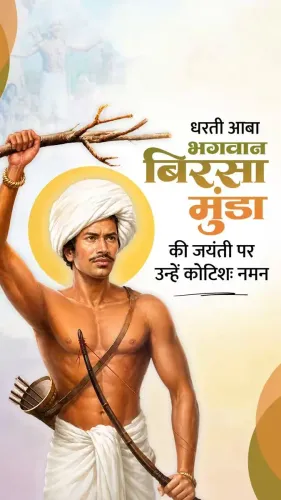
Lalan Singh pays tribute to Birsa Munda on Janjatiya Gaurav Divas
Synopsis
Union Minister Rajiv Ranjan Singh (Lalan Singh) marked Janjatiya Gaurav Divas on 15 November 2026 with a heartfelt tribute to Birsa Munda, honouring the tribal icon's courage and his enduring contribution to India's freedom movement and Adivasi identity.
Key Takeaways
Lalan Singh posted a tribute to Birsa Munda on X on 15 November 2026 , marking Janjatiya Gaurav Divas .
Birsa Munda , born 15 November 1875 , led the Ulgulan rebellion against British land-alienation policies in present-day Jharkhand .
He is revered as Dharti Aaba — 'Father of the Earth' — by tribal communities across eastern India.
The central government declared 15 November as Janjatiya Gaurav Divas in November 2021 to honour tribal contributions to India's freedom struggle.
Birsa Munda's portrait hangs in the Central Hall of Parliament , marking his stature in the national memory.
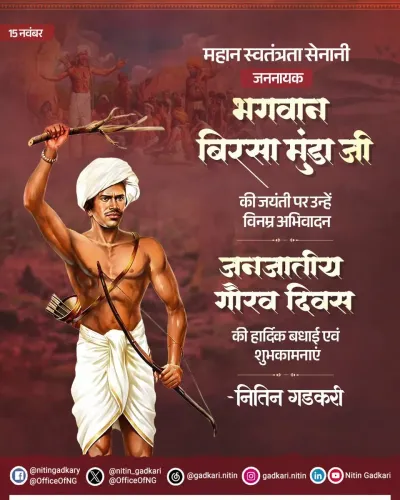
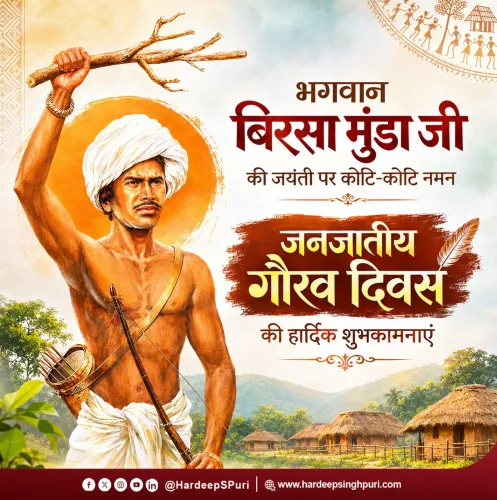
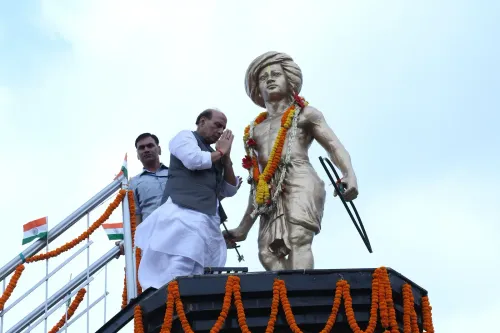
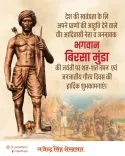
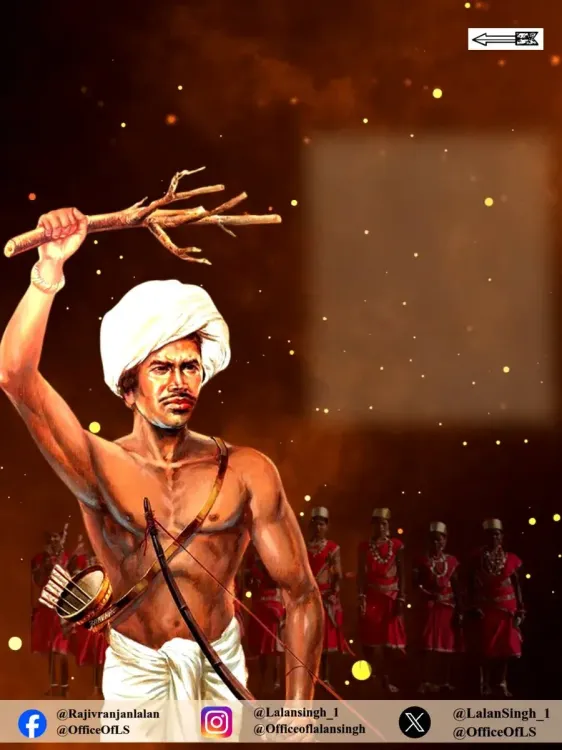
On the birth anniversary of Birsa Munda — the 19th-century tribal icon revered across eastern India as Dharti Aaba, 'Father of the Earth' — Union Panchayati Raj and Fisheries Minister Rajiv Ranjan Singh offered a solemn tribute, calling the freedom fighter's courage and sacrifice an eternal source of inspiration for the nation on Janjatiya Gaurav Divas, 15 November 2026.
Posting on X in Hindi, Lalan Singh extended greetings to all citizens and bowed to Birsa Munda's legacy with the words: 'The indomitable courage, struggle, and contribution of Dharti Aaba to tribal identity will forever inspire the nation.' The message channelled the deep reverence that tribal communities across Jharkhand, Odisha, and Bengal hold for the Munda community's most celebrated son.
Who was Birsa Munda — and why 15 November matters
Birsa Munda was born on 15 November 1875 in the Ulihatu village of present-day Jharkhand. At a time when British land-alienation policies were stripping tribal communities of their forests and livelihoods, Munda rose to lead the Ulgulan — 'The Great Tumult' — a mass rebellion that made the colonial administration sit up and take notice. He died in Ranchi Jail in June 1900, aged just 25, but left behind a movement that shaped tribal land rights for generations.
The honorific Dharti Aaba, meaning 'Father of the Earth', speaks to his status not merely as a rebel but as a spiritual and cultural anchor for Adivasi identity. His portrait hangs in the Central Hall of Parliament — a rare honour that underscores his place in India's national memory.
From declaration to annual observance: how Janjatiya Gaurav Divas was born
In November 2021, the central government formally declared 15 November as Janjatiya Gaurav Divas — National Tribal Pride Day — to institutionalise the commemoration of Birsa Munda's birth anniversary and to place tribal contributions to India's freedom struggle at the centre of the national calendar. The move was widely seen as an effort to weave Adivasi icons more firmly into the mainstream narrative of India's independence movement.
Each year the day draws state-level events, announcements tied to tribal welfare programmes, and political messaging that reflects just how central Adivasi identity has become to the broader conversation about inclusion and development. With the winter session of Parliament approaching, watchers expect fresh references to Birsa Munda-linked commemorations from the floor of both Houses.
Birsa Munda did not live to see independence. But on every 15 November, the nation pauses to reckon with how much it owes to those who fought before the cameras, the microphones — and the history books — arrived.
Point of View
Multi-year political project to mainstream Adivasi icons in India's national narrative — one that began with the formal institution of Janjatiya Gaurav Divas in 2021. For the JD(U), a party rooted in Bihar and deeply attentive to the Munda-dominated belt that straddles Bihar and Jharkhand, such messaging carries both cultural sincerity and electoral weight. The annual repetition of this observance is quietly cementing tribal identity as a first-order political concern rather than a footnote to the mainstream freedom-movement story. As the winter session of Parliament nears, expect this symbolic investment to translate into substantive debates on tribal welfare delivery.
NationPress
15 Nov 2026
Frequently Asked Questions
What is Janjatiya Gaurav Divas and when is it celebrated?
Janjatiya Gaurav Divas, or National Tribal Pride Day, is observed every year on 15 November to mark the birth anniversary of tribal icon Birsa Munda . The central government formally declared the day in November 2021 .
Who was Birsa Munda?
Birsa Munda was a 19th-century tribal leader from the Munda community in present-day Jharkhand who led the Ulgulan rebellion against British colonial land-alienation policies. Born on 15 November 1875 , he died in Ranchi Jail in June 1900 at the age of 25.
What does 'Dharti Aaba' mean?
Dharti Aaba is a revered honorific for Birsa Munda meaning 'Father of the Earth' in tribal parlance, reflecting his status as a spiritual and cultural anchor for Adivasi communities across eastern India.
What did Lalan Singh say on Janjatiya Gaurav Divas 2026?
Union Minister Lalan Singh posted a tribute in Hindi extending greetings to all citizens and saluting Birsa Munda's 'indomitable courage, struggle, and contribution to tribal identity,' calling it an eternal source of inspiration for the nation.
Why was Janjatiya Gaurav Divas instituted?
The day was instituted in November 2021 to highlight tribal contributions to India's freedom movement, integrate Adivasi icons into the national narrative, and signal the government's attention to tribal identity and development concerns.