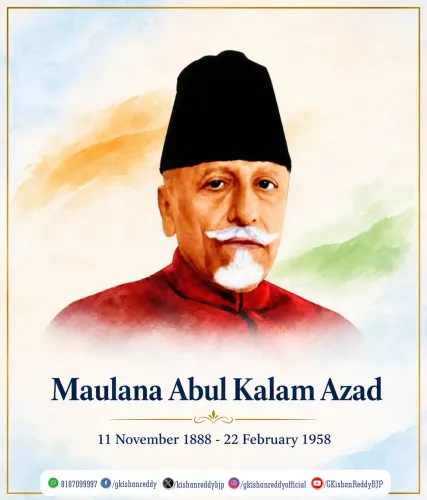
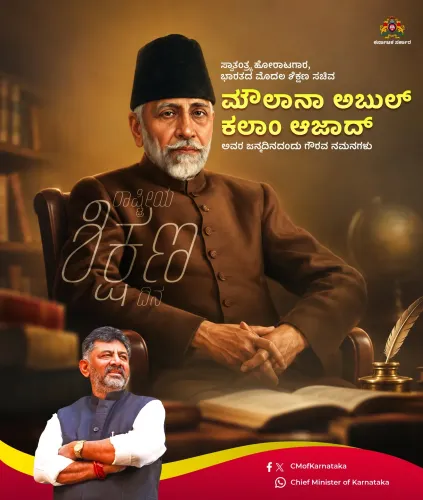
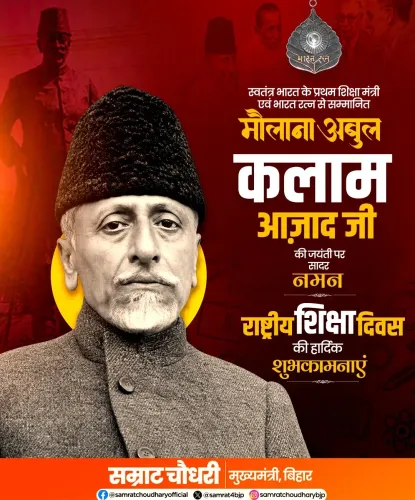
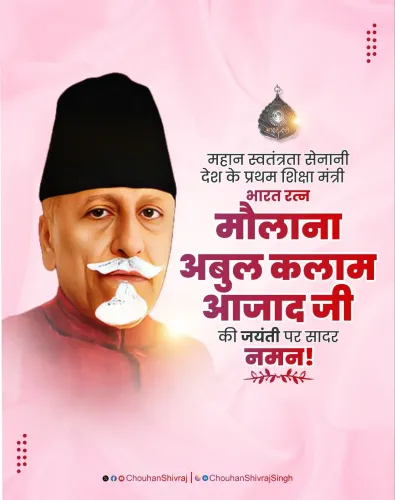
Maulana Abul Kalam Azad birth anniversary: Om Birla, leaders pay tribute
Synopsis
India marked the 138th birth anniversary of Maulana Abul Kalam Azad — freedom fighter, scholar, and the nation's first Education Minister — with cross-party tributes at Samvidhan Sadan. Azad's fingerprints remain on some of India's most consequential institutions: IIT Kharagpur, the UGC, and the Indian Institute of Science, all shaped under his tenure between 1947 and 1958.
Key Takeaways
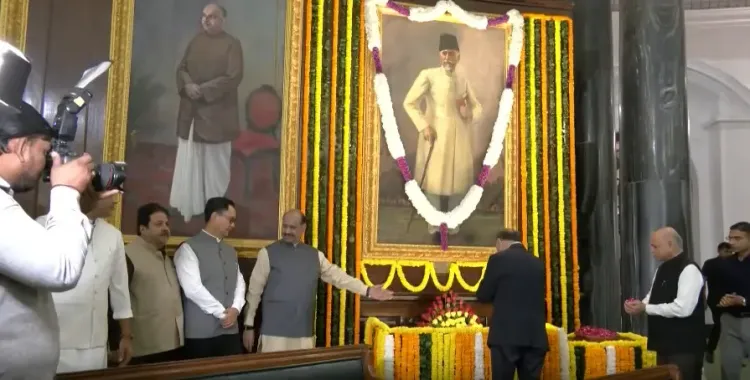
Lok Sabha Speaker Om Birla , Minister Kiren Rijiju , and Congress MP Imran Pratapgarhi paid floral tributes at Samvidhan Sadan on 11 November 2026 .
Maulana Abul Kalam Azad was born on 11 November 1888 in Mecca and served as India's first Education Minister from 1947 to 1958 .
He was posthumously awarded the Bharat Ratna in 1992 , nearly 34 years after his death on 22 February 1958 .
Azad founded the first IIT at Kharagpur in 1951 and helped establish the University Grants Commission in 1953 .
11 November is observed as National Education Day across India in his honour.
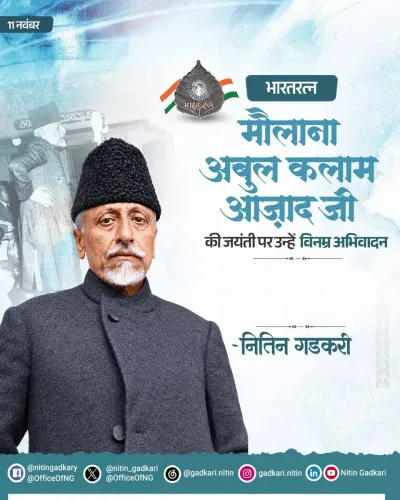
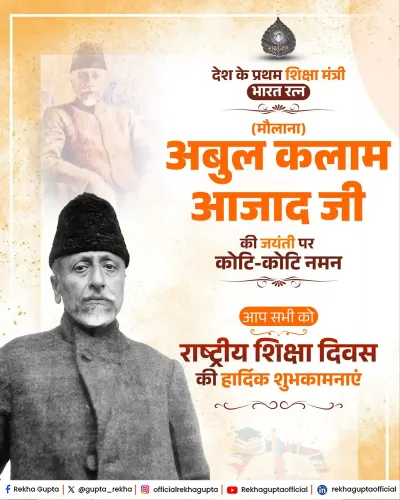
Lok Sabha Speaker Om Birla, Union Parliamentary Affairs Minister Kiren Rijiju, Congress MP Imran Pratapgarhi, and several other prominent political leaders on Wednesday, 11 November 2026, paid floral tributes to Maulana Abul Kalam Azad on his birth anniversary at the Central Hall of Samvidhan Sadan, New Delhi. The event marked the 138th birth anniversary of India's first Education Minister and Bharat Ratna recipient.
What Leaders Said
Remembering Azad as a towering figure in India's independence movement, Birla described him as a 'distinguished educationist, scholar and a key figure in the country's freedom movement.' In a post on social media, the Speaker said: 'Heartfelt tributes on the birth anniversary of Bharat Ratna Maulana Abul Kalam Azad, a valiant warrior of the freedom struggle, a great educationist and independent India's first Education Minister.'
Birla added: 'Today, floral tributes were offered in the Central Hall of the Constitution House to commemorate his unparalleled contribution to nation-building, education and social harmony. His ideas and ideals will forever continue to light the nation's path.'
Who Was Maulana Abul Kalam Azad
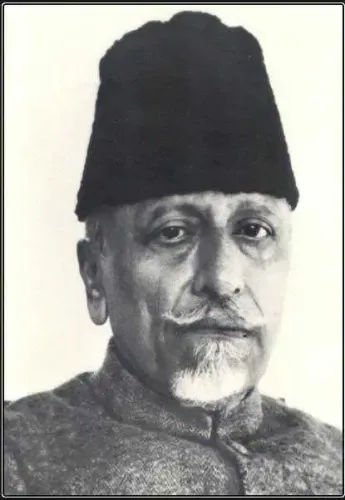
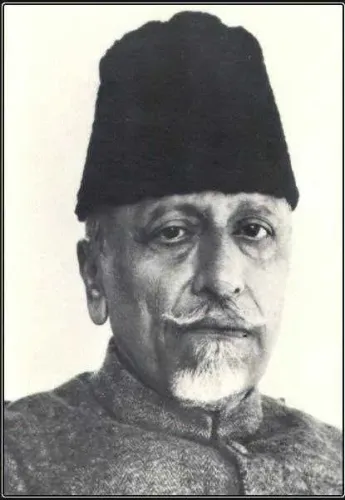
Born on 11 November 1888 in Mecca, Azad came from a family of distinguished Islamic scholars. His father, Maulana Khairuddin, was a Bengali Muslim of Afghan origin, while his mother was Arab. His forefathers had migrated from Herat in present-day Afghanistan during the Mughal period. Azad was proficient in multiple languages — Arabic, English, Urdu, Hindi, Persian, and Bengali — and earned wide recognition as a scholar, poet, and journalist long before Independence.
Following Independence, Azad served as India's first Education Minister in Prime Minister Jawaharlal Nehru's Cabinet from 1947 until his death in 1958. He was posthumously awarded the Bharat Ratna in 1992, nearly three decades after he died of a stroke on 22 February 1958.
Azad's Lasting Impact on Indian Education
Azad's educational philosophy centred on universal and compulsory basic education, arguing that access to elementary schooling was the birthright of every citizen and that financial constraints must not limit the reach of primary education. His vision extended to adult education, secondary and higher learning, technical and scientific training, and the promotion of arts and culture.
Among his most enduring institutional contributions was the establishment of the first Indian Institute of Technology (IIT) at Kharagpur in 1951. He also played a central role in setting up the University Grants Commission (UGC) in 1953, which became a statutory body in 1956 to coordinate university education and maintain academic standards. Additionally, Azad supported the expansion of the Indian Institute of Science in Bengaluru and helped establish the Central Institute of Education at Delhi University to strengthen teacher training and educational research.
Cross-Party Acknowledgement
The gathering at Samvidhan Sadan was notable for its cross-party representation, with leaders from both the ruling Bharatiya Janata Party (BJP) and the opposition Indian National Congress joining the ceremony. This comes amid an era when Azad's legacy — particularly his advocacy for Hindu-Muslim unity during the freedom movement — holds continued resonance in national discourse. Notably, the anniversary also coincides with National Education Day, observed annually on 11 November in his honour.
As India's institutions mark another year of his birth, Azad's foundational role in building the country's scientific and academic infrastructure remains a benchmark against which contemporary education policy is frequently measured.
Point of View
But Azad's legacy demands more than ceremonial remembrance. He built the scaffolding of modern Indian education — IIT Kharagpur, the UGC, the Central Institute of Education — in just eleven years, often against fiscal and political headwinds. India's higher education system still carries his institutional DNA, yet his core conviction — that elementary education is every child's birthright — remains unfinished business decades later. Cross-party consensus on his memory is easy; honouring his philosophy through policy is the harder ask.
NationPress
11 Nov 2026
Frequently Asked Questions
Why is 11 November celebrated as National Education Day in India?
11 November is observed as National Education Day to mark the birth anniversary of Maulana Abul Kalam Azad, India's first Education Minister, who was born on this day in 1888. The government designated the date in his honour to recognise his foundational contributions to India's education system.
What were Maulana Abul Kalam Azad's major contributions to Indian education?
Azad established the first Indian Institute of Technology at Kharagpur in 1951 and set up the University Grants Commission in 1953, which became a statutory body in 1956. He also supported the expansion of the Indian Institute of Science in Bengaluru and helped create the Central Institute of Education at Delhi University for teacher training.
When did Maulana Abul Kalam Azad serve as Education Minister?
Azad served as India's first Education Minister from 1947 until his death on 22 February 1958, spanning the entire first decade of independent India. He held the portfolio in Prime Minister Jawaharlal Nehru's Cabinet throughout that period.
When was Maulana Abul Kalam Azad awarded the Bharat Ratna?
Azad was posthumously awarded the Bharat Ratna in 1992, more than three decades after his death. He remains one of the few individuals honoured with India's highest civilian award posthumously.
Who attended the tribute ceremony for Maulana Azad on 11 November 2026?
Lok Sabha Speaker Om Birla, Union Parliamentary Affairs Minister Kiren Rijiju, and Congress MP Imran Pratapgarhi were among the prominent leaders who paid floral tributes at the Central Hall of Samvidhan Sadan in New Delhi on 11 November 2026.