Left unions demand CEC Gyanesh Kumar's resignation, protesters detained in Delhi
Synopsis
On Gandhi Jayanti, thousands of Left activists descended on New Delhi demanding CEC Gyanesh Kumar's resignation, alleging 13 crore voters were illegally deleted under his watch. Police denied permission and detained several protesters — but the INDIA bloc has already announced a bigger MP march on 6 October and a national rally on 1 November, signalling a sustained escalation.
Key Takeaways
Left student unions SFI and DYFI , along with civil society groups, staged protests in New Delhi on 2 October demanding CEC Gyanesh Kumar's resignation.
CPI-M General Secretary M.A.
Baby called it the 'biggest mobilisation in Delhi today,' with activists arriving from across the country.
CPI-M leader Brinda Karat alleged nearly 13 crore voters were 'illegally deleted' under Gyanesh Kumar's leadership and demanded an end to the Special Intensive Revision (SIR) of electoral rolls.
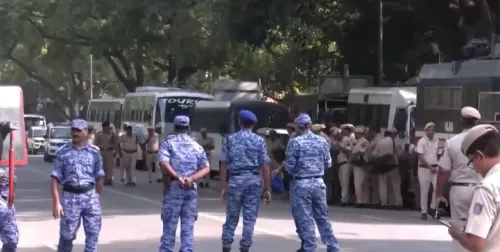
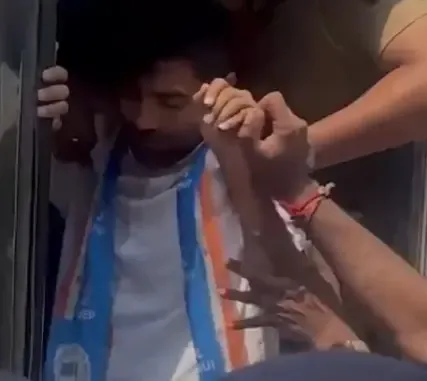
Delhi Police imposed prohibitory orders under Section 163 of the BNSS, 2023 at Jantar Mantar; several protesters were detained after permission was denied.
The INDIA bloc has announced an MP march on 6 October and a national rally on 1 November as part of a wider escalation.
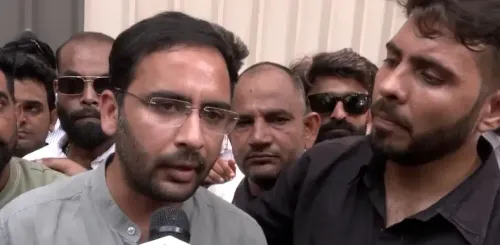
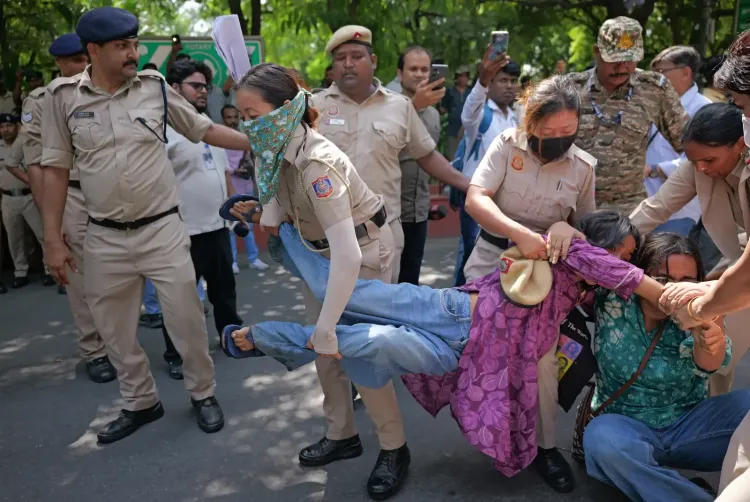
Left student unions and several civil society organisations staged large-scale protests in New Delhi on Friday, 2 October — Gandhi Jayanti — demanding the resignation of Chief Election Commissioner (CEC) Gyanesh Kumar, with police detaining several demonstrators after denying permission for the gathering at Jantar Mantar.
Scale of the Mobilisation
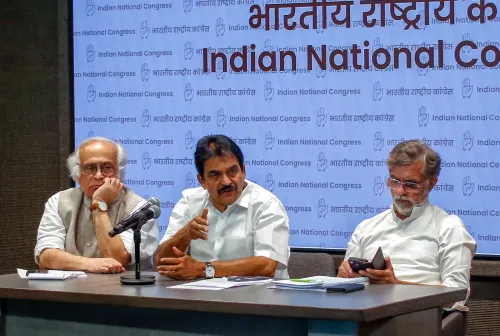
Communist Party of India (Marxist) [CPI-M] General Secretary M.A. Baby said thousands of youth and student activists from the party-affiliated Students' Federation of India (SFI) and Democratic Youth Federation of India (DYFI) had arrived in Delhi from across the country. Baby described it as 'the biggest mobilisation in Delhi today,' adding that activists had come to 'strongly register their demand that Gyanesh Kumar, who has been nakedly violating all existing rules of the functioning of the Election Commission, should be removed.'
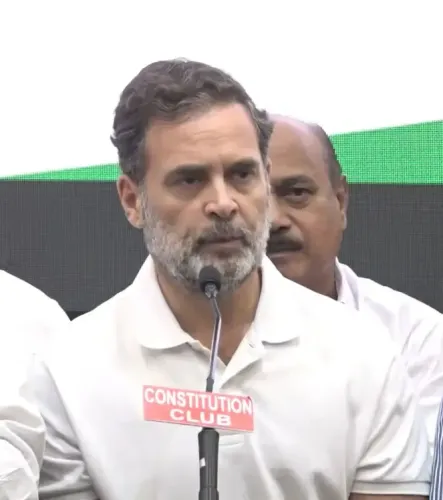
He also outlined a broader escalation plan: an INDIA bloc rally scheduled for 1 November, and a march by INDIA bloc MPs and others on 6 October. 'As he is not resigning, we will continue to protest,' Baby said.
What Protesters Are Alleging
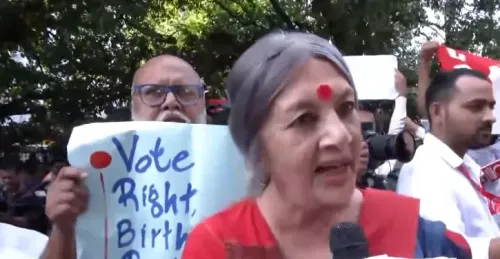
CPI-M leader Brinda Karat alleged that the Election Commission's actions had undermined voting rights, specifically claiming that nearly 13 crore voters had been 'illegally deleted' under Gyanesh Kumar's leadership. She demanded an immediate end to the Special Intensive Revision (SIR) of electoral rolls, describing it as a threat to democratic participation. Invoking the occasion, Karat said: 'On Gandhi Jayanti, we are pledging to defend the principles for which Gandhi ji fought, and one of those rights is the equal right to vote.'
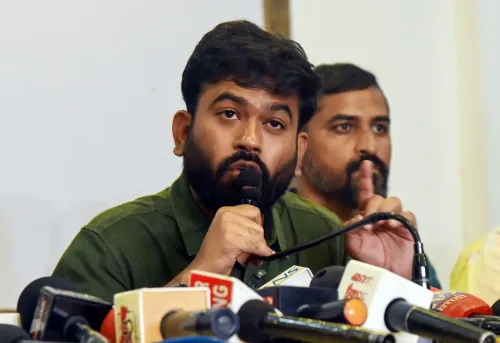
Rajya Sabha member A.A. Rahim said Delhi Police's denial of permission had forced protesters to proceed without authorisation. 'We will not surrender to authoritarianism. Peaceful protests are our right; how can they prevent us?' Rahim said, pledging to continue the fight to 'safeguard the Indian Constitution.'
Police Restrictions and Detentions
Delhi Police had imposed prohibitory orders under Section 163 of the Bharatiya Nagarik Suraksha Sanhita (BNSS), 2023 in the Jantar Mantar area. The orders prohibit public gatherings or assemblies of five or more people, processions, demonstrations, picketing, and dharnas without prior written permission, and also restrict sloganeering and speeches without prior approval.
Despite the restrictions, a large number of protesters gathered, and several were detained after police denied permission for the demonstration. Karat responded sharply to the detentions: 'What is detention? Detention versus deletion,' drawing a pointed comparison between the curbing of protesters and the alleged removal of voters from electoral rolls. 'We don't require permission to defend democracy,' she added.
Context: The SIR Controversy
The protests centre on the Election Commission's ongoing Special Intensive Revision (SIR) of electoral rolls, which the Left and several Opposition parties allege has resulted in the large-scale, arbitrary deletion of voter names. Critics argue the process disproportionately affects marginalised communities. This comes amid a broader Opposition campaign questioning the independence and functioning of the Election Commission under the current CEC. Notably, the timing of the protest — on Gandhi Jayanti — was a deliberate political signal, with speakers repeatedly invoking democratic rights and constitutional values.
What Happens Next
The INDIA bloc has announced that its MPs will march on 6 October, and a larger national rally is planned for 1 November. The protests are expected to intensify as the Opposition keeps pressure on the Election Commission over the SIR exercise and broader electoral roll concerns.
Point of View
Making it harder to dismiss as partisan noise. The allegation of 13 crore deleted voters, if substantiated, would be one of the most serious challenges to electoral integrity in recent memory; if not, it risks overstating the case and undermining legitimate concerns about the SIR process. What is notable is that the INDIA bloc is now institutionalising the protest into a parliamentary action on 6 October, shifting the theatre from the streets to Parliament. The Election Commission has not publicly responded to the specific deletion figures, and that silence is itself becoming part of the story.
NationPress
2 Oct 2026
Frequently Asked Questions
Why are Left unions demanding CEC Gyanesh Kumar's resignation?
Left unions and Opposition groups allege that Chief Election Commissioner Gyanesh Kumar has overseen the illegal deletion of nearly 13 crore voters from electoral rolls through the Special Intensive Revision (SIR) process and has violated the rules governing the Election Commission's functioning. They are demanding his resignation or removal and an immediate halt to the SIR exercise.
What is the Special Intensive Revision (SIR) of electoral rolls?
The Special Intensive Revision (SIR) is an Election Commission exercise to update and clean up voter rolls across constituencies. Critics, including the CPI-M and other Opposition parties, allege that the ongoing SIR round has resulted in the large-scale and arbitrary deletion of legitimate voter names, disproportionately affecting marginalised communities.
What action did Delhi Police take against protesters on 2 October?
Delhi Police imposed prohibitory orders under Section 163 of the Bharatiya Nagarik Suraksha Sanhita (BNSS), 2023, banning gatherings of five or more people at Jantar Mantar without prior permission. After denying permission for the demonstration, police detained several protesters who had gathered at the site.
What protests has the INDIA bloc planned next?
The INDIA bloc has announced that its MPs and others will march on 6 October as a follow-up to the 2 October protest. A larger national rally is scheduled for 1 November. CPI-M General Secretary M.A. Baby has said the campaign will continue until Gyanesh Kumar resigns or is removed.
Who participated in the 2 October protest in New Delhi?
The protest was led by CPI-M-affiliated student and youth bodies — the Students' Federation of India (SFI) and Democratic Youth Federation of India (DYFI) — along with members of other Left organisations and civil society groups. Senior leaders including CPI-M General Secretary M.A. Baby, Brinda Karat, and Rajya Sabha member A.A. Rahim were present.