Karnataka to submit ethanol blending documents to Centre, warns of legal action
Synopsis
Karnataka says petrol at six fuel terminals contained ethanol as high as 31.2% — well above the legal 20% cap — and is now escalating to the Union Petroleum Ministry with documents, a media release of evidence, and a threat of legal action if the Centre doesn't act. Oil majors IOC, BPCL, and HPCL have flatly denied the findings, setting up a direct Centre-state confrontation over fuel quality.
Key Takeaways
Karnataka Minister Rizwan Arshad announced on 16 November 2026 that all evidence on alleged excess ethanol blending will be submitted to the Union Petroleum Ministry .
NABL-accredited lab tests reportedly found ethanol levels between 26% and 31.2% at several petrol outlets — against the prescribed E20 (20%) limit .
Alleged irregularities span six fuel terminals in Karnataka; the state claims excess blending originates at terminal blending points, not retail pumps.
IOC , BPCL , and HPCL rejected the findings, citing nationwide tests on 893 samples — including 56 from Karnataka — that showed compliance with Bureau of Indian Standards limits.
Kumaraswamy called for transparent investigation but questioned the need for Congress protests before facts are established.
Karnataka says it will wait for the Centre's response before deciding whether to initiate independent legal proceedings.
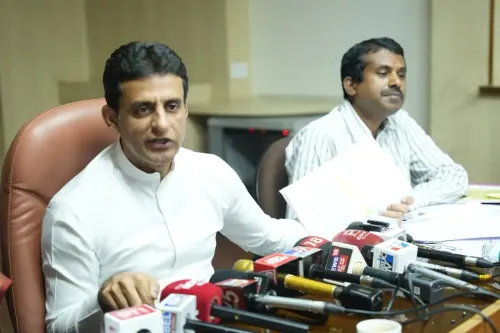
Karnataka's Minister for Food, Civil Supplies and Consumer Affairs, Rizwan Arshad, on 16 November 2026 announced that the state government will hand over all documents, certificates, and reports related to alleged excess ethanol blending at six fuel terminals in Karnataka to the Union Petroleum Ministry. The minister warned that if the Centre failed to initiate appropriate action, the state was prepared to pursue legal proceedings.
What Karnataka Has Found
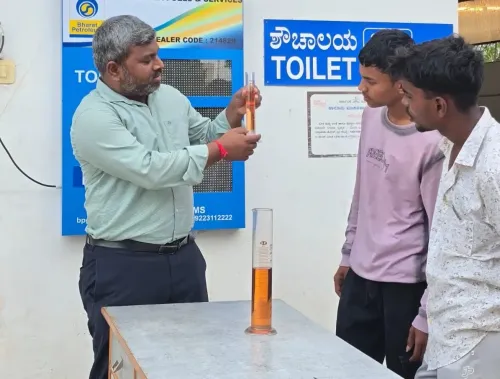
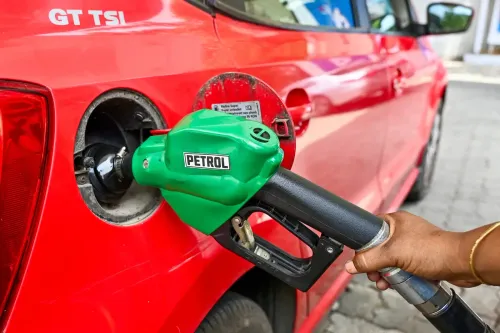
Tests conducted through National Accreditation Board for Testing and Calibration Laboratories (NABL)-accredited independent labs reportedly showed ethanol levels ranging between 26% and 31.2% across several petrol outlets in the state. This is significantly above the prescribed E20 (20%) limit mandated by the government. The state alleges that excess blending originates at terminal blending points rather than at individual retail pumps, potentially damaging older vehicle engines and reducing fuel mileage without offering consumers any price relief.
What the Minister Said
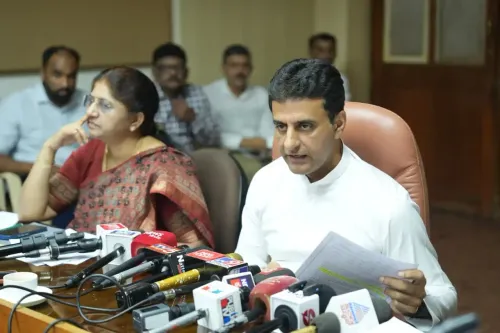
'We will submit all the certificates, reports and documents available with us to the Union Petroleum Ministry tomorrow. All the documents being sent to the Centre will also be released to the media,' Arshad stated while addressing reporters. He added that the state government had already sought legal opinion on initiating action and had consulted both experts and officials. 'We will wait for some time. If they say they will take action, it is fine. Otherwise, we have also sought the state government's opinion on initiating legal action,' he said.
Centre's Response and Kumaraswamy's Remarks
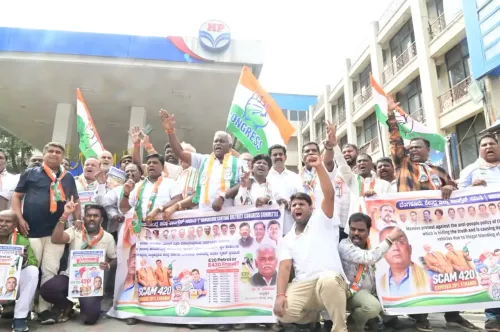
Union Minister for Heavy Industries and Steel H.D. Kumaraswamy, commenting on the controversy from Udupi, said the matter could be resolved if facts were presented transparently. Referring to allegations raised by Congress leaders, Kumaraswamy acknowledged that the state was claiming oil companies were blending a higher proportion of ethanol than officially declared. 'This allegation needs to be investigated, and those responsible must clarify the facts. If the truth is presented, the matter will end there. What is the need for the Congress to stage dharnas or protests?' he said.
Oil Companies Push Back
State-run fuel majors Indian Oil Corporation (IOC), Bharat Petroleum (BPCL), and Hindustan Petroleum (HPCL) have strongly rejected the state's findings. The oil marketing companies (OMCs) stated that their nationwide tests — covering 893 samples, including 56 from Karnataka — complied with Bureau of Indian Standards (IS 17021) limits of between 19% and 21%. The contradictory test results have deepened the standoff between the state government and Central public sector undertakings.
What Happens Next
Karnataka has indicated it will await the Centre's response after submitting the evidence before deciding on its next course of action, including whether to pursue independent legal proceedings. This dispute marks a significant escalation in Centre-state tensions over fuel quality regulation, and the outcome could set a precedent for how state governments challenge OMC blending practices across the country.
Point of View
A confrontation Indian federalism rarely produces in the energy sector. The 10-percentage-point gap between the state's lab findings (up to 31.2%) and the OMCs' declared compliance band (19–21%) is too wide to attribute to routine measurement variance — one side's data is significantly off, and the Centre's handling of the evidence submission will reveal which side it backs. For consumers, the stakes are concrete: excess ethanol at these concentrations can degrade rubber seals and reduce mileage in older vehicles without any price offset. If Karnataka's findings hold, the blending enforcement framework under E20 is demonstrably porous — a policy problem that extends well beyond this state.
NationPress
16 Nov 2026
Frequently Asked Questions
What is the ethanol blending controversy in Karnataka?
The Karnataka government has alleged that petrol at six fuel terminals in the state contains ethanol levels as high as 31.2%, well above the government-mandated E20 (20%) limit. NABL-accredited independent lab tests commissioned by the state reportedly found ethanol concentrations between 26% and 31.2% at several outlets.
What action is the Karnataka government taking?
Karnataka Minister Rizwan Arshad announced on 16 November 2026 that all documents, certificates, and reports related to the alleged irregularities will be submitted to the Union Petroleum Ministry and simultaneously released to the media. The state has also sought legal opinion and warned it may pursue independent legal action if the Centre does not respond appropriately.
How have oil companies responded to the allegations?
Indian Oil Corporation (IOC), Bharat Petroleum (BPCL), and Hindustan Petroleum (HPCL) have strongly rejected the Karnataka government's findings. The oil marketing companies said their own nationwide tests on 893 samples — including 56 from Karnataka — showed compliance with Bureau of Indian Standards (IS 17021) limits of 19% to 21% ethanol.
Why does excess ethanol blending matter for consumers?
Ethanol levels above the E20 limit can damage rubber seals and fuel system components in older vehicles and reduce fuel mileage. Consumers bear these costs without any corresponding reduction in petrol prices, making the alleged irregularity a direct financial and mechanical harm.
What did Union Minister H.D. Kumaraswamy say about the controversy?
Speaking in Udupi, Kumaraswamy said the matter could be resolved through transparent presentation of facts and called for concerned authorities to establish actual blending percentages before political protests were held. He acknowledged the allegation warranted investigation but questioned the need for Congress-led dharnas ahead of an official inquiry.