PSU OMCs reject Karnataka ethanol blending claims, cite 893 clean test results
Synopsis
India's three state-owned oil giants have pushed back hard against Karnataka allegations of rogue ethanol blending — presenting 893 test samples as proof of compliance and challenging the state government to a joint transparent verification. The move puts the burden of proof squarely back on those making the 26–31% blending claim.
Key Takeaways
IOCL , BPCL , and HPCL rejected Karnataka allegations of ethanol over-blending on 7 November 2026 .
All 893 samples tested across 27 states and Union Territories , including 56 from Karnataka , were found within the prescribed 19–21% ethanol range.
Allegations claimed blending at some Karnataka pumps reached 26–31% , above the E20 ceiling.
The three OMCs have sought joint and transparent testing with the Karnataka government to settle the dispute.
Fuel supplied by the companies conforms to the IS 17021 quality standard, with blending done via automated calibrated systems .
Shares of IOCL , BPCL , and HPCL ended higher on BSE , with IOCL gaining up to 1.61% to ₹146.10 .
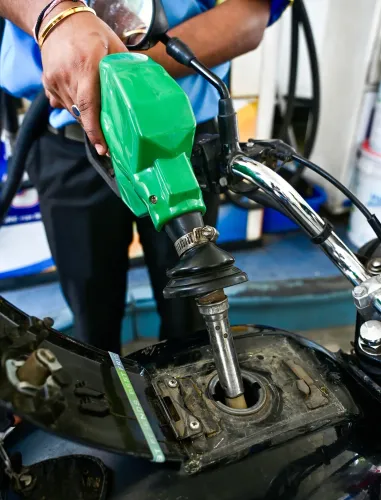
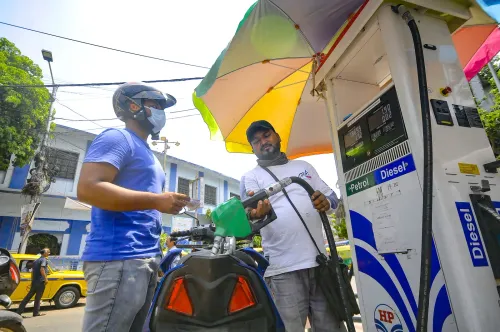
Public sector oil marketing companies (OMCs) — Indian Oil Corporation Ltd (IOCL), Bharat Petroleum Corporation Ltd (BPCL), and Hindustan Petroleum Corporation Ltd (HPCL) — have firmly rejected allegations of excessive ethanol blending in petrol at select retail outlets in Karnataka, asserting that tests conducted across 27 states and Union Territories found ethanol content strictly within the prescribed 19–21 per cent range. The joint rebuttal, issued on 7 November 2026, follows widespread consumer concern triggered by allegations of blending as high as 26–31 per cent at some pumps in the state.
What the Testing Found
All 893 samples tested across the country — including 56 drawn specifically from Karnataka — were found fully compliant with the prescribed ethanol blending limits, according to the three OMCs. The testing was carried out through officially prescribed procedures, the companies said, adding that ethanol blending at refineries and depots is performed via automated and calibrated systems, with fuel quality verified before supply to the market. The fuel supplied, they emphasised, conforms to the IS 17021 quality standard.
IOCL's Statement on X
Taking to the social media platform X, IOCL categorically stated: 'Recent claims of excessive ethanol blending at certain retail outlets in Karnataka are not supported by testing conducted through prescribed procedures.' The company reiterated its commitment to fuel quality, transparency, and customer trust, urging consumers to rely only on verified information from official sources. BPCL and HPCL echoed the position, with HPCL writing on X that all 893 samples tested across 27 states and Union Territories, including 56 from Karnataka, were found compliant with the prescribed 19–21% ethanol range.
Joint Testing Proposed with Karnataka Government
In a notable step toward resolution, IOCL said the three OMCs have collectively sought joint and transparent testing in coordination with the Karnataka government to establish the facts on record. This move signals that the companies are willing to subject their quality protocols to independent scrutiny — a significant concession in what has become a politically sensitive dispute. No response from the Karnataka government was immediately available.
Background: The Excessive Blending Allegations
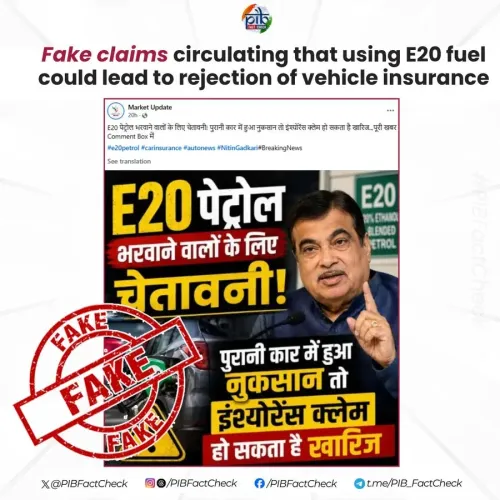
The controversy emerged from allegations that ethanol content at certain Karnataka petrol pumps was running between 26 and 31 per cent — well above the ceiling for E20 fuel, which is defined by a 20 per cent ethanol blend. E20 has been progressively rolled out under the Centre's national biofuel programme, with OMCs authorised to supply fuel in the 19–21 per cent tolerance band. Critics and consumer groups argue that over-blending can degrade engine performance, particularly in older vehicles not engineered for high-ethanol fuel. This is not the first time ethanol blending standards have come under scrutiny; similar concerns surfaced in other states during the initial E10-to-E20 transition.
Market Reaction
Shares of all three OMCs ended higher on the Bombay Stock Exchange (BSE) on the day of the clarification. IOCL gained up to 1.61 per cent to close at ₹146.10, while BPCL and HPCL ended at ₹319 and ₹386, respectively. Investors appeared to treat the coordinated rebuttal as a credibility signal, though the dispute remains unresolved pending joint testing outcomes.
The OMCs' proposal for joint verification with the Karnataka government is expected to be the next key development in this dispute, with the results likely to either settle or intensify the debate over ethanol blending compliance at the retail level.
Point of View
And the IS 17021 standard is internationally recognised — but it sidesteps a key question: were the retail outlets where complaints originated actually sampled? Centralised refinery and depot testing does not necessarily capture what happens between the depot and the pump nozzle. The proposal for joint testing with the Karnataka government is the right call, but its credibility will hinge on whether the sampling protocol is designed by a genuinely independent agency rather than by the OMCs themselves. If the state government declines or delays the joint process, that too is a data point worth scrutinising.
NationPress
7 Nov 2026
Frequently Asked Questions
What are the allegations about ethanol blending in Karnataka petrol pumps?
Allegations surfaced that some petrol retail outlets in Karnataka were blending ethanol at levels of 26–31 per cent — well above the prescribed E20 ceiling of 20 per cent. The claims raised concerns about potential engine damage, particularly for older vehicles not designed for high-ethanol fuel.
What did IOCL, BPCL, and HPCL find in their testing?
All three OMCs said 893 samples tested across 27 states and Union Territories — including 56 from Karnataka — were found compliant with the prescribed 19–21 per cent ethanol blending range. The tests were conducted under officially prescribed procedures.
What is E20 fuel and what is the prescribed ethanol limit?
E20 fuel refers to petrol blended with up to 20 per cent ethanol, rolled out under India's national biofuel programme. OMCs are authorised to supply fuel within a 19–21 per cent tolerance band, and the applicable quality standard is IS 17021.
What has IOCL proposed to resolve the Karnataka blending dispute?
IOCL, along with BPCL and HPCL, has sought joint and transparent testing in coordination with the Karnataka government to independently establish the facts. The outcome of this process is expected to be the next key development in the dispute.
How did PSU oil company shares react to the ethanol blending controversy?
Shares of all three OMCs ended higher on the BSE on 7 November 2026. IOCL gained up to 1.61 per cent, closing at ₹146.10, while BPCL ended at ₹319 and HPCL at ₹386, as investors responded positively to the coordinated rebuttal.