Is There a Strong Connection Between Land Use and Water Pollution in Manipur's Loktak Lake Catchment?
Synopsis
A groundbreaking study by Nagaland University uncovers alarming environmental threats to Loktak Lake in Manipur, revealing the profound impact of land use on water quality and local livelihoods. The research emphasizes urgent action needed for conservation.
Key Takeaways
Land use changes impact water quality in Loktak Lake.
Agricultural runoff is a major pollutant.
Community-based management is essential for restoration.
Natural vegetation plays a protective role in water quality.
Urgent action is needed to address ecological degradation.
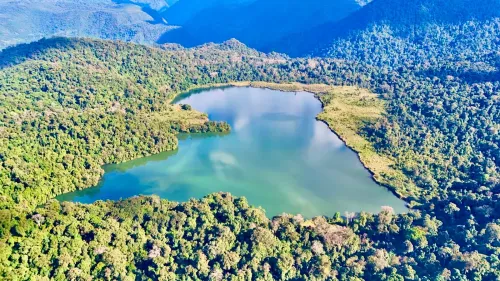
Kohima, Oct 27 (NationPress) A study conducted by Nagaland University has raised an environmental alarm for Loktak Lake in Manipur, recognized as one of India’s most significant freshwater ecosystems and classified as a 'Ramsar Site'.
An official from the university reported that researchers discovered that alterations in land use, especially in agriculture, settlements, and shifting cultivation, are significantly harming the water quality of the rivers that nourish the lake, endangering its biodiversity and the livelihoods of local populations.
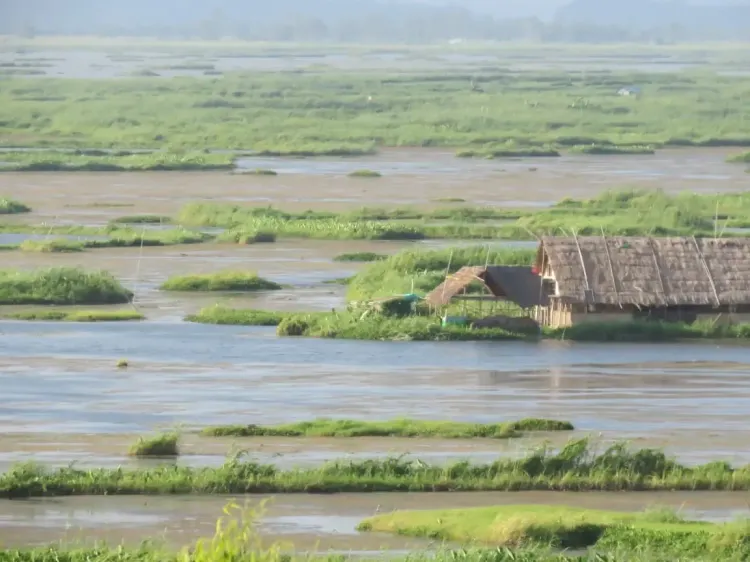
Situated in Manipur’s Bishnupur district, Loktak Lake is a habitat for 132 plant species and 428 animal species, and it supports hydropower, fisheries, transportation, and tourism. This lake was designated as a Ramsar site, acknowledging its international ecological importance under the Ramsar Convention on Wetlands, which was established in Iran in 1971. These sites are recognized for their ecological relevance, including supporting biodiversity and providing essential habitats for waterfowl.
However, over the past few decades, the lake has been included in the Montreux Record, a global cautionary list for wetlands suffering from severe ecological degradation.
Decreasing fish populations, escalating pollution levels, and increased sedimentation have emerged as significant concerns.
The research, led by Dr. Eliza Khwairakpam from Nagaland University, has been published in international journals.
To investigate the underlying causes, researchers from Nagaland University performed field sampling across nine major rivers—Khuga, Western, Nambul, Imphal, Kongba, Iril, Thoubal, Heirok, and Sekmai—that flow into Loktak Lake.
Employing detailed Land Use Land Cover (LULC) maps, Dr. Khwairakpam evaluated various types of land activities, including agricultural regions, dense and degraded forests, settlements, ‘Jhum’ cultivation (a slash and burn farming method), and water bodies, against water quality indicators like dissolved oxygen (DO), biological oxygen demand (BOD), and temperature.
Dr. Khwairakpam, Assistant Professor in the Department of Environmental Science, elaborated on the key findings: "Our research confirms that land use choices in villages and forested landscapes upstream are directly impacting water quality downstream. This underscores the need for community-based land management and stricter regulations on agricultural runoff and waste disposal to rejuvenate Loktak Lake."
Moreover, she emphasized that land management is not merely an environmental issue but also a strategy for protecting the livelihoods of the people of Manipur. Comprehensive land regulation across the catchment, sustainable agricultural practices, and controlled Jhum cycles are essential for safeguarding India’s only floating national park and the endangered Sangai deer habitat within the lake.
The study identified the Nambul River as the most polluted, exhibiting low oxygen levels and high organic contamination, directly associated with 47 percent agricultural land and 11 percent settlement areas in its sub-catchment. The Khuga River displayed the second poorest water quality, despite having more forest cover. Researchers attribute this to extensive Jhum (shifting) cultivation, which constituted 42 percent in the area.
Conversely, rivers like Iril and Thoubal, flowing through predominantly forested landscapes, demonstrated better water quality, highlighting the protective role of natural vegetation.
This research was supported by the Manipur government’s Forest Department, which provided LULC maps, and assistance from the Manipur Pollution Control Board for fieldwork. The study was collaboratively supported by Nagaland University and IIT Delhi.
Emphasizing the importance of such research, Prof. Jagadish K Patnaik, Vice President of Nagaland University, stated: "We take immense pride in the substantial research contributions made by our faculty and scholars, as they reveal the vital connection between land use and water pollution in the Loktak Lake catchment area of Manipur."
He noted that this study highlights urgent environmental challenges stemming from agricultural runoff, human settlements, and shifting cultivation, all of which are directly affecting river water quality in the region.
Nagaland University remains dedicated to fostering research-driven environmental stewardship that influences policy, promotes sustainable livelihoods, and protects our natural ecosystems, Prof. Patnaik added.
Point of View
It's crucial to emphasize that the findings from Nagaland University provide significant insights into the environmental challenges facing Loktak Lake. This research not only highlights the detrimental effects of land use changes on water quality but also calls for immediate policy actions to safeguard this vital ecosystem. The connection between agriculture, settlements, and pollution underscores the need for sustainable practices to ensure the well-being of local communities and the preservation of biodiversity. Our commitment is to advocate for informed discussions and solutions that prioritize the environment and public health.
NationPress
26 Sept 2026
Frequently Asked Questions
What is Loktak Lake?
Loktak Lake is a significant freshwater ecosystem located in Manipur, India, known for its unique floating phumdis and rich biodiversity.
Why is the study important?
The study highlights the direct impact of land use changes on water quality in Loktak Lake, emphasizing the need for sustainable land management practices.
What are the main findings?
The study found that agricultural activities and settlements negatively affect the water quality of rivers feeding into Loktak Lake.
Who conducted the study?
The research was conducted by Dr. Eliza Khwairakpam and her team at Nagaland University.
What can be done to protect Loktak Lake?
Implementing community-based land management, regulating agricultural runoff, and adopting sustainable practices can help restore and protect Loktak Lake.