Lok Sabha forms 24-member joint panel on Corporate Laws Amendment Bill 2026
Synopsis
Parliament has formally constituted a 24-member cross-party joint committee to scrutinise the Corporate Laws (Amendment) Bill, 2026 — a reform package targeting digital compliance, independent directors, shareholder rights, and insolvency resolution. With senior lawmakers from both Houses and industry consultations ahead, the bill's final shape will have direct consequences for how companies are governed and regulated in India.
Key Takeaways
The Lok Sabha Secretariat notified the joint parliamentary committee on the Corporate Laws (Amendment) Bill, 2026 on 19 May 2025 .
The committee has 24 members — 21 from the Lok Sabha and 3 from the Rajya Sabha — drawn from across party lines.
Kamaljeet Sehraawat leads the Lok Sabha bloc; Rajya Sabha nominees include Vinod Shridhar Tawde , Sujeet Kumar , and Ujjwal Deorao Nikam .
The bill targets digital compliance , stronger independent director roles, enhanced shareholder protections , and faster insolvency resolution .
Industry bodies including CII , FICCI , and ASSOCHAM are among the stakeholders expected to be consulted.
The committee will submit its report within a stipulated timeframe before both Houses vote on the legislation.
The Lok Sabha Secretariat has officially notified the composition of a joint committee of Parliament to examine the Corporate Laws (Amendment) Bill, 2026, marking the formal start of legislative scrutiny of one of the most consequential corporate governance reforms in recent years. The notification was published in the Lok Sabha Bulletin on Tuesday, 19 May 2025.
Committee Composition
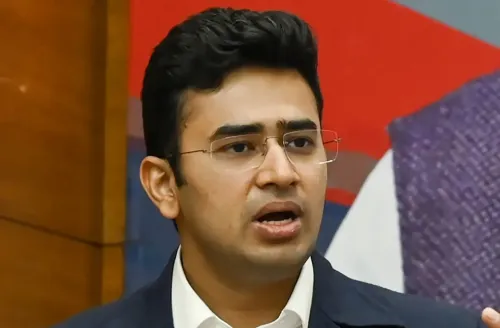
The joint committee comprises 24 members in total — 21 drawn from the Lok Sabha and 3 from the Rajya Sabha. Kamaljeet Sehraawat heads the Lok Sabha contingent, followed by Mukeshkumar Chandrakaant Dalal, Sudheer Gupta, Baijayant Panda, Dr Nishikant Dubey, Tejasvi Surya, P. P. Chaudhary, Konda Vishweshwar Reddy, Shashank Mani, Varun Chaudhry, Km Sudha R, Dhanorkar Pratibha Suresh, Rahul Kaswan, Dimple Yadav, Mahua Moitra, Thiru Dayanidhi Maran, Magunta Sreenivasulu Reddy, Supriya Sule, Devesh Chandra Thakur, Anil Yeshwant Desai, and Naresh Ganpat Mhaske.
The Rajya Sabha nominees are Vinod Shridhar Tawde, Sujeet Kumar, and Ujjwal Deorao Nikam. The cross-party representation — spanning the ruling alliance and the opposition — signals the broad parliamentary consensus around the need to overhaul India's corporate regulatory architecture.
What the Bill Seeks to Change
The Corporate Laws (Amendment) Bill, 2026 is designed to address a cluster of contemporary governance gaps. Key areas under examination include digital compliance mechanisms, a stronger mandate for independent directors, enhanced shareholder protections, faster insolvency resolution, and alignment of Indian corporate norms with global best practices.
Experts believe the proposed amendments could meaningfully reduce compliance burdens for smaller companies, streamline regulatory filings, and introduce stricter penalties for corporate fraud and mismanagement — issues that have periodically surfaced in high-profile insolvency and governance cases over the past decade.
Stakeholder Consultations Ahead
Once the committee begins its deliberations, it is expected to invite submissions from a wide range of stakeholders. These include industry bodies such as the Confederation of Indian Industry (CII), the Federation of Indian Chambers of Commerce and Industry (FICCI), and the Associated Chambers of Commerce and Industry of India (ASSOCHAM), as well as legal experts, the Ministry of Corporate Affairs, and members of the public.
This consultative process is standard practice for joint committees handling legislation with wide economic implications, and its outcome typically shapes the final form of the bill before it is put to a vote in both Houses.
Broader Context
The formation of this panel comes at a moment when India is actively courting greater foreign direct investment and working to strengthen domestic entrepreneurship. The country's corporate law framework — anchored by the Companies Act, 2013 — has undergone several rounds of revision since its enactment, each iteration responding to evolving business realities and regulatory gaps exposed by market events.
This is the latest in a series of legislative efforts to position India as a more predictable and transparent destination for global capital. The committee is expected to submit its report within a stipulated timeframe for consideration by both Houses of Parliament.
Point of View
But the real test lies in how the consultations are conducted and whether the final bill moves beyond incremental tweaks. India's Companies Act has been amended repeatedly since 2013, yet governance failures — from IL&FS to more recent insolvency disputes — have continued to surface. The inclusion of opposition voices like Mahua Moitra, Dimple Yadav, and Supriya Sule could sharpen scrutiny, particularly on independent director accountability and minority shareholder rights. Whether the committee's report reflects genuine deliberation or becomes a rubber stamp will determine if this reform cycle breaks the pattern of well-intentioned legislation with weak enforcement architecture.
NationPress
14 Sept 2026
Frequently Asked Questions
What is the Corporate Laws (Amendment) Bill, 2026?
The Corporate Laws (Amendment) Bill, 2026 is proposed legislation aimed at reforming India's corporate governance framework, covering areas such as digital compliance, independent director roles, shareholder protections, insolvency resolution, and alignment with global regulatory standards. It is currently under examination by a joint parliamentary committee constituted by the Lok Sabha Secretariat.
How many members are on the joint parliamentary committee?
The joint committee has 24 members in total — 21 from the Lok Sabha and 3 from the Rajya Sabha. Members span multiple parties, reflecting cross-party interest in corporate law reform.
Who are the key members of the joint committee?
Kamaljeet Sehraawat leads the Lok Sabha contingent, which also includes Baijayant Panda, Dr Nishikant Dubey, Tejasvi Surya, Mahua Moitra, Dimple Yadav, Supriya Sule, and Thiru Dayanidhi Maran, among others. The Rajya Sabha nominees are Vinod Shridhar Tawde, Sujeet Kumar, and Ujjwal Deorao Nikam.
What changes does the bill propose for Indian companies?
The bill is expected to simplify regulatory filings, reduce compliance burdens for smaller companies, strengthen the role of independent directors, improve insolvency resolution timelines, and introduce stricter penalties for corporate fraud and mismanagement.
When will the joint committee submit its report?
The committee is expected to submit its report within a stipulated timeframe set by Parliament, after which both Houses will take up the bill for further consideration. No specific deadline has been publicly announced yet.