CM Samrat Choudhary Hails Lok Sabha Passage of Exam Anti-Cheat Bill
Synopsis
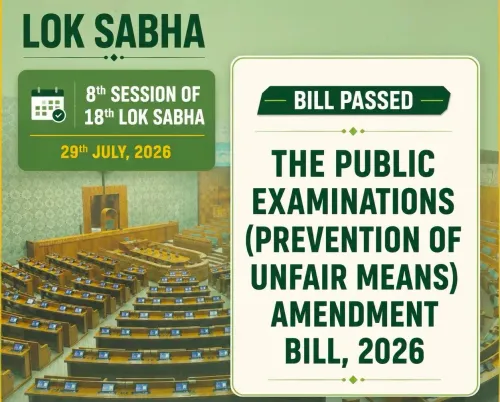
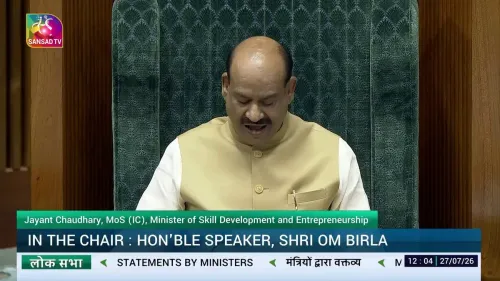
The Lok Sabha passed the Public Examination (Prevention of Unfair Means) Amendment Bill, 2026, strengthening penalties against paper leaks and organised cheating. Bihar CM Samrat Choudhary hailed it as a historic step to protect meritorious students, building on the original 2024 Act. The bill now heads to the Rajya Sabha.
Key Takeaways
The Lok Sabha passed the Public Examination (Prevention of Unfair Means) Amendment Bill, 2026 on 30 July 2026 .
Bihar CM Samrat Choudhary described the passage as a 'historic step' to secure the futures of crores of young Indians.
The bill amends the Public Examinations (Prevention of Unfair Means) Act, 2024 , which first criminalised unfair practices in public exams at the national level.
The legislation targets paper leaks, exam rigging, and organised cheating networks with strict legal penalties.
The bill must still pass the Rajya Sabha and have enforcement rules notified before it takes effect across states.
Bihar , a major source of competitive exam aspirants, has a direct stake in the law's effective implementation.
Millions of students who have watched their hard work unravel because of a leaked question paper got a legislative answer on Thursday, 30 July 2026, when the Lok Sabha passed the Public Examination (Prevention of Unfair Means) Amendment Bill, 2026. Bihar Chief Minister Samrat Choudhary called it a historic step toward securing the futures of crores of young Indians.
Welcoming the development, CM Choudhary wrote that under the leadership of Prime Minister Narendra Modi, the central government is building a robust framework to make the examination system 'completely transparent and impartial.' He added that those involved in paper leaks, exam rigging, and organised cheating will now face strict legal action — and that the decision 'will protect the dreams of every hardworking student and give talent its rightful due.'
From the 2024 Act to the 2026 Amendment
The bill is an amendment to the Public Examinations (Prevention of Unfair Means) Act, 2024, which Parliament enacted in the wake of a string of high-profile paper leak scandals — including controversies surrounding NEET and several state-level recruitment tests. That original law criminalised unfair practices in public examinations for the first time at the national level, signalling a shift from administrative hand-wringing to criminal accountability.
The 2026 amendment signals that the government views the 2024 framework as a foundation to build on, not a finished structure. The legislative arc — original act, then a targeted amendment within two years — reflects sustained pressure from aspirants and civil society to close loopholes and sharpen enforcement teeth.
Why Competitive Exam Aspirants Are Watching Rajya Sabha Now
The bill's passage in the lower house is only the first hurdle. It must clear the Rajya Sabha before becoming law, and the rules that govern its enforcement across states will determine whether the promise translates into practice on the ground. For the lakhs of students preparing for central government jobs, banking exams, and entrance tests, the real test is implementation — not just legislation.
Bihar, a state that sends an outsized share of competitive exam aspirants into national recruitment pipelines, has a direct stake in how rigorously the law is enforced. CM Choudhary's vocal endorsement signals that state-level political leadership is aligning with the Centre's push to restore credibility in merit-based selection.
The bill now moves to the upper house. If it clears, every organised paper-leak syndicate in the country will be operating under a tougher legal shadow — and every student who stayed up memorising formulas will have a stronger guarantee that the playing field is flat.
Point of View
But also that the government is willing to course-correct rather than let the issue fester. For BJP leaders like CM Choudhary, championing this bill is both good policy and smart politics in a state where crores of families are invested in competitive exam outcomes. The real credibility test, however, will come at enforcement — whether the new law actually dismantles the syndicates or merely raises the price of doing business for them.
NationPress
13 Sept 2026
Frequently Asked Questions
What is the Public Examination Amendment Bill 2026?
It is a bill passed by the Lok Sabha on 30 July 2026 that amends the Public Examinations (Prevention of Unfair Means) Act, 2024, to strengthen legal penalties against paper leaks, exam rigging, and organised cheating in public examinations across India.
What was the original Public Examinations Act 2024?
The Public Examinations (Prevention of Unfair Means) Act, 2024 was enacted by Parliament to criminalise unfair practices in public exams at the national level, following multiple high-profile paper leak incidents including controversies around NEET and state recruitment tests.
Has the exam anti-cheat bill become law yet?
Not yet. The bill passed the Lok Sabha on 30 July 2026 but must also be approved by the Rajya Sabha and have enforcement rules notified before it becomes operative law across states.
Why did Bihar CM Samrat Choudhary welcome this bill?
CM Choudhary called it a historic step to protect the dreams of hardworking students and ensure merit-based selection, noting that Bihar sends a large number of competitive exam aspirants into national recruitment pipelines.
Which exams will the new law cover?
The law is aimed at public examinations conducted for central government recruitment and national-level entrance tests. State-level enforcement will depend on the rules notified after the bill clears the Rajya Sabha.