Did the Lok Sabha Pass the Manipur GST (Second Amendment) Bill Amid Winter Session Turbulence?

Synopsis
The Lok Sabha's passage of the Manipur GST (Second Amendment) Bill-2025 marks a crucial step in fiscal alignment amidst ongoing Winter session disruptions. Finance Minister Nirmala Sitharaman emphasized the bill's significance for economic stability in Manipur, a state currently grappling with challenges. Could this legislative move lead to renewed stability in the region?
Key Takeaways
Manipur GST (Second Amendment) Bill-2025 passed by Lok Sabha.
Introduces streamlined tax provisions.
Aligns Manipur's GST framework with national standards.
Protests highlighted regional sensitivity amid legislative urgency.
Potential to stabilize Manipur's economy.
New Delhi, Dec 1 (NationPress) In a pivotal move towards fiscal coherence, the Lok Sabha approved the Manipur Goods and Services Tax (Second Amendment) Bill-2025 on Monday, overcoming disruptions during the Winter session.
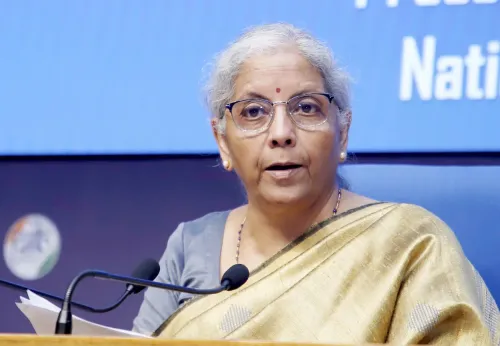
Finance Minister Nirmala Sitharaman introduced the bill, which supersedes the Manipur Goods and Services Tax (Second Amendment) Ordinance, 2025, issued on October 7 while the state was under President's Rule.
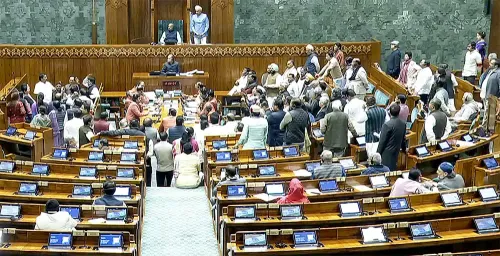
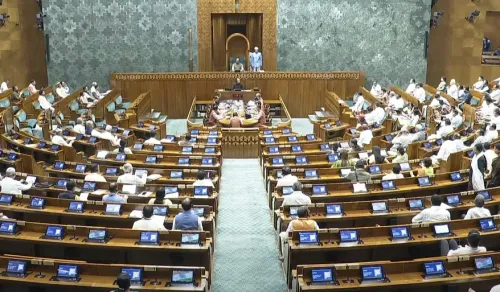
During the session led by Telugu Desam Party's Krishna Prasad Tenneti, the House was adjourned until Tuesday as Opposition members insisted on discussing the Special Intensive Revision (SIR) taking place in twelve states.
This legislation modifies the Manipur Goods and Services Tax Act, 2017, aligning it with recent amendments to the Central Goods and Services Tax (CGST) Act through Sections 121–134 of the Finance Act, 2025.
Notable changes include simplified tax slabs, the unification of overlapping rates for easier compliance, and a new 40 percent tax on ultra-luxury goods.
These reforms, endorsed by the 56th GST Council meeting, are designed to enhance revenue, reduce evasion, and improve the ease of doing business in the northeastern region.
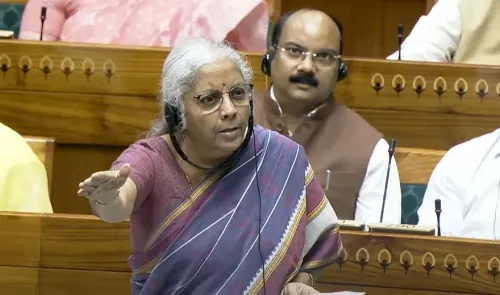
In a debate lasting three hours on the Bill, Finance Minister Sitharaman underscored its urgent necessity.
“Since President's Rule commenced on February 13, 2025, the GST framework in Manipur required immediate alignment with national standards. This amendment guarantees smooth integration, benefiting both traders and consumers,” she stated.
The Finance Minister also emphasized how these changes would bolster fiscal independence and aid economic recovery in a region facing ethnic strife and insurgency.
BJP's Shashank Mani from Deoria (Uttar Pradesh) supported the Bill and advocated for its passage.
However, the passage was not without challenges, as the vote was conducted amid protests from Opposition members, including Congress and Trinamool Congress, regarding electoral issues and the SIR of electoral rolls, resulting in two prior adjournments on Monday.
Trinamool MP Saugata Roy criticized the timing, claiming it placed “additional burdens” on the populace of conflict-affected Manipur.
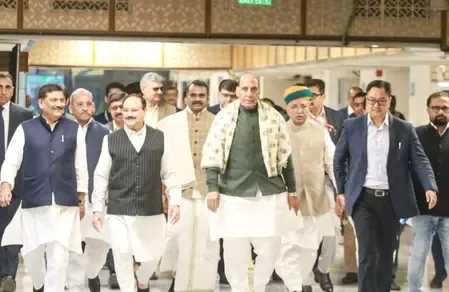
Nevertheless, BJP allies and Treasury benches voiced their support for the measure.
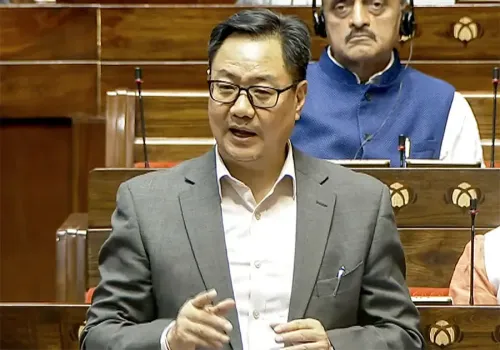
The Bill is now set to be reviewed by the Rajya Sabha.
Sources suggest the Upper House might address it by week's end, along with other economic reforms like the Insurance Laws (Amendment) Bill, which proposes 100 percent FDI in insurance.
Experts view the passage as a victory for the uniform structure of GST.
For Manipur, which has been grappling with violence since May 2023, the Bill could provide stability to its Rs 5,000-crore economy, which is largely dependent on agriculture and handlooms.
As Parliament manages a busy agenda—including the Insolvency and Bankruptcy Code (Amendment) Bill and Supplementary Demands for Grants—the approval of the Manipur GST Bill highlights the government's drive for legislative progress amidst political conflict.
Point of View
I believe the passage of the Manipur GST (Second Amendment) Bill is a significant step in aligning regional tax frameworks with national standards. It aims to stabilize a region currently facing instability. However, the ongoing protests highlight the need for a balance between legislative urgency and regional sensitivities.
NationPress
17 Oct 2026
Frequently Asked Questions
What is the Manipur GST (Second Amendment) Bill?
The Manipur GST (Second Amendment) Bill aims to amend the existing GST framework in Manipur to align it with the Central GST Act, introducing streamlined tax provisions.
Who introduced the bill?
The bill was introduced by Finance Minister Nirmala Sitharaman.
What are the key changes in the bill?
The bill includes changes such as simplified tax slabs, merging of overlapping rates, and a 40% tax on ultra-luxury items.
Why was there opposition to the bill?
Opposition members protested over electoral issues and the timing of the bill, claiming it added burdens on the conflict-affected population of Manipur.
What are the potential impacts of the bill?
The bill could enhance fiscal stability, curb tax evasion, and improve the ease of doing business in Manipur.