Lucknow Aliganj fire: Biometric lock trapped workers, survivor climbed down on electric wire

Synopsis
A Lucknow fire survivor has revealed that a biometric entry system — disabled by the power failure caused by the fire — locked workers inside the building, forcing him and four others to shimmy down an electric wire. With the fire alarm silent, the terrace shutter-locked, and the fire brigade arriving over an hour late, the Aliganj tragedy is a case study in compounding safety failures.
Key Takeaways
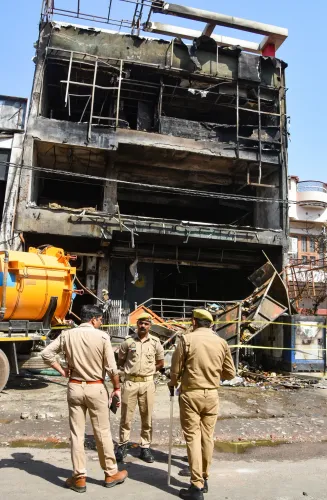
At least 18 people died in a fire at a commercial building in Lucknow's Aliganj area on 23 June .
Survivor Mohammad Asif says the biometric entry system failed during the power outage, locking workers inside the second floor.
Asif and four to five others escaped by climbing down an electric wire through a small window.
Colleague Jayant Gupta fractured his hip after falling onto an iron railing while attempting to jump from a broken window.
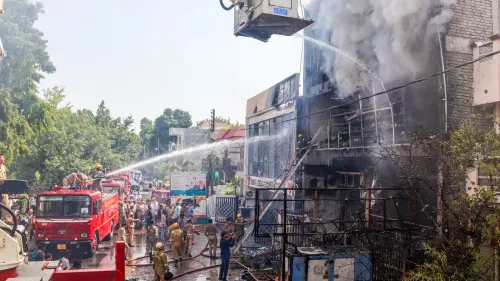
The building's fire alarm did not activate , and the fire brigade arrived more than an hour after the blaze broke out.
Eyewitness Mala Nigam said a shutter-locked terrace door prevented children from reaching the roof and blocked firefighter access from above.
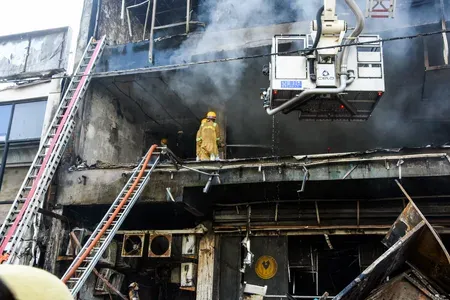
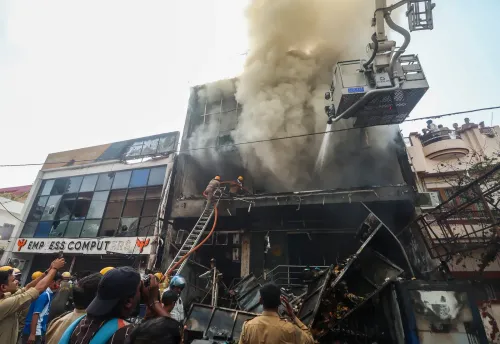
A survivor of the devastating fire that tore through a commercial building in Lucknow's Aliganj area on 23 June, killing at least 18 people, has described how a biometric entry system failed during a power outage and trapped workers on the second floor, forcing some to climb down using an electric wire to escape. The account, given by Mohammad Asif, one of the few who made it out alive, offers the most detailed first-person testimony yet of the sequence of failures that turned a short circuit into a mass casualty event.
How the Fire Unfolded
Asif recalled that the blaze began without warning while staff were returning from their lunch break. 'We were sitting after lunch and were about to start work again when some staff came and said there was a short circuit kind of a thing and a fire had broken out,' he said. Workers initially attempted to leave through the main door, but the biometric attendance system — which required fingerprint authentication to unlock the exit — had stopped functioning due to the power failure. 'There was no electricity, and the fingerprint system was not working. The door was also not opening,' Asif said.
The Desperate Escape Route
With the primary exit sealed and smoke rapidly filling the staircase, Asif and a small group retreated to another room, covered their faces with towels, and located a small window. 'We saw an electricity wire passing beside a small window. We tried to climb down using the wire. Me and four to five others could come down using that,' he said. Others, unable to reach the window or the wire, reportedly locked themselves in a washroom in a bid to avoid suffocation. 'They could not escape,' Asif said, his account confirming that the washroom offered no way out.
Injuries, Delayed Response, and a Broken Alarm
One colleague, Jayant Gupta, broke a glass window and attempted to jump, but fell onto an iron railing, fracturing his hip. According to Asif, Gupta lay on the road for approximately half an hour before an ambulance arrived. The fire brigade, Asif said, reached the site only after more than an hour. He also confirmed that while the building reportedly had fire-fighting equipment installed, the fire alarm did not activate. 'We received help almost an hour later,' he said, adding that the heat was so intense it could be felt on the skin from 100 metres away.
Eyewitness: Terrace Door Was Shutter-Locked
Witness Mala Nigam, who observed the tragedy from outside, described scenes of chaos on the ground floor, where a pet shop's animals were pulled out in cages by bystanders. She said only a few people managed to descend from the upper floors, and two or three children jumped and sustained injuries before the fire became too intense for further rescues. Critically, Nigam said the terrace door was shutter-locked, preventing children from reaching the roof — and preventing firefighters from accessing them from above. 'The children were stuck and remained locked inside... they were calling up their parents in panic, some even locked themselves in the washrooms while attempting to save themselves,' she said.
Systemic Failures at the Centre of the Tragedy
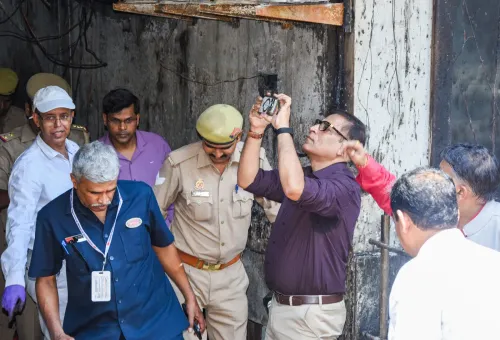
The survivor accounts point to a convergence of failures: a biometric lock that could not be manually overridden during a power cut, a fire alarm that did not sound, a locked terrace door, and a delayed emergency response. This is not the first time locked emergency exits have been cited in Indian building fire tragedies — similar findings emerged after high-profile incidents in Surat and Delhi in recent years. Authorities have yet to formally address the building's fire safety compliance status. Investigations are ongoing.
Point of View
Yet the same failure modes — locked exits, silent alarms, no evacuation protocol — recur with grim regularity. The question is not whether the rules exist, but why their enforcement remains so consistently absent.
NationPress
22 Sept 2026
Frequently Asked Questions
What caused the Lucknow Aliganj building fire?
The fire is believed to have originated from a short circuit, according to survivor accounts. At least 18 people were killed in the blaze at a commercial building in Lucknow's Aliganj area on 23 June. Investigations by authorities are ongoing.
How did Mohammad Asif survive the Lucknow fire?
Survivor Mohammad Asif said he and four to five colleagues escaped by climbing down an electric wire running alongside a small window after the biometric-locked main door failed to open during the power outage. Others who could not reach the window reportedly locked themselves in washrooms and did not survive.
Why did the biometric door fail during the fire?
The biometric fingerprint system required electricity to operate. When the fire caused a power failure, the system stopped working and the door would not open, trapping workers on the second floor with no direct exit route.
How long did it take for the fire brigade to arrive?
According to survivor Mohammad Asif, the fire brigade arrived more than an hour after the fire broke out. He also said the building's fire alarm did not activate, meaning occupants had no early warning system.
Were there children among the victims of the Lucknow Aliganj fire?
Eyewitness Mala Nigam said children were among those trapped, with some calling their parents in panic and others locking themselves in washrooms. She said a shutter-locked terrace door prevented them from reaching the roof, blocking a potential rescue route for firefighters.