Lunglei War Memorial Renovated: 108 Martyrs Honoured in Mizoram
Synopsis
Mizoram's renovated Lunglei War Memorial, inaugurated on April 25, 2025, now enshrines 108 martyrs — 103 from WWII and 5 from post-Independence operations — at a single historic site, reviving an often-overlooked chapter of Northeast India's military sacrifice as India nears the 80th anniversary of WWII's end.
Key Takeaways
The War Memorial at Chanmari, Lunglei, Mizoram was inaugurated after renovation on April 25, 2025 .
The memorial now displays the names of 108 martyrs — 103 from World War II and 5 from post-Independence operations — at a single site.
Pendharkar, GOC of 3 Corps , inaugurated the memorial via video conferencing; Brig.
Puspendar Sorayan represented him on-site.
The memorial was originally established in 1977 on land provided by the Government of Mizoram .
Assam Rifles reaffirmed its commitment to Mizoram's development in areas including healthcare, education, security, and anti-drug initiatives .
The renovation holds added significance as India approaches the 80th anniversary of the end of World War II in 2025 .
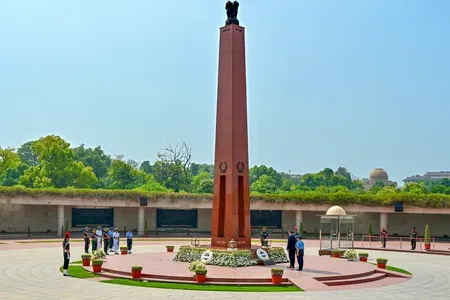
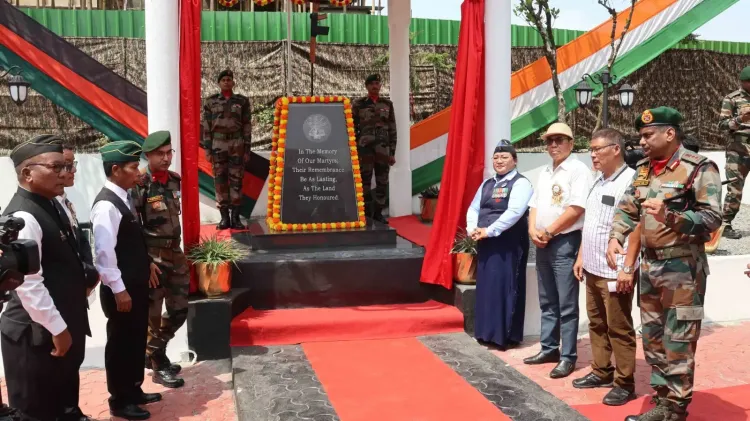
The War Memorial at Chanmari, Lunglei, Mizoram was formally reopened on Friday, April 25, 2025, after a comprehensive renovation, now enshrining the names of 108 martyrs — soldiers who gave their lives for India across two distinct eras of conflict. The inauguration was presided over by Lt Gen Abhijit S. Pendharkar, General Officer Commanding (GOC) of 3 Corps, who addressed the gathering via video conferencing, reaffirming the nation's debt to its fallen defenders.
A Memorial Rebuilt for a New Generation
The renovated memorial, originally established in 1977 on land allocated by the Government of Mizoram, now consolidates at a single site the names of 103 soldiers who sacrificed their lives during World War II and five others who died in post-Independence military operations. The consolidation of these names in one location is historically significant — it ensures that no martyr's contribution is scattered or forgotten across separate records.
Maj. Rebecca L. Chhakchhuak (Retd), District Sainik Welfare and Resettlement Officer, noted that the renovation transforms a decades-old structure into a modern tribute befitting the magnitude of sacrifice it represents. The memorial is centrally located in Lunglei town, one of Mizoram's most strategically important southern districts.
Ceremony and Ceremonial Honours
Representing the GOC at the ground ceremony, Brigadier Puspendar Sorayan, Commander of 23 Sector Assam Rifles, formally unveiled the memorial and laid a wreath in honour of the fallen soldiers. The ceremony observed a solemn two-minute silence accompanied by full ceremonial military honours — a tradition that underscores the gravity of the occasion.
Floral tributes were offered by Lunglei Municipal Council Chairman Lalzuithanga, Maj. Rebecca L. Chhakchhuak (Retd), members of the Mizoram Ex-Services League, and family members of the martyrs. The presence of martyr families added deep personal significance to the state ceremony.
Lunglei Municipal Council Vice Chairman K. Lalrinawma acknowledged the memorial's profound importance for the local community and expressed appreciation for the investments made in its restoration.
Assam Rifles' Commitment to Mizoram
In his address, Brig. Sorayan underscored the Assam Rifles' enduring role in Mizoram — not merely as a security force but as a partner in the state's social development. He highlighted active support across healthcare, education, security, and anti-drug initiatives, areas of critical importance in a state that has historically grappled with insurgency and narcotics trafficking from across its porous international borders with Myanmar and Bangladesh.
This reaffirmation of the Assam Rifles' civilian engagement comes at a time when the force's mandate in Northeast India is under periodic public debate, making the ceremony a subtle but deliberate signal of goodwill and institutional continuity.
Historical Context: Mizoram's Deep Military Legacy
Mizoram's contribution to World War II is often underreported in mainstream national narratives. Soldiers from the Mizo Hills, then part of Assam, served in significant numbers under the British Indian Army, particularly in the Burma Campaign — one of the most gruelling theatres of the Second World War. The 103 WWII martyrs now named at the Lunglei memorial represent this largely unsung chapter of Indian military history.
The five post-Independence martyrs reflect the region's continued sacrifice during a turbulent period that included the Mizo National Front insurgency of the 1960s and 1970s, which ended with the landmark Mizo Peace Accord of 1986. Lunglei itself was a theatre of significant conflict during that era, making the memorial's location especially resonant.
Significance and the Road Ahead
Lt Gen Pendharkar urged citizens and institutions alike to preserve the legacy of martyrs not just in stone and bronze, but through lived values of unity, peace, and selfless service — a message particularly relevant in Mizoram's multi-ethnic, border-sensitive social fabric. The memorial is expected to become a site of annual observances, school visits, and civic education programmes.
As India approaches the 80th anniversary of the end of World War II in 2025, the renovation of the Lunglei War Memorial takes on added national significance — a timely reminder that the northeast's contribution to global and national security deserves equal recognition alongside more prominently remembered theatres of war.
Point of View
Yet these sacrifices rarely feature in mainstream commemorations. That the Assam Rifles — an institution itself born of Northeast complexity — is driving this remembrance is significant. As India projects military pride globally, it must reckon honestly with the full geography of its sacrifice.
NationPress
8 Oct 2026
Frequently Asked Questions
Where is the renovated War Memorial in Mizoram located?
The renovated War Memorial is located at Chanmari in central Lunglei town, Mizoram . It was originally established in 1977 on land allotted by the Government of Mizoram.
How many martyrs are honoured at the Lunglei War Memorial?
The memorial honours 108 martyrs in total — 103 soldiers who died during World War II and 5 who fell in post-Independence military operations . All names are now consolidated at a single site.
Who inaugurated the Lunglei War Memorial renovation?
Lt Gen Abhijit S. Pendharkar , General Officer Commanding of 3 Corps , inaugurated the memorial via video conferencing on April 25, 2025 . Brig. Puspendar Sorayan of 23 Sector Assam Rifles represented him on the ground.
What is the role of Assam Rifles in Mizoram?
The Assam Rifles plays a dual role in Mizoram — providing security along the state's international borders and actively supporting civilian welfare through healthcare, education, and anti-drug programmes . The force has been present in the region since before Indian Independence.
Why is Mizoram's World War II contribution significant?
Soldiers from the Mizo Hills served in the Burma Campaign , one of WWII's most gruelling fronts, under the British Indian Army. Their contribution is largely absent from mainstream Indian WWII narratives, making memorials like the one in Lunglei critical for preserving this history.