Is Madhya Pradesh Ready for a Digital Investment Revolution?
Synopsis
Madhya Pradesh's Chief Minister Mohan Yadav emphasizes a transformative Union Budget focused on digital investment and job creation, particularly for women. This budget is presented as a roadmap toward empowerment and economic growth, aligning state initiatives with national goals, thereby invigorating development across various sectors.
Key Takeaways
Increased digital investment focused on innovation.
Job creation initiatives particularly for women.
Support for biopharma and tech startups.
Commitment to women's empowerment through various programs.
Alignment with national goals for comprehensive growth.
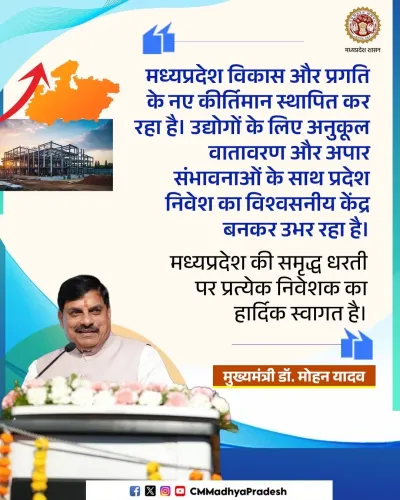
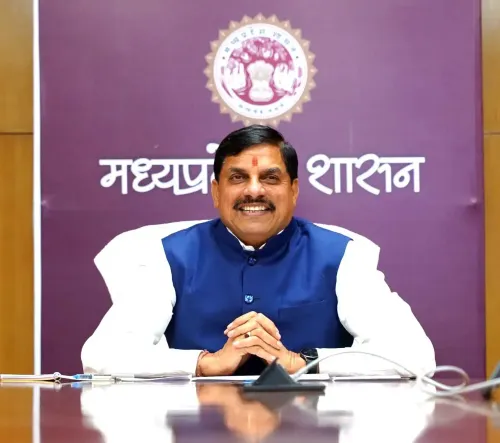
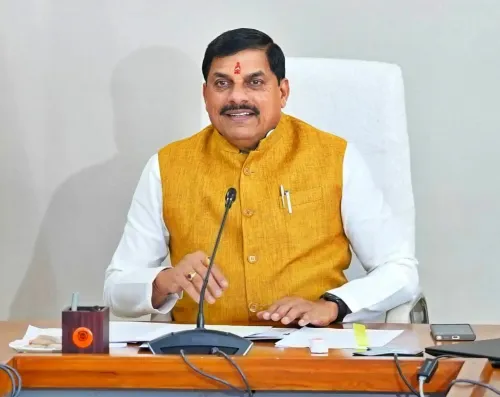
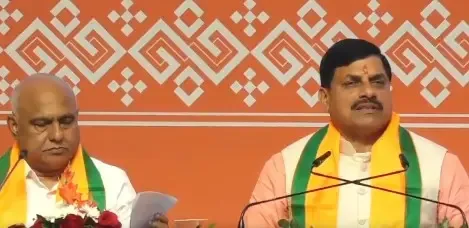
Bhopal, Feb 3 (NationPress) Chief Minister Mohan Yadav announced that enhanced digital investments, innovation, and technology upgrades are on the horizon, particularly for women's job creation, thanks to provisions from the Union Budget. Speaking at a joint press conference with state BJP president Hemant Khandelwal, he emphasized that the budget is geared towards welfare, inclusivity, and empowerment for the underprivileged, youth, and women, while also integrating sectors like startups, innovation, and artificial intelligence.
CM Yadav stated that this budget lays out a comprehensive roadmap aimed at bolstering India's global position and economic capabilities in the long run, aligned with the vision for a developed nation during the Amrit Kaal.
He pointed out that the budget is directed at providing opportunities to every segment of society in Madhya Pradesh, optimizing resources for continuous growth and meeting public expectations.
Expressing gratitude towards the Prime Minister and the Finance Minister, CM Yadav noted that this marks the twelfth budget under PM Modi, focusing on structural reforms that enhance the ease of doing business. He highlighted how this budget ignites aspirations among the youth, supports business-friendly industries, and accelerates investments, production, exports, and job creation in Madhya Pradesh.
His excitement was palpable regarding the provisions for biopharma, biotechnology, pharmaceuticals, and health startups, which are set to strengthen the knowledge economy and generate high-value jobs.
CM Yadav referred to his recent discussions with the Prime Minister in Gujarat about semiconductors, asserting that the Semiconductor Mission 2.0 and related initiatives will promote high-tech industries, attract more digital investments in the state, and create opportunities for innovation and technology entrepreneurship while modernizing traditional industries.
He added that the budget revitalizes employment generation by enhancing the availability of industrial land, logistics, and supply chains. For the MSME sector, it introduces three pivotal strategies to boost competitiveness, self-reliance, and growth, reinforcing self-employment and industrial expansion.
In sectors where Madhya Pradesh excels, such as IT, tourism, agriculture, health, and education, the budget aims to realize aspirations for global leadership by 2047, paving the way for the development of these as key centers.
CM Yadav reiterated his government's unwavering commitment to women's empowerment, noting significant provisions in the budget that align with this goal.
He discussed plans for hostels dedicated to supporting professional women commuting for work, along with targets to train 150,000 women service providers with incentives of Rs 1 lakh each to enhance their employment opportunities.
These initiatives reflect the principle of 'Sabka Saath, Sabka Vikas', extending to rural women's leadership, special entrepreneurship, and community support groups like Lakhpati Didis, with comprehensive arrangements in place.
CM Yadav noted that many state initiatives resonate closely with central plans, suggesting that the state's two-year budget works in concert with the Union government. This synergy is expected to benefit urban development in Madhya Pradesh's metropolitan areas, where proposals such as women's hostels will enhance professional opportunities and overall progress.
In conclusion, CM Yadav asserted that the budget's execution in Madhya Pradesh will foster inclusive growth, modernize industries, generate jobs, and position the state as a vital contributor to India's ascent as a global economic powerhouse.
Point of View
It's evident that the Union Budget's provisions present significant opportunities for Madhya Pradesh, particularly in technology and women's empowerment. The alignment of state and central initiatives signals a collaborative approach to development, fostering hopes for comprehensive growth across various sectors.
NationPress
5 Oct 2026
Frequently Asked Questions
What are the key highlights of the Union Budget for Madhya Pradesh?
The Union Budget emphasizes digital investment, technological upgrades, and increased job creation, especially for women, along with provisions aimed at enhancing the MSME sector and promoting industrial growth.
How will the budget impact women's empowerment?
The budget includes plans for hostels for working women, training programs for 150,000 women service providers, and initiatives that support rural women's leadership and entrepreneurship.
What sectors are expected to benefit the most?
Key sectors like IT, biotechnology, pharmaceuticals, and health startups are set to benefit significantly from the budget, aimed at fostering innovation and high-value employment.
How does this budget align with national goals?
The budget aligns closely with the national vision of a developed India, working in tandem with central plans to enhance urban development and economic growth.