MP CM Mohan Yadav to Transfer ₹2,148 Cr to Ladli Behna Women
Synopsis
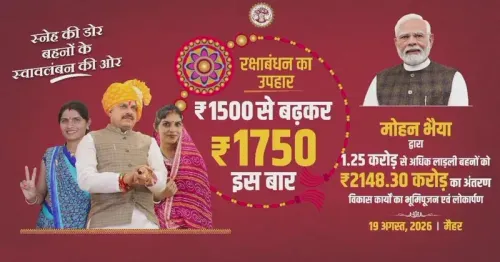
Madhya Pradesh CM Dr. Mohan Yadav will transfer over ₹2,148 crore to Ladli Behna Yojana beneficiaries on Rakshabandhan, 19 August 2026, from Maihar — with each eligible woman receiving ₹1,750 directly into her bank account.
Key Takeaways
₹2,148 crore+ to be transferred in a single day to Ladli Behna Yojana beneficiaries on 19 August 2026 .
Each eligible woman will receive ₹1,750 directly into her bank account.
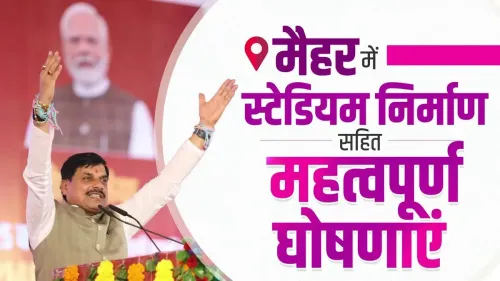
The disbursement event will be held at Maihar , Satna district, Madhya Pradesh.
Mohan Yadav will personally preside over the transfer.
The Ladli Behna Yojana was launched in 2023 to provide direct cash support to women across Madhya Pradesh.
Rakshabandhan was chosen as the occasion, continuing the state's practice of tying major welfare disbursements to festivals.
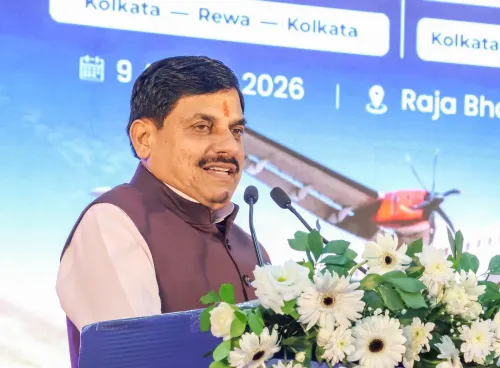
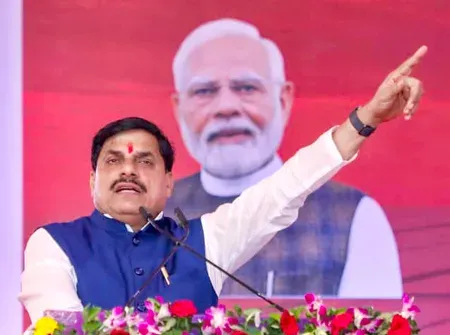
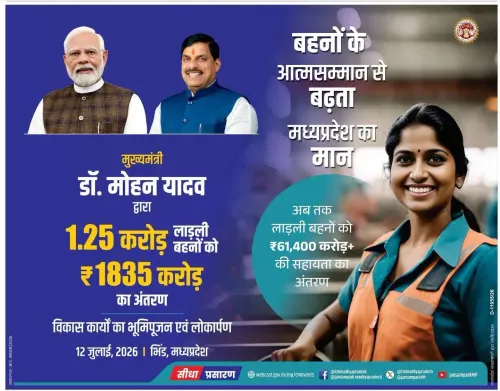
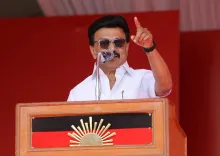
On the occasion of Rakshabandhan, Madhya Pradesh Chief Minister Dr. Mohan Yadav is set to deliver a direct financial gift to the state's women — transferring over ₹2,148 crore into the accounts of eligible Ladli Behna beneficiaries, with each woman receiving ₹1,750, on 19 August 2026 from Maihar in Satna district.
A Rakshabandhan disbursement rooted in political symbolism
The choice of Rakshabandhan — the festival celebrating the bond between siblings — as the backdrop for the transfer is deliberate. The Chief Minister's Office of Madhya Pradesh framed the announcement as a 'khaas tohfa' ('special gift') for 'Ladli Behnas', the state government's term of endearment for scheme beneficiaries. Timing welfare disbursements around major festivals has become a signature move for the Madhya Pradesh government, reinforcing an emotional connection between the state and its women constituents.
The venue, Maihar, a town in Satna district, has previously served as a stage for high-visibility government events in the region — putting the announcement in front of a local audience while broadcasting it statewide.
What Ladli Behna Yojana has built since 2023
Launched in 2023, the Ladli Behna Yojana was designed to deliver periodic direct cash transfers to eligible women across Madhya Pradesh, cutting out intermediaries and routing money straight to bank accounts. The scheme quickly became one of the state's most politically visible welfare programmes. Dr. Mohan Yadav, who took charge as Chief Minister in December 2023, has continued and expanded the scheme's cadence of disbursements.
A single-day transfer of over ₹2,148 crore to women beneficiaries underscores the scale the programme has reached — and the state's sustained commitment to direct benefit transfers as its primary welfare delivery mechanism.
What the ₹1,750 figure signals
Each eligible beneficiary is set to receive ₹1,750 in this round. The amount reflects the programme's evolving payout structure since its inception, when monthly transfers began at lower levels. Watching how this figure moves in future disbursements will be a key indicator of whether the state government is willing to push the benefit higher — a question that will sharpen as the next election cycle approaches.
For now, the Rakshabandhan transfer positions the scheme not just as routine welfare, but as an annual ritual of state-to-citizen giving — one the government clearly intends to own.
Point of View
Visible, festival-timed cash transfers that make the state feel like a benefactor rather than a bureaucracy. For CM Dr. Mohan Yadav, presiding over a ₹2,148 crore single-day transfer is as much a political statement as a policy action — it keeps the Ladli Behna brand warm and dominant in the public imagination. The steady uptick in per-beneficiary payouts, if it continues, will test the state's fiscal headroom and set a competitive benchmark that opposition parties will struggle to ignore heading into the next electoral cycle.
NationPress
3 Oct 2026
Frequently Asked Questions
What is the Ladli Behna Yojana Rakshabandhan 2026 transfer amount?
Each eligible Ladli Behna beneficiary will receive ₹1,750 in the Rakshabandhan 2026 disbursement, with a total of over ₹2,148 crore being transferred statewide on 19 August 2026 .
Who will conduct the Ladli Behna transfer on Rakshabandhan 2026?
Madhya Pradesh Chief Minister Dr. Mohan Yadav will personally preside over the transfer event, which is being held at Maihar in Satna district.
What is the Ladli Behna Yojana and who is eligible?
The Ladli Behna Yojana is a Madhya Pradesh government scheme launched in 2023 that provides periodic direct cash transfers to eligible women in the state. Eligibility is based on criteria set by the state government.
Why is the Ladli Behna transfer being held on Rakshabandhan?
The Madhya Pradesh government has chosen Rakshabandhan , a festival celebrating sibling bonds, to frame the disbursement as a special gift from the state to its women beneficiaries — a practice of tying welfare transfers to major festivals.
Where is the Ladli Behna Rakshabandhan 2026 event taking place?
The transfer event is being held at Maihar , a town in Satna district , Madhya Pradesh, on 19 August 2026 .