Madras HC: MLAs resigning to re-contest under new party may 'insult' voters
Synopsis
The Madras High Court has put a spotlight on a fast-spreading political tactic: MLAs resigning their seats, switching parties, and immediately contesting bye-elections from the same constituency. With six former AIADMK legislators now standing under the TVK banner in Tamil Nadu, the court has asked the Election Commission whether Article 324 gives it the power to stop this from becoming a template for gaming the electoral system.
Key Takeaways
The Madras High Court on 16 September 2026 questioned the practice of MLAs resigning, switching parties, and re-contesting bye-elections from the same seat.
The court said such conduct could 'insult' voters and amount to 'making a mockery of democracy,' per Justice S.M.
The Bench asked the Election Commission of India to explore framing guidelines under Article 324 of the Constitution.
Six AIADMK MLAs resigned after Tamil Nadu's Assembly election and joined the ruling Tamilaga Vettri Kazhagam (TVK) .
Bye-elections have been notified only for Madurantakam and Dharapuram , where Maragatham Kumaravel and P.
Sathyabama are TVK candidates.
The petitioner warned the practice could trigger mass resignations and significant losses to the public exchequer .
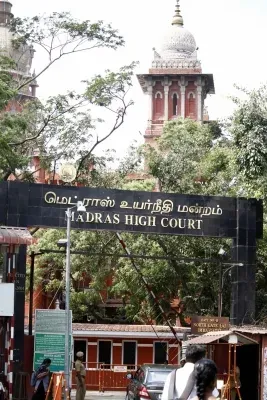
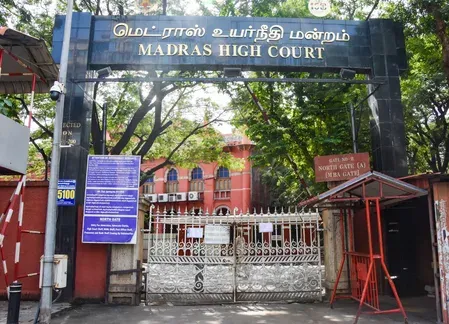
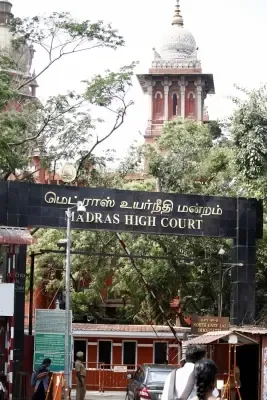
The Madras High Court on Wednesday, 16 September 2026, questioned the growing practice of elected legislators resigning their Assembly seats, switching political parties, and then contesting the resultant bye-elections from the very same constituencies — observing that such conduct could amount to insulting voters and undermining their original democratic mandate.
Justice S.M. Subramaniam, part of the court's second Division Bench, said an MLA who resigns only to seek re-election on a rival party's ticket may be 'making a mockery of democracy.' The Bench — comprising Justice Subramaniam and Justice K. Govindarajan — also asked why the Election Commission of India (ECI) should not examine the issue and frame appropriate guidelines by invoking its constitutional powers under Article 324.
The PIL and Its Core Argument
The observations came while hearing a public interest litigation filed by Chennai advocate K. Suthan, who sought measures to prevent elected representatives from resigning after switching parties and then contesting the resulting bye-elections from the same seat. The petitioner argued that the practice directly undermined the choice made by voters at the general election and imposed an avoidable financial burden on the public exchequer.
Senior counsel R. Singaravelan, appearing for the petitioner, informed the Bench that six AIADMK legislators in Tamil Nadu had resigned following this year's Assembly election and subsequently joined the ruling Tamilaga Vettri Kazhagam (TVK). Of them, Maragatham Kumaravel and P. Sathyabama have been fielded by the TVK in Madurantakam and Dharapuram, respectively — the very seats vacated by their own resignations.
Only Two Bye-Elections Notified
The court was informed that the Election Commission had notified bye-elections only for those two constituencies and not for the other seats vacated by the remaining AIADMK legislators who switched parties. This selective notification, the petitioner argued, further highlighted the need for a uniform regulatory framework.
Risk of Mass Resignations and Exchequer Loss
Singaravelan warned the Bench that without regulatory guardrails, the practice could encourage mass resignations in the future, resulting in repeated bye-elections and causing substantial losses to the public exchequer. He contended that voters who had chosen a candidate based on a particular party affiliation were effectively being compelled to vote again solely because of the legislator's personal political decision — a burden that should not fall on taxpayers.
What the Court Said Next
The Bench indicated that the issue warranted closer examination given the Election Commission's constitutional responsibility to supervise elections. It directed the poll body to consider whether safeguards could be framed to specifically discourage resignations motivated solely by party switching and the intent of immediate re-election. This is not the first time Indian courts have flagged the nexus between anti-defection law gaps and strategic resignations — the Supreme Court has previously weighed in on similar concerns in the context of the Tenth Schedule. The matter is expected to come up for further hearing, with the ECI now under judicial scrutiny to respond.
Point of View
Then use the resulting bye-election as a legitimacy wash. Tamil Nadu's current episode, with six AIADMK MLAs rebranding under TVK, is a textbook example. The real question is whether the Election Commission, whose powers under Article 324 are broad but largely untested in this context, has the appetite to act — or whether it will wait for Parliament to close the gap that courts keep identifying but cannot legislate away.
NationPress
16 Sept 2026
Frequently Asked Questions
What did the Madras High Court say about MLAs resigning to re-contest under a new party?
The Madras High Court said an MLA who resigns only to re-contest from the same constituency on another party's ticket may be 'making a mockery of democracy' and could be insulting voters who gave them a mandate under a specific party. The court made these observations on 16 September 2026 while hearing a public interest litigation filed by Chennai advocate K. Suthan.
What has the court asked the Election Commission of India to do?
The court asked the Election Commission of India to examine whether it can use its constitutional powers under Article 324 to frame guidelines that discourage resignations motivated solely by party switching and immediate re-election bids. The ECI is now under judicial scrutiny to respond to the matter.
Which MLAs and constituencies are at the centre of this case?
Six AIADMK legislators in Tamil Nadu resigned after this year's Assembly election and joined the ruling Tamilaga Vettri Kazhagam (TVK). Of these, Maragatham Kumaravel and P. Sathyabama have been fielded by TVK in Madurantakam and Dharapuram, respectively — the same seats they vacated through their resignations.
Why is this practice considered problematic for voters and the exchequer?
Voters who chose a candidate on the basis of a party affiliation are compelled to vote again because of the legislator's personal political decision, the petitioner argued. Additionally, repeated bye-elections triggered by strategic resignations impose a significant and avoidable financial cost on the public exchequer.
How does this relate to existing anti-defection laws?
India's Tenth Schedule (anti-defection law) bars legislators from defecting, but it does not cover MLAs who resign their seats before switching parties. By resigning first, legislators effectively bypass the anti-defection framework, a gap that courts have flagged before but that only Parliament can close through legislation.