Maharashtra Agriculture Minister inspects drought-hit crops in Sangamner, Ahilyanagar
Synopsis
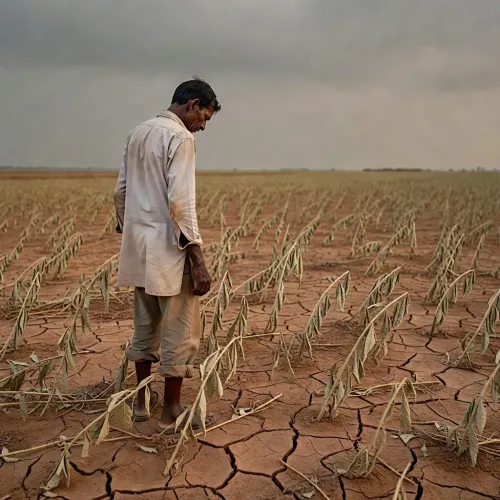
Maharashtra Agriculture Minister Dattatray Bharane walked drought-parched fields in Sangamner on 24 September, where soybean, cotton, maize, and pulses are simultaneously failing at critical growth stages. With crops sown well above target but rainfall well below need, the minister has directed emergency insurance and relief action — and a formal disaster notification is imminent.
Key Takeaways
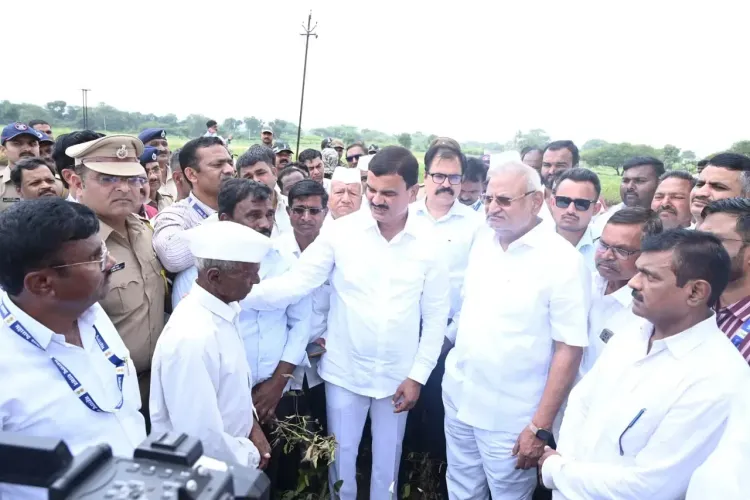
Maharashtra Agriculture Minister Dattatray Bharane inspected drought-hit crops in Pimple village, Sangamner taluka, Ahilyanagar district on 24 September 2026 .
Soybean (sown at 113.03% of target), Maize ( 163.34% ), and Tur ( 134.32% ) are all suffering severe water stress at critical growth stages.
Bharane directed Agriculture and Revenue departments to expedite crop insurance processing during the Kharif season .
MSEDCL has been instructed to ensure uninterrupted power supply for irrigation through timely supply of transformers and DP units.
A formal notification under the Central Disaster Management Division and State Relief and Rehabilitation Department is expected shortly to cover agriculture, animal husbandry, fodder, and water scarcity relief.
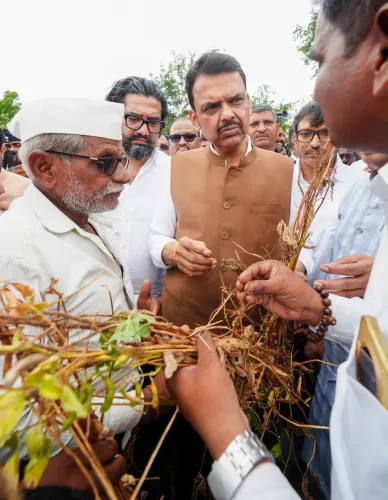
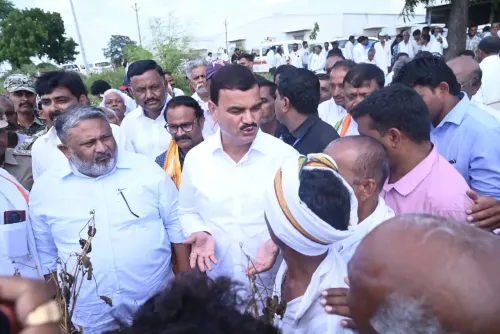
Maharashtra Agriculture Minister Dattatray Bharane on Thursday, 24 September 2026, visited drought-affected fields in Sangamner taluka, Ahilyanagar district, inspecting damaged soybean crops at farmer Sopan Chakor's field in Pimple village and reaffirming the state government's commitment to ensuring farmers receive timely benefits under crop insurance, loan waiver, and relief programmes.
What the Minister Found on the Ground
District Superintendent Agriculture Officer Sudhakar Borale presented a sobering crop-status briefing. Soybean, sown across 113.03% of the target area, is at the pod-filling stage but suffering flat pods, small grain size, and wilting on light soils due to acute water stress.
Cotton was sown across 91.66% of the area; plants at the flowering and boll stage are experiencing flower drop along with sucking pest and pink bollworm infestations triggered by the dry spell. Maize, sown at a striking 163.34% of its target area, is at the cob-filling stage but faces stunted growth and yield loss. Kharif Bajra sowing reached 63.83%, with crops drying up in patches. Tur sowing at 134.32% has seen severely hindered growth, while Moong and Urad stand at 47.83% and 61.45% of sowing targets, respectively.
Government's Immediate Directives
Bharane directed the Agriculture and Revenue departments to act swiftly on crop insurance grievances during the ongoing Kharif season, emphasising that scheme benefits must reach farmers directly rather than through delayed administrative channels. He also instructed officials of the Maharashtra State Electricity Distribution Company Ltd (MSEDCL) to ensure transformers and distribution point (DP) units are made available without delay so that irrigation power supply remains uninterrupted.
According to the minister, the administration is responsible for delivering relief to farmers' doorsteps — covering agriculture, animal husbandry, fodder supply, and water scarcity. A comprehensive notification under the Central Disaster Management Division and the State Relief and Rehabilitation Department is expected to be issued shortly to extend consolidated assistance.
Minister's Personal Assurance to Farmers
Bharane, who described himself as a farmer, offered a personal assurance to distressed cultivators. 'Being a farmer myself, I understand your pain and situation. The government stands with you in this crisis and is committed to extending full support,' he said while comforting those whose crops have suffered total damage due to lack of rainfall.
Context and Broader Impact
The dry spell in Ahilyanagar district this Kharif season has hit multiple crops at critical growth stages simultaneously — an unusual convergence that agricultural officials say amplifies overall yield loss. Notably, several crops including Maize and Tur were sown well above target areas, indicating farmer confidence at the start of the season, which makes the drought damage particularly acute. This comes amid wider rainfall deficits reported across parts of Maharashtra, placing additional pressure on the state's crop insurance payout mechanisms and its rural credit infrastructure. All eyes are now on when the promised disaster management notification will be issued and how quickly insurance claims will be processed before the Kharif harvest window closes.
Point of View
But the crop data from Ahilyanagar tells a genuinely alarming story: multiple Kharif crops sown enthusiastically above target — Maize at 163%, Tur at 134% — are now failing simultaneously at peak growth stages. That gap between sowing ambition and rainfall reality is a structural vulnerability Maharashtra has not resolved. The more pressing question is whether crop insurance settlements will arrive before harvest time lapses, since delayed payouts after Kharif damage have historically pushed farmers into distress debt cycles. A formal disaster notification is a necessary first step, but the real accountability test is speed of disbursal — and that is where past Maharashtra relief efforts have repeatedly fallen short.
NationPress
25 Sept 2026
Frequently Asked Questions
Why did Maharashtra Agriculture Minister Dattatray Bharane visit Sangamner?
Bharane visited Pimple village in Sangamner taluka, Ahilyanagar district, on 24 September 2026 to inspect drought-damaged soybean crops at farmer Sopan Chakor's field. The visit was aimed at assessing the scale of Kharif crop damage and directing immediate relief measures for affected farmers.
Which crops have been damaged by the drought in Ahilyanagar?
Soybean, cotton, maize, Kharif bajra, tur, moong, and urad have all been adversely affected by insufficient rainfall this season. Crops such as maize (at the cob-filling stage) and soybean (at the pod-filling stage) are suffering stunted growth, wilting, and yield loss at critical developmental phases.
What relief measures has the Maharashtra government announced for drought-hit farmers?
The Agriculture and Revenue departments have been directed to expedite crop insurance processing during the Kharif season. A comprehensive notification under the Central Disaster Management Division and the State Relief and Rehabilitation Department is expected shortly, covering agriculture, animal husbandry, fodder supply, and water scarcity relief.
What is the current sowing status of major Kharif crops in Ahilyanagar?
Maize was sown at 163.34% of its target area, tur at 134.32%, soybean at 113.03%, cotton at 91.66%, kharif bajra at 63.83%, urad at 61.45%, and moong at 47.83%. Despite high sowing percentages for several crops, rainfall deficits have caused widespread damage at growth stages critical to final yield.
Why is the power supply issue relevant to drought relief in Maharashtra?
Bharane instructed MSEDCL officials to ensure timely availability of transformers and DP units to maintain uninterrupted electricity supply for irrigation. In drought conditions, farmers depend on pump-based irrigation to compensate for absent rainfall, making reliable power supply a direct component of crop-saving efforts.