Maharashtra 2nd in crimes against women: Shiv Sena (UBT) slams state govt
Synopsis
Maharashtra has slipped to second place nationally for crimes against women, according to Shiv Sena (UBT)'s 'Saamana'. The editorial lays out a damning series of sexual assaults across Pune, Hingoli, Nalasopara and Bhayandar, and asks why a death sentence in the Nasrapur case — delivered in just 58 days — did nothing to stop the next crime.
Key Takeaways
Maharashtra has slipped to second place nationally for crimes against women, according to Shiv Sena (UBT) 's editorial in 'Saamana' on 21 August .
A 25-year-old suspect in Pimpalwandi village, Junnar taluka allegedly sexually assaulted and murdered a 9-year-old girl ; he was identified via CCTV footage and confessed.
In Hingoli district , a specially-abled girl was allegedly gang-raped by four individuals on 13 August ; three have been arrested.
The Chief Minister , who holds the Home portfolio , admitted in the state legislature that Maharashtra ranks 8th nationally in total crime statistics.
Over 23,000 cases of violence involving young boys and girls have been registered in Maharashtra in recent years, according to the editorial.
A death sentence in the Nasrapur case was delivered within 58 days , yet critics argue it failed to deter subsequent crimes.
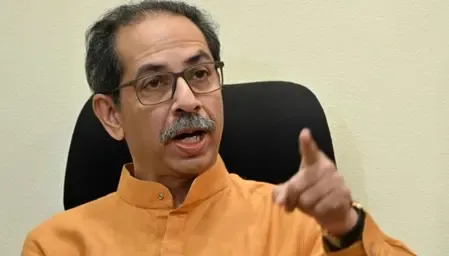
Shiv Sena (Uddhav Balasaheb Thackeray) on Friday, 21 August launched a scathing attack on the Maharashtra government over a sharp deterioration in the safety of women and children, asserting that the state has slipped to second place nationally for crimes against women. The party's mouthpiece 'Saamana' published an editorial cataloguing a series of brutal sexual assaults across multiple districts, questioning why the ruling administration has failed to build any meaningful deterrence.
The Pune Cases That Triggered the Editorial
Pune district, widely regarded as Maharashtra's cultural capital and a major education hub, has been at the centre of the crisis. The editorial drew a direct line between two near-identical crimes in the district. In the first, a sexual assault and murder occurred in Nasrapur (Bhor taluka). Even as the state was absorbing that shock, a second crime unfolded in Pimpalwandi village (Junnar taluka).
According to the editorial, a 25-year-old suspect lured a 9-year-old girl from her home on the pretext of teaching her to ride a bicycle, took her to a nearby sugarcane field, sexually assaulted her, beat her severely, and strangled her to death. In a chilling detail, the accused reportedly joined police and villagers in the search operation after concealing the body. He was identified through CCTV footage showing him with the victim on a bicycle, subsequently confessed, and led police to the body.
Notably, the Nasrapur case had resulted in a death sentence for the 65-year-old perpetrator within 58 days — one of the fastest capital punishments awarded in such cases. Yet, the editorial argued, that swift verdict failed to deter the Pimpalwandi crime, exposing the limits of reactive justice.
Crimes Reported Across Other Districts
The editorial catalogued several other recent incidents across Maharashtra. In Hingoli district (Hatta, Vasmat taluka), a specially-abled girl was allegedly lured with biscuits into a sugarcane field and gang-raped by four individuals on 13 August. Her disability meant the assault only came to light when her parents observed sudden behavioural changes; three of the four accused have since been arrested.
In Nalasopara, two youths allegedly sexually assaulted a 14-year-old girl and circulated video footage of the assault on social media. In Bhayandar, a 14-year-old girl was reportedly assaulted by six perpetrators. In Wakad, Pune, a 65-year-old man was arrested for sexually assaulting a 10-year-old child.
What the Shiv Sena (UBT) Said
The Thackeray camp's editorial stated that over 23,000 cases of violence and murder involving young boys and girls have been registered in Maharashtra in recent years. It further noted that the Chief Minister, who also holds the Home portfolio, himself acknowledged in the state legislature that Maharashtra ranks 8th nationally in total crime statistics — a concession the editorial described as 'shameful.'
The party alleged that criminal elements feel emboldened due to perceived political protection, and questioned why the state administration failed to create sufficient deterrence before crimes occurred. Pune District Police chiefs reportedly promised a charge sheet within 15 days and a trial in a fast-track court, but the editorial asked whether assurances alone can prevent recurring atrocities.
Political and Administrative Accountability
The editorial concluded with a direct rebuke of the ruling dispensation, holding the Chief Minister and the Home Department accountable for what it called inaction and unresponsiveness amid sustained public outcry. This comes amid broader concerns about law and order in Maharashtra, where opposition parties have repeatedly flagged a perceived governance vacuum on public safety. The Shiv Sena (UBT) has been a consistent critic of the ruling coalition's handling of crime since the split in the original Shiv Sena.
With fast-track courts promising swift trials and arrests continuing, the test for the state government will be whether institutional responses translate into a measurable reduction in crime — or remain, as critics argue, reactive measures that follow rather than prevent violence.
Point of View
But the underlying data is hard to dismiss — Maharashtra's second-place ranking for crimes against women is a governance indictment, not just an opposition talking point. The Nasrapur case is particularly telling: a death sentence delivered in 58 days is precisely the kind of swift deterrence the system is supposed to project, yet it demonstrably failed to prevent the next assault. That gap between punitive speed and preventive effect is the real policy failure here. The Chief Minister's own admission of an 8th-place ranking in total crime in the state legislature suggests the problem is systemic, not episodic — and no volume of fast-track court assurances will change that without structural reform in policing, surveillance, and community safety infrastructure.
NationPress
21 Aug 2026
Frequently Asked Questions
Where does Maharashtra rank in crimes against women in India?
According to Shiv Sena (UBT)'s editorial in 'Saamana', Maharashtra has slipped to second place nationally for crimes against women. The party cited over 23,000 registered cases of violence involving young boys and girls in the state in recent years.
What happened in Pimpalwandi village in Pune?
A 25-year-old suspect allegedly lured a 9-year-old girl from her home on the pretext of teaching her to ride a bicycle, took her to a sugarcane field, sexually assaulted her, beat her, and strangled her to death. He was identified through CCTV footage, subsequently confessed, and led police to the body.
Why did Shiv Sena (UBT) criticise the Maharashtra government?
The party alleged that the ruling administration failed to build adequate deterrence to prevent crimes, and that criminal elements feel emboldened due to perceived political protection. It held the Chief Minister, who also holds the Home portfolio, directly accountable for inaction amid a spate of sexual assault cases.
What was the Nasrapur case referred to in the editorial?
The Nasrapur case involved a sexual assault and murder in Bhor taluka, Pune, in which a 65-year-old perpetrator was sentenced to death within 58 days — cited as an example of swift justice. However, the editorial argued that even this rapid verdict failed to deter the subsequent Pimpalwandi crime.
What other crimes were highlighted in the 'Saamana' editorial?
The editorial cited a gang rape of a specially-abled girl in Hingoli district on 13 August by four individuals (three arrested), a sexual assault on a 14-year-old in Nalasopara with footage circulated on social media, an assault involving six perpetrators in Bhayandar, and the arrest of a 65-year-old man for assaulting a 10-year-old in Wakad, Pune.