Mahanadi Dispute: CMs of CG, Odisha Meet Under Jal Shakti
Synopsis
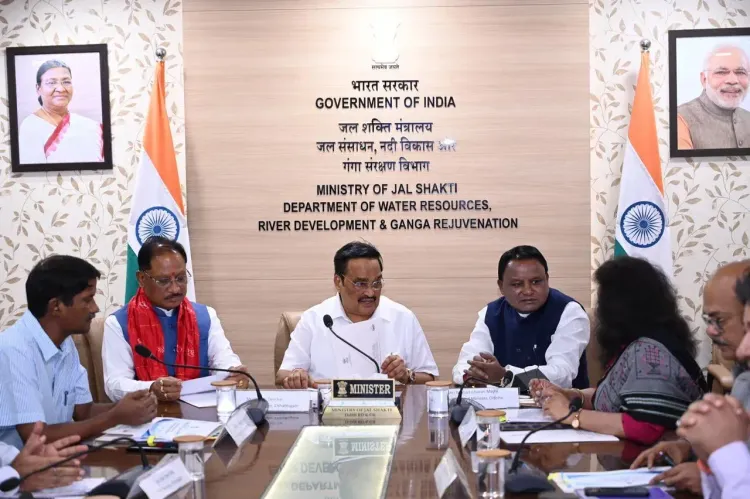
Union Jal Shakti Minister C.R. Patil chaired a high-level meeting in New Delhi on 30 July 2026 with Chhattisgarh CM Vishnu Dev Sai and Odisha CM Mohan Charan Majhi, pushing for a lasting resolution to the long-running Mahanadi river water dispute affecting farmers and tribal communities in both states.
Key Takeaways
Patil , Union Minister of Jal Shakti, chaired the meeting in New Delhi on 30 July 2026 .
CM Vishnu Dev Sai (Chhattisgarh) and CM Mohan Charan Majhi (Odisha) both participated, marking a rare joint political engagement on the dispute.
Sai described the Mahanadi as the 'shared lifeline' of both states and called the meeting 'a new beginning towards a solution.' The Mahanadi Water Disputes Tribunal was constituted in 2018 under the Inter-State River Water Disputes Act, 1956, but the dispute remains unresolved.
The talks explicitly prioritised the interests of farmers , tribal communities , and future generations in both states.
All three governments involved are BJP-led , creating a political alignment that could accelerate a negotiated settlement.
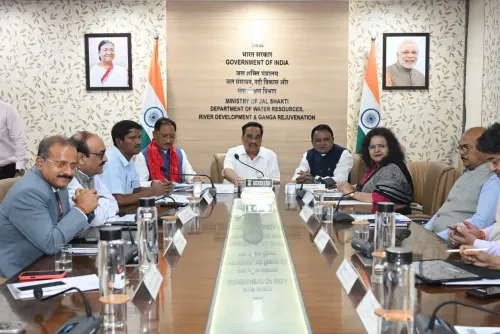
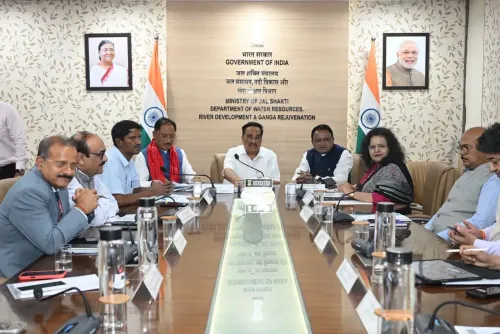
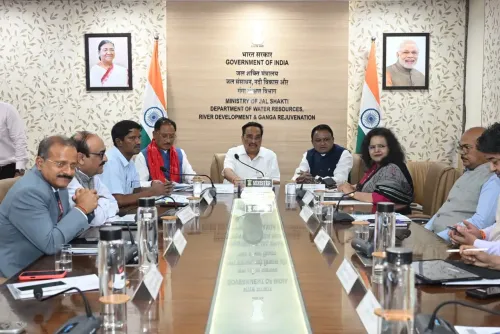
A river that gives life to two states sat at the centre of a high-stakes meeting in New Delhi on Thursday, 30 July 2026. The Chief Minister's Office of Chhattisgarh confirmed that Chief Minister Vishnu Dev Sai and Odisha Chief Minister Mohan Charan Majhi joined Union Jal Shakti Minister C.R. Patil for a crucial dialogue aimed at reaching a lasting resolution to the long-running Mahanadi river water dispute.
Two Chief Ministers, One River, One Room
The meeting, chaired by C.R. Patil, brought together the political heads of both riparian states under the Union government's roof — a signal that New Delhi is pushing for a negotiated settlement alongside the ongoing tribunal process. CM Sai framed the moment in terms that went beyond legalism: 'Mahanadi, Chhattisgarh aur Odisha ki saanjhi jeevan rekha hai' — 'The Mahanadi is the shared lifeline of Chhattisgarh and Odisha.' He called the meeting 'a new beginning towards a solution' and stressed that the river must become a bridge of 'cooperation, development, and brotherhood' between the two neighbours. Sai underlined that any durable settlement must account for the interests of farmers, tribal communities, and the water security of future generations in both states — a framing that signals Raipur's intent to keep the human stakes of the dispute front and centre, not just the engineering or legal arithmetic.A Dispute That Has Outlasted Governments
The Mahanadi originates in Chhattisgarh and flows roughly 900 kilometres before emptying into the Bay of Bengal through Odisha. That geography has long been a fault line: Odisha accuses upstream Chhattisgarh of constructing barrages and diverting water, starving its delta farmers and the Hirakud reservoir downstream. Chhattisgarh contests those claims and argues its projects are within its sovereign rights. The Central Government constituted the Mahanadi Water Disputes Tribunal in 2018 under the Inter-State River Water Disputes Act, 1956 — the same legal architecture that has governed contests over the Cauvery, Krishna, and Godavari for decades. Tribunals under this Act are notoriously slow; bilateral political meetings like today's are often the more nimble path to interim arrangements that reduce tension while formal adjudication grinds on.Cooperative Federalism on Trial
The optics of Thursday's meeting are deliberate. Having the Union minister chair a joint session with two state chief ministers — rather than letting the dispute fester in tribunal corridors — is textbook cooperative federalism: Centre as convener, states as partners, litigation as last resort. The hashtags the CMO used, #CooperativeFederalism and #InterStateCooperation, are not accidental; they telegraph the political narrative Raipur wants attached to this process. For the BJP, which governs both Chhattisgarh and Odisha as well as the Centre, the alignment offers a rare political window to demonstrate that shared party affiliation can translate into shared governance outcomes on a dispute that has defied resolution for years. Whether that window produces a concrete water-sharing formula — or remains a warm photo opportunity — is the question both states' farmers will be watching. The Mahanadi has waited long enough. Now the clock is on the politicians.Point of View
Tribal communities, and future generations is a calculated reframing: it shifts the discourse from a technical legal contest to a human-welfare imperative, which is harder to oppose. If a bilateral framework emerges, it would validate the cooperative federalism model as a faster alternative to tribunal adjudication — a template with implications for other unresolved inter-state water disputes across India. The real test, however, is whether this political goodwill translates into a concrete, enforceable water-sharing arrangement or remains a diplomatic gesture.
NationPress
30 Jul 2026
Frequently Asked Questions
What is the Mahanadi water dispute between Chhattisgarh and Odisha?
The Mahanadi water dispute centres on Odisha's allegation that upstream dams and barrages built by Chhattisgarh reduce water flow into Odisha, harming farmers and the Hirakud reservoir. Chhattisgarh contests these claims. A Central tribunal was set up in 2018 to adjudicate the issue.
What happened at the Mahanadi water meeting on 30 July 2026?
Union Jal Shakti Minister C.R. Patil chaired a meeting in New Delhi on 30 July 2026 with Chhattisgarh Chief Minister Vishnu Dev Sai and Odisha Chief Minister Mohan Charan Majhi to work towards a permanent resolution of the Mahanadi water dispute.
Who is C.R. Patil and what is his role in the Mahanadi dispute?
C.R. Patil is India's Union Minister of Jal Shakti, the ministry responsible for water resources and inter-state river disputes. He chaired the 30 July 2026 meeting between the two state chief ministers as the Centre's representative facilitating dialogue.
What is the Mahanadi Water Disputes Tribunal?
The Mahanadi Water Disputes Tribunal was constituted by the Central Government in 2018 under the Inter-State River Water Disputes Act, 1956, to adjudicate the water-sharing dispute between Chhattisgarh and Odisha. Bilateral political meetings like the one on 30 July 2026 run parallel to the tribunal process.
How does the Mahanadi dispute affect farmers and tribal communities?
Farmers in Odisha depend on the Mahanadi's flow for irrigation, particularly through the Hirakud reservoir. Tribal communities in both states rely on the river for agriculture and livelihoods. Any reduction in downstream flow directly threatens crop yields and water security for these populations.