Maharashtra CMO: AI to Power Caste Verification Process
Synopsis
Maharashtra's Chief Minister's Office announced on 3 July 2026 that artificial intelligence will be integrated into the state's caste verification process. The move, attributed to CM Devendra Fadnavis, aims to speed up scrutiny of caste certificates that underpin reservation entitlements for millions of applicants in education and employment.
Key Takeaways
The Chief Minister's Office of Maharashtra announced on 3 July 2026 that AI will be added to the caste verification process.
The announcement is attributed to Chief Minister Devendra Fadnavis , a BJP leader with a track record of e-governance initiatives.
Maharashtra's caste scrutiny system covers Scheduled Castes, Scheduled Tribes, OBCs, and Nomadic Tribes , making it among the most legally complex in India.
The move follows years of digitisation of caste, income, and domicile certificate applications begun in the mid-2010s .
Pilot districts, rollout timelines, and the AI system's technical scope have not yet been disclosed.
Courts that have previously intervened in Maharashtra's verification disputes are expected to scrutinise the AI-assisted process.
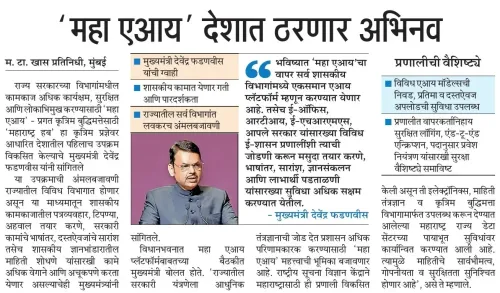
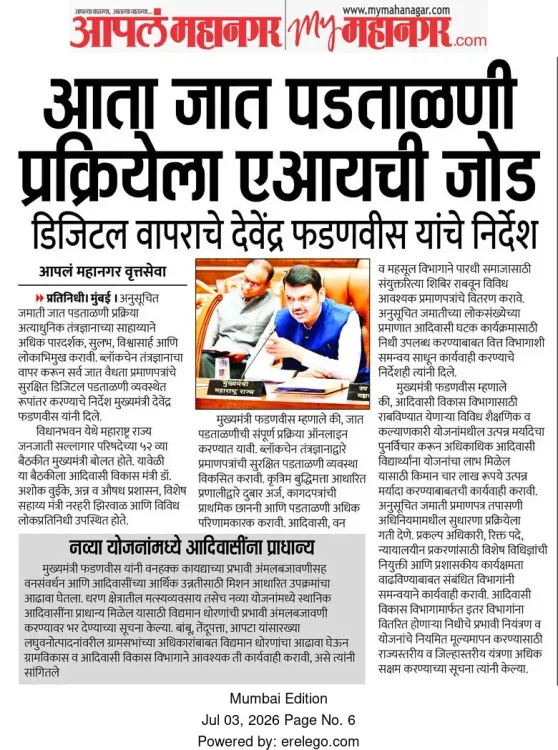
The Chief Minister's Office of Maharashtra announced on Friday, 3 July 2026 that the state's caste verification process will now be integrated with artificial intelligence, signalling a significant upgrade to one of Maharashtra's most scrutinised administrative workflows. The announcement, made via the official CMO handle, was attributed to Chief Minister Devendra Fadnavis.
Context
The post, written in Hindi, states: 'Aata jaat padtaḷṇī prakriyela AI chi joḍ' — 'Now, the caste verification process gets the addition of AI.' The announcement positions Maharashtra as one of the first major Indian states to formally embed AI tools into the caste certificate scrutiny pipeline, a process that affects millions of applicants seeking benefits under reservation policies in education and employment.
Caste verification in Maharashtra has historically been handled by district-level scrutiny committees under the revenue department. The process involves cross-checking documentary evidence of caste claims, a task prone to delays, inconsistencies, and litigation.
Policy Backdrop
Maharashtra began digitising applications for caste, income, and domicile certificates in the mid-2010s, reducing manual bottlenecks and enabling online tracking. The Digital India programme launched in 2014 further accelerated state-level digitisation, with Aadhaar-based identity checks being integrated into certificate workflows across several states.
The introduction of AI follows that trajectory. Earlier pilots across Indian states used biometric databases to flag duplicate or fraudulent certificate claims. AI-assisted document scrutiny is expected to reduce processing time and minimise human discretion at the initial verification stage, which has been a source of corruption complaints and court challenges.
Chief Minister Devendra Fadnavis, a Bharatiya Janata Party leader with a record of championing e-governance during his previous tenures, has consistently positioned technology adoption as a governance priority for the state.
Stakeholders and Impact
The primary beneficiaries of a faster, more accurate verification system are reserved-category students and job applicants who depend on valid caste certificates to access constitutional entitlements. Delays in verification have routinely caused candidates to miss admission or recruitment deadlines.
Revenue department officials and scrutiny committee members stand to see their workloads restructured, with AI potentially handling preliminary document checks before human review. Civil society groups tracking reservation implementation will be watching whether the system reduces or inadvertently introduces new forms of exclusion for applicants from remote or digitally underserved communities.
Maharashtra's complex caste demographics — encompassing Scheduled Castes, Scheduled Tribes, Other Backward Classes, and Nomadic Tribes — make the verification system one of the most legally contested in the country, with regular High Court and Supreme Court interventions on verification disputes.
What's Next
Key details that will determine the initiative's impact include the rollout schedule, which pilot districts are selected for the initial phase, and the technical architecture of the AI system — particularly whether it will be used for document authenticity checks, pattern recognition across historical records, or both.
Judicial scrutiny is also likely. Courts that have previously intervened in Maharashtra's caste verification disputes may be called upon to assess whether AI-assisted decisions meet the standards of natural justice, especially in cases where certificates are rejected. The government's next steps on framing guidelines and grievance redressal mechanisms will be closely watched by legal experts and applicant communities alike.
Point of View
But it also carries political weight: CM Fadnavis is signalling modernisation of a process that has long been a flashpoint for both corruption allegations and community grievances. The move fits a broader national pattern where state governments use technology adoption to demonstrate administrative reform without altering the underlying policy architecture of reservations. The real test will be in implementation — whether the AI reduces genuine fraud and delays, or becomes a new layer of opaque rejection that drives more litigation. Judicial oversight and community consultation will determine whether this is a governance upgrade or a governance risk.
NationPress
1 Oct 2026
Frequently Asked Questions
What is Maharashtra's new AI caste verification system?
Maharashtra's government announced on 3 July 2026 that artificial intelligence will be integrated into its caste certificate verification process to speed up scrutiny and reduce fraudulent claims.
Who announced AI integration in Maharashtra's caste verification?
The announcement was made by the Chief Minister's Office of Maharashtra and attributed to Chief Minister Devendra Fadnavis.
How does caste verification work in Maharashtra?
Caste verification in Maharashtra is conducted by district-level scrutiny committees under the revenue department, which examine documentary evidence before issuing or validating caste certificates used for reservation benefits.
Which categories are covered under Maharashtra's caste certificate system?
The system covers Scheduled Castes, Scheduled Tribes, Other Backward Classes, and Nomadic Tribes, whose members require verified certificates to access reservation entitlements in education and government employment.
Will courts review AI-based caste verification decisions in Maharashtra?
Legal experts expect High Courts and potentially the Supreme Court to examine whether AI-assisted verification decisions meet natural justice standards, particularly in cases where certificates are rejected.