Maharashtra Government Approves Anti-Conversion Legislation for 2026
Synopsis
The Maharashtra government has approved the anti-conversion Bill, aiming to curb fraudulent conversions while protecting individual religious freedoms. This legislation, more stringent than existing laws in other states, will be tabled during the Budget Session.
Key Takeaways
The Maharashtra government approved the anti-conversion Bill.
The Bill aims to prevent forced and fraudulent religious conversions.
It establishes non-bailable offenses for offenders.
Repeat offenders face stricter penalties.
The legislation aligns with constitutional rights to religious freedom.
Mumbai, March 5 (NationPress) The Mahayuti administration in Maharashtra has, during a Cabinet meeting on Thursday, sanctioned the long-awaited anti-conversion Bill known as the Maharashtra Freedom of Religion Act, 2026. This Bill is set to be presented in the Maharashtra Legislature within the ongoing Budget Session, followed by the issuance of a Government Resolution (GR).
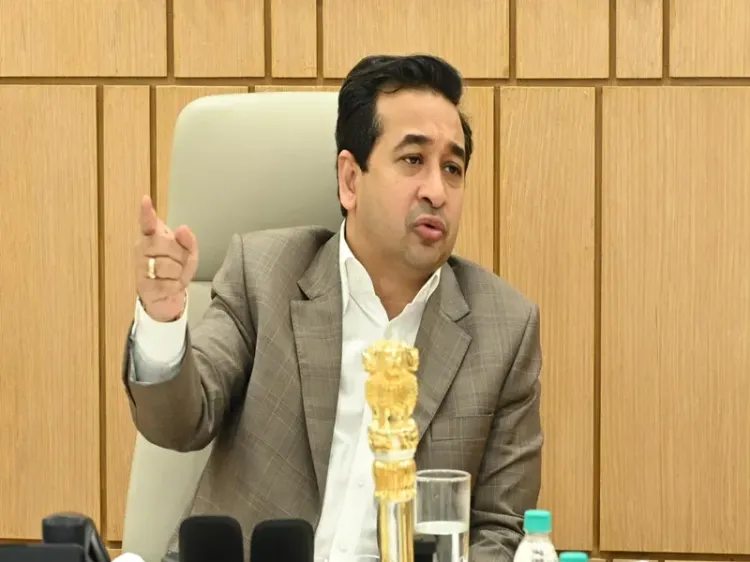
Minister Nitesh Rane confirmed the Cabinet's resolution to introduce the anti-conversion Bill in this session.
The proposed legislation stipulates that any individual engaging in religious conversion through force, deception, or inducements will face a non-bailable offense.
Rane also mentioned that there are provisions for the immediate arrest of offenders in such situations, and obtaining bail will not be straightforward. Detailed technical aspects of the law will be shared with the public shortly.
He asserted that this new legislation is aimed to be more stringent and effective than the current anti-conversion regulations in states like Madhya Pradesh and Gujarat.
According to sources from the government, the law intends to prevent coercive and fraudulent religious conversions while safeguarding individuals' religious freedoms.
The Bill seeks to establish a transparent legal structure that upholds religious freedom while preventing its exploitation.
This legislation aligns with similar laws in other states and contains clauses for the annulment of registration and penalties for those partaking in illegal conversions.
Repeat offenders will be subject to harsher penalties than first-time offenders, with the Home Department responsible for determining the appropriate level of punishment.
Government sources have stated that the Constitution of India guarantees every citizen the fundamental right to freedom of religion, which includes the liberty to practice, promote, and educate others about their religion.
“Nevertheless, there has been a surge in instances of unauthorized religious conversions in Maharashtra, involving physical, emotional, or psychological pressure on vulnerable individuals. These include threats of divine retribution, promises of material rewards, or manipulation via marriage. Such actions compromise the dignity and autonomy of individuals, violating core constitutional principles,” the sources added.
The government’s decision to proceed with the Bill was influenced by appeals from elected officials, organizations, and citizens advocating for measures to prevent fraudulent or coerced conversions.
“Other states in India have enacted similar laws. Consequently, a special committee was established, led by the Director General of Police (DGP) of Maharashtra, via a Government Resolution dated February 14, 2025, to analyze the local situation, recommend strategies for addressing complaints related to forced or fraudulent conversions, review laws in other states, and draft a Bill,” sources stated.
In this context, the DGP submitted the draft of the Maharashtra Freedom of Religion Act, 2026 to the state government in a letter dated February 26, 2026.
Additionally, Rane expressed support for the Bombay High Court's ruling on public prayer offerings, noting that numerous mosques and designated prayer areas are available in the state, suggesting no need for prayers on roads or at airports.
Point of View
Aligning with similar laws in other states.
NationPress
28 Sept 2026
Frequently Asked Questions
What is the Maharashtra Freedom of Religion Act, 2026?
It is an anti-conversion Bill aimed at preventing fraudulent and coercive religious conversions while protecting individual religious freedoms.
What penalties does the Bill impose?
The Bill establishes non-bailable offenses for forced conversions, with provisions for arrest and strict penalties for repeat offenders.
Why was this Bill introduced?
The Bill was introduced in response to concerns raised by citizens and elected representatives regarding unauthorized religious conversions.
How does this Bill compare to laws in other states?
It is designed to be more stringent and effective than existing anti-conversion laws in states like Madhya Pradesh and Gujarat.
What is the constitutional basis for this legislation?
The Constitution of India guarantees every citizen the fundamental right to freedom of religion, which this Bill seeks to uphold.