Maharashtra CMO launches Drug Free Mumbai drive for 5 lakh students

Synopsis
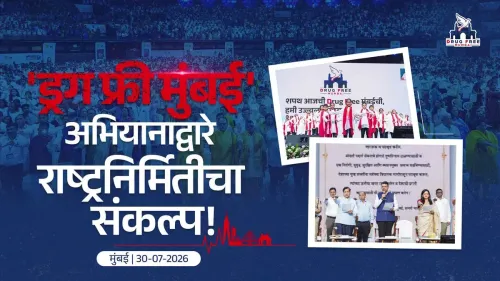
Maharashtra's Chief Minister's Office has launched 'Drug Free Mumbai', an anti-drug awareness campaign targeting over 5 lakh students across roughly 3,000 schools and 500-plus colleges in Mumbai, backed by more than 2,000 trained counsellors.
Key Takeaways
The Chief Minister's Office of Maharashtra announced the Drug Free Mumbai – Nashamukt Janjagruti Abhiyan on 30 July 2026 .
The campaign aims to reach over 5 lakh students across Mumbai's educational institutions.
Coverage targets approximately 3,000 schools and more than 500 colleges in Mumbai.
More than 2,000 trained counsellors will be deployed to deliver the anti-drug message.
The drive aligns with India's national Nasha Mukt Bharat Abhiyan , launched in 2020 .
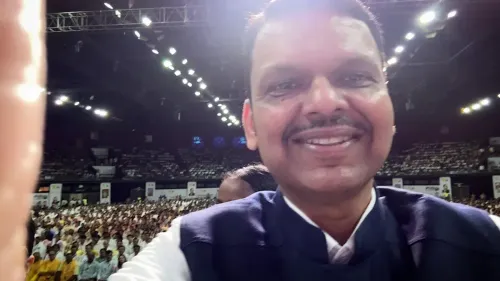
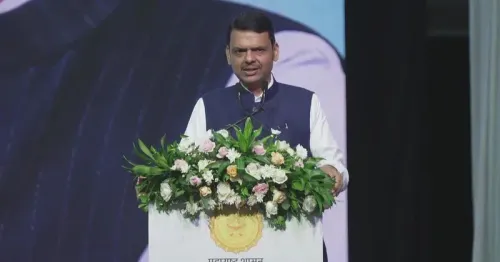
Chief Minister Devendra Fadnavis and MP Lodha are tagged as key stakeholders in the initiative.
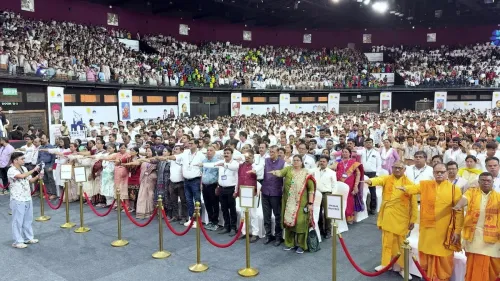
Mumbai's classrooms are about to become the frontline in Maharashtra's war on drugs. The Chief Minister's Office of Maharashtra announced the 'Drug Free Mumbai – Nashamukt Janjagruti Abhiyan' (नशामुक्ती जनजागृती अभियान) on Thursday, 30 July 2026 — a sweeping awareness campaign designed to reach over 5 lakh students across the city's educational institutions.
The campaign's stated ambition is striking in its scale: approximately 3,000 schools and more than 500 colleges in Mumbai are to be covered, with the involvement of over 2,000 trained counsellors who will carry the anti-drug message directly into student communities. The CMO tagged Chief Minister Devendra Fadnavis and MP Lodha in the post, signalling high-level political ownership of the drive.
What the 'Drug Free Mumbai' campaign actually does
At its core, the initiative is a mass-awareness push — not a law-enforcement operation. Trained counsellors embedded in schools and colleges will engage students on the dangers of substance abuse, aiming to build preventive knowledge before addiction takes hold. The campaign's official handle @drugfreemumbai_ has been activated to sustain public engagement beyond the classroom.
The choice of Mumbai as the focal city is deliberate. As India's financial capital and Maharashtra's most densely populated urban centre, Mumbai has repeatedly been flagged by state administrations for the prevalence of drug-related risks among its young population — a pattern that has driven periodic de-addiction drives for over a decade.
Where this fits in India's anti-drug policy arc
The Maharashtra drive builds on a national template. The central government's Nasha Mukt Bharat Abhiyan, launched in 2020, established a framework for state-level awareness campaigns targeting youth, with an emphasis on educational institutions and community counselling. Maharashtra's new campaign follows that blueprint while concentrating its firepower on a single, high-impact city.
State governments across India have increasingly leaned on the school-and-college pipeline as the most cost-effective route to preventive health messaging — reaching students before habits form, rather than intervening after addiction sets in. The involvement of trained counsellors, rather than just teachers or police, marks a shift toward a welfare-first approach.
With 5 lakh students as the target and 2,000-plus counsellors as the delivery mechanism, the real test will be whether coverage translates into measurable behavioural change — or remains a well-intentioned headline. Maharashtra's CMO has the numbers on paper; the streets of Mumbai will write the verdict.
Point of View
Channelling the architecture of the Centre's 2020 Nasha Mukt Bharat Abhiyan into a city-specific, counsellor-led model. By anchoring the initiative in schools and colleges rather than law enforcement, the Fadnavis administration is making a visible bet on preventive welfare over punitive action — a framing that carries political dividends in a city where youth issues are electorally sensitive. The scale declared — 3,000 schools, 500 colleges, 2,000 counsellors — sets a high public benchmark, meaning progress reports and independent assessments will be closely watched. Whether this drive sustains beyond the announcement cycle or fades like earlier periodic campaigns will define its true policy legacy.
NationPress
30 Jul 2026
Frequently Asked Questions
What is the Drug Free Mumbai campaign?
'Drug Free Mumbai – Nashamukt Janjagruti Abhiyan' is a Maharashtra government anti-drug awareness campaign targeting over 5 lakh students across approximately 3,000 schools and 500-plus colleges in Mumbai, with more than 2,000 trained counsellors involved.
Who launched the Drug Free Mumbai campaign?
The campaign was announced by the Chief Minister's Office of Maharashtra, with Chief Minister Devendra Fadnavis and MP Lodha tagged as key figures associated with the initiative.
How many students will the Drug Free Mumbai campaign reach?
The campaign aims to reach over 5 lakh (500,000) students across Mumbai's educational institutions.
How is the Drug Free Mumbai drive connected to the national Nasha Mukt Bharat Abhiyan?
The Maharashtra campaign follows the framework of India's Nasha Mukt Bharat Abhiyan, launched by the central government in 2020, which encouraged states to run youth-focused anti-drug awareness programmes through educational institutions and community counselling.
What role do counsellors play in the Drug Free Mumbai campaign?
More than 2,000 trained counsellors will be deployed across schools and colleges in Mumbai to engage students directly on the dangers of substance abuse, forming the primary delivery mechanism of the campaign.