Maharashtra Forms 7-Member Panel to Draft UCC
Synopsis
Maharashtra's Chief Minister's Office announced a seven-member panel to draft a Uniform Civil Code for the state under CM Devendra Fadnavis, making Maharashtra the latest BJP-governed state to move toward UCC legislation following Uttarakhand's 2024 enactment.
Key Takeaways
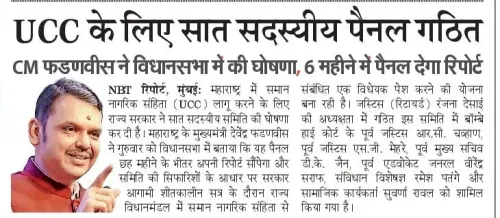
The Chief Minister's Office of Maharashtra announced on 10 July 2026 that a seven-member panel has been constituted to draft a Uniform Civil Code for the state.
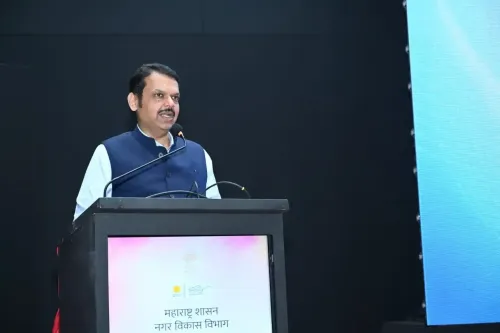
Chief Minister Devendra Fadnavis is leading the BJP-led coalition government that has initiated this law reform effort.
The UCC seeks to replace religion-specific personal laws with a single framework covering marriage, divorce, inheritance, and adoption.
Uttarakhand became the first Indian state to enact a UCC in 2024 , setting the precedent Maharashtra is now following.
The move aligns with the BJP's 2019 and 2024 national election manifestos , which committed to implementing a nationwide UCC.
Legal questions over state versus central competence to legislate on UCC may eventually require Supreme Court intervention.
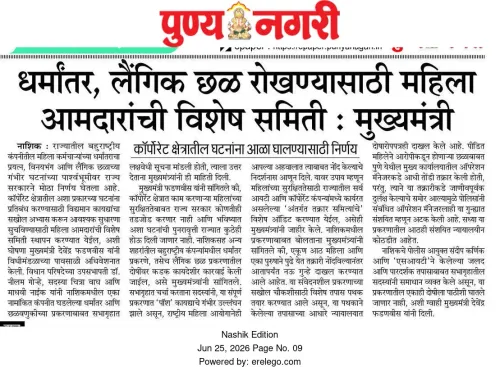
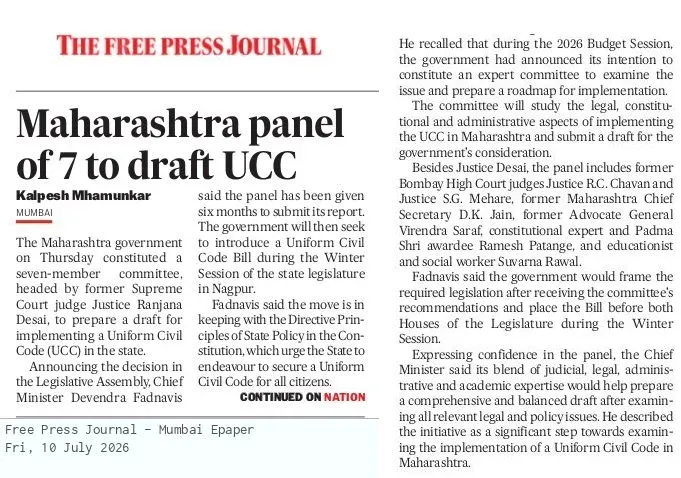
The Chief Minister's Office of Maharashtra announced on Friday, 10 July 2026 that the state government under Chief Minister Devendra Fadnavis has constituted a seven-member panel to draft a Uniform Civil Code (UCC) for the state, marking a significant step in Maharashtra's law reform agenda.
Context
The announcement, made via the official CMO Maharashtra account on X as a reply to Chief Minister Devendra Fadnavis, confirms that Maharashtra is moving formally toward drafting its own version of the UCC — a common set of civil laws governing marriage, divorce, inheritance, and adoption applicable to all citizens regardless of religion. The post states plainly: 'Maharashtra panel of 7 to draft UCC.'
The UCC is rooted in Article 44 of the Indian Constitution, which lists it as a Directive Principle of State Policy, instructing the state to endeavour to secure a uniform civil code for citizens across the country. The provision has remained largely aspirational at the national level for decades.
Policy Backdrop
Uttarakhand became the first Indian state to enact a UCC in 2024, having constituted an expert committee in 2022 to examine and draft the legislation. That precedent opened the door for other BJP-governed states to pursue similar measures.
The Bharatiya Janata Party (BJP) included a commitment to implementing a nationwide UCC in both its 2019 and 2024 general election manifestos. Maharashtra, led by a BJP-led coalition, is now among the states translating that electoral position into concrete legislative groundwork. Several other BJP-ruled states have similarly formed expert bodies to examine state-level UCC frameworks, reflecting a broader federal push on the issue.
Stakeholders and Impact
The formation of the drafting panel has direct implications for religious communities across Maharashtra, as a UCC would replace existing personal laws — such as those governing Muslim, Hindu, Christian, and Parsi communities separately — with a single statutory framework. Women's rights groups have historically been among the strongest proponents of a UCC, arguing that uniform laws would close gender gaps embedded in certain personal law systems, particularly around inheritance and divorce rights.
Opponents, including several minority community organisations, have raised concerns about cultural autonomy and the constitutional right to religious practice. The seven-member panel's deliberations are expected to navigate these competing interests before any draft is tabled before the Maharashtra state legislature.
What's Next
The immediate focus will be on the composition and terms of reference of the newly formed panel. Observers will watch closely whether Maharashtra tables a draft UCC bill during the winter 2026 assembly session, which would make it only the second Indian state to move toward enacting such a law.
Any state-level UCC legislation is also likely to attract legal scrutiny over the question of whether states hold the constitutional competence to legislate in this area — an issue that may ultimately require adjudication by the Supreme Court of India. Maharashtra's move adds fresh urgency to that unresolved federal debate.
Point of View
And it carries far greater symbolic weight given Maharashtra's size and demographic diversity. For the BJP, it converts a long-standing manifesto commitment into visible executive action in a politically pivotal state ahead of future electoral cycles. The panel's work will be scrutinised not only for its legal draftsmanship but as a test of whether a populous, multi-religious state can navigate UCC implementation without triggering the social friction that critics warn of. The broader implication is that the UCC debate is shifting from Parliament to state capitals, complicating the question of whether a patchwork of state UCCs serves the constitutional vision of a single uniform code.
NationPress
10 Jul 2026
Frequently Asked Questions
What is the Maharashtra UCC panel announced in July 2026?
The Chief Minister's Office of Maharashtra announced on 10 July 2026 that a seven-member panel has been formed to draft a Uniform Civil Code for the state under CM Devendra Fadnavis.
What is the Uniform Civil Code and why does it matter?
The Uniform Civil Code (UCC) is a proposed single set of civil laws on marriage, divorce, inheritance, and adoption applicable to all citizens regardless of religion, as envisioned under Article 44 of the Indian Constitution. It replaces separate personal laws for different religious communities.
Which Indian state was the first to implement a UCC?
Uttarakhand became the first Indian state to enact a Uniform Civil Code in 2024, after constituting an expert drafting committee in 2022.
Can a state government implement its own Uniform Civil Code in India?
The constitutional competence of states to legislate on UCC is debated. While states can enact laws, a UCC is traditionally seen as requiring parliamentary legislation, and any state law may face legal challenges that could go to the Supreme Court of India.
How does Maharashtra's UCC panel relate to BJP's national policy?
The BJP included a commitment to a nationwide UCC in both its 2019 and 2024 general election manifestos. Maharashtra's panel is part of a broader pattern of BJP-governed states taking state-level steps toward UCC legislation in line with that national position.