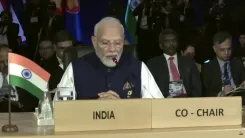
Maharashtra launches India's first SO2 emissions trading scheme, 13 crore to benefit
Synopsis
Maharashtra has done what no Indian state has before — built a market to price industrial sulfur dioxide pollution. With 13 crore residents in scope and an AI-inspection MoU signed the same day, the MPCB's SO2 trading scheme is both a policy landmark and a template that other high-pollution states will now watch closely.
Key Takeaways
The Maharashtra Pollution Control Board (MPCB) launched India's first sulfur dioxide emissions trading scheme on 17 November 2026 .
The scheme covers the entire state of Maharashtra and is expected to benefit approximately 13 crore residents through improved air quality.
Industrial plants can trade SO2 emission permits , incentivising lower-cost polluters to cut more and sell surplus allowances to higher-cost facilities.
The MPCB and a research institute signed an MoU to develop an AI-assisted inspection framework targeting non-compliant industrial facilities.
The pilot follows years of preparation to establish accurate emissions tracking mechanisms and was developed in collaboration with academic and research partners.
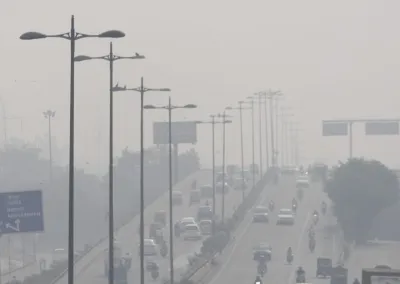
The Maharashtra Pollution Control Board (MPCB) on Tuesday, 17 November 2026, announced the launch of India's first sulfur dioxide (SO2) emissions trading scheme, marking a landmark shift in the country's approach to industrial air pollution control. The scheme, which covers the entire state of Maharashtra, is expected to benefit approximately 13 crore residents through measurably improved air quality.
How the Emissions Market Works
Under the Maharashtra Sulfur Dioxide Emissions Trading Scheme, participating industrial plants are allocated emission permits that can be bought and sold on a regulated market. The mechanism creates a financial incentive for facilities with lower pollution-reduction costs to cut emissions more aggressively and sell their surplus permits to plants facing higher compliance costs. This market-based approach is designed to achieve overall emission reductions at the lowest aggregate economic cost — a model that has demonstrated results in several international jurisdictions.
The pilot launch follows years of groundwork by regulatory authorities to build reliable, real-time emissions tracking systems. Officials indicated the initiative is being executed in close collaboration with academic and research partners to enable the eventual scaling of emissions trading across the region.
What the Environment Minister Said
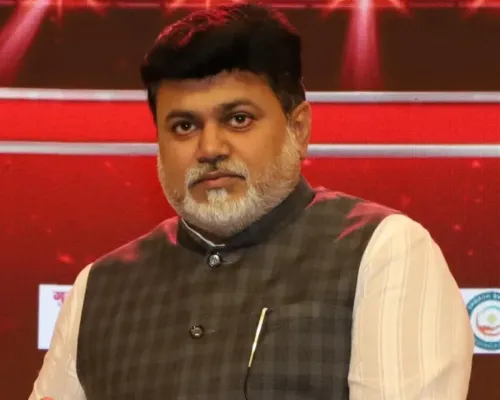
Addressing the launch event, the state's Minister for Environment and Climate Change underscored the importance of deploying technology — including artificial intelligence (AI) — to monitor industrial pollution more intelligently and facilitate collaborative solutions between regulators and industry. Officials reiterated that the regulatory philosophy centres on cooperating with industries rather than adversarial enforcement, with the goal of advancing sustainable development alongside environmental protection.
AI Partnership for Smarter Enforcement
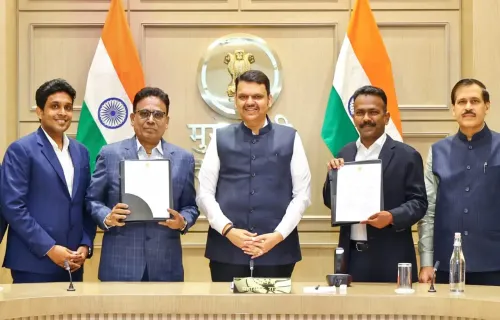
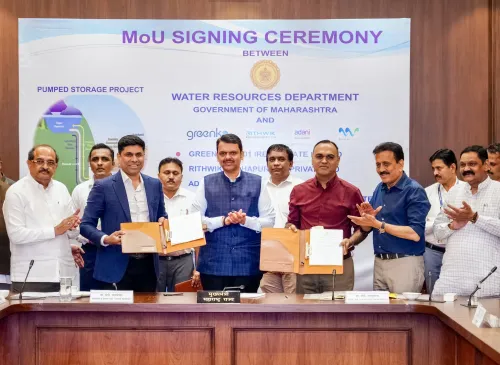
Separately, the MPCB and a prominent research institute signed a Memorandum of Understanding (MoU) at the same event to advance data-driven environmental governance. The partnership will jointly develop and pilot an AI-assisted inspection framework designed to help officials identify industrial facilities with a higher probability of non-compliance. The initiative will be supported by regular technical training and data analytics workshops for field inspectors, aiming to make enforcement more targeted and evidence-based.
Why This Matters for India
India has long grappled with industrial SO2 emissions, particularly from thermal power plants and manufacturing clusters concentrated in states like Maharashtra, Gujarat, and Chhattisgarh. Market-based pollution control tools such as emissions trading have been widely recommended by economists and environmental scientists as more cost-efficient than fixed regulatory caps, since they allow emission reductions to occur where they are cheapest. Maharashtra's scheme is the first of its kind in the country, and its outcomes are likely to inform whether similar markets are rolled out in other high-pollution states. Notably, this initiative aligns with India's broader commitments under its Nationally Determined Contributions (NDCs) to the Paris Agreement, as the country seeks to decouple economic growth from environmental degradation.
Point of View
From the US Acid Rain Programme to the EU ETS, because they let reductions happen where they cost least. The harder question is enforcement: India's environmental compliance history is patchy, and a permit market is only as credible as its monitoring data. The AI-inspection MoU signals that MPCB is thinking about this, but results will depend on whether the technology is actually integrated into enforcement decisions or becomes a demonstration project. If the pilot delivers measurable SO2 reductions with verified industry participation, it could unlock a scalable model for Gujarat, Chhattisgarh, and the Indo-Gangetic belt — where the pollution burden is far heavier.
NationPress
17 Nov 2026
Frequently Asked Questions
What is the Maharashtra Sulfur Dioxide Emissions Trading Scheme?
It is India's first market-based SO2 pollution control mechanism, launched by the Maharashtra Pollution Control Board on 17 November 2026. Industrial plants are allocated emission permits that can be traded, incentivising lower-cost polluters to make deeper cuts and sell surplus permits to higher-cost facilities, achieving overall reductions at lower economic cost.
Who will benefit from the SO2 emissions trading scheme?
Approximately 13 crore Maharashtra residents are expected to benefit from improved air quality under the scheme. The initiative also aims to support economic growth by creating a cost-efficient compliance pathway for industries.
How does an emissions trading scheme reduce pollution?
An emissions trading scheme sets a cap on total allowable emissions and issues tradeable permits up to that cap. Facilities that cut pollution below their allocation can sell spare permits; those that find cuts expensive can buy them. The market price of permits creates a continuous financial incentive to reduce emissions.
What is the AI inspection framework announced alongside the scheme?
The MPCB and a research institute signed an MoU to jointly develop an AI-assisted inspection system that identifies industrial facilities with a higher probability of non-compliance. The framework will be backed by data analytics workshops and technical training for MPCB inspectors.
Could this scheme be extended to other Indian states?
Maharashtra's pilot is explicitly designed with scalability in mind, developed in collaboration with academic and research partners. If the scheme delivers verifiable SO2 reductions, it is widely expected to serve as a template for other high-pollution states across India.