Maharashtra Police gets ₹733.28 crore Centre boost for AI, maritime security

Synopsis
The Centre has sanctioned ₹733.28 crore for Maharashtra Police — one of the largest ASUMP allocations for the state — targeting AI integration, coastal surveillance along a 720-km shoreline, cyber fraud cells, and anti-drug squads. With crime shifting from streets to screens and sea routes, this is less a routine upgrade and more a structural rethink of how Maharashtra polices its borders and networks.
Key Takeaways
The Centre has sanctioned ₹733.28 crore for Maharashtra Police modernisation under the ASUMP scheme managed by the Ministry of Home Affairs .
Funding split: 60% from the Central Government, 40% from the Maharashtra state government .
Key focus areas include AI and cyber security , maritime surveillance along Maharashtra's 720-km coastline , anti-narcotics operations, and modern weapons and vehicles.
Chief Minister Devendra Fadnavis credited PM Modi and Home Minister Amit Shah for the approval.
The move comes as crime patterns shift toward cybercrime, deepfakes, and sea-route drug trafficking, officials said.
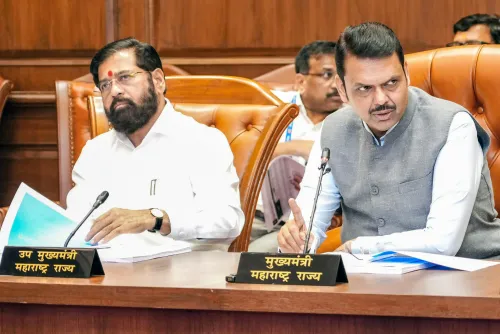
Maharashtra Police is set for a sweeping technological overhaul after the Centre sanctioned ₹733.28 crore under the Assistance to States for Modernisation of Police (ASUMP) scheme, Chief Minister Devendra Fadnavis announced on Tuesday, 16 June. The funding, approved by the Ministry of Home Affairs, will transform the force from a manpower-dependent organisation into an AI-driven, technology-first security apparatus.
Funding Structure
Of the total ₹733.28 crore outlay, 60 per cent — roughly ₹439.97 crore — will be borne by the Central Government, with the remaining 40 per cent contributed by the Maharashtra state government. Chief Minister Fadnavis publicly thanked Prime Minister Narendra Modi and Union Home Minister Amit Shah for clearing the package, calling it a critical step toward a 'future-ready' force.
What the Funds Will Cover
According to state government sources, the modernisation blueprint spans several frontline security domains. On the cyber security front, funds will be deployed to implement predictive AI tools, data analytics platforms, and advanced software within regional cyber cells to counter high-tech financial fraud and organised digital crime networks. Cyber labs will also be upgraded to address the surge in online financial scams and identity theft.
For maritime security, the allocation will finance high-speed patrol boats and sophisticated sonar and surveillance equipment to monitor Maharashtra's 720-km coastline — described by officials as 'strategically vulnerable.' Anti-narcotics squads will receive advanced technical scanners and intelligence-gathering tools designed to disrupt sea-route drug trafficking chains.
The procurement list further includes next-generation weaponry, protective gear, and high-speed tactical vehicles to improve response times and safety for citizens, women, and children.
Why This Matters Now
Government sources noted that the approval comes at a moment when the nature of crime in India is shifting rapidly — away from conventional street offences toward complex cybercrime, deepfakes, online financial syndicates, and narcotics smuggling via sea routes. For Mumbai and Maharashtra broadly, both of which remain prime targets for sophisticated financial crimes and coastal threats, officials argue the investment addresses an immediate national security gap.
Notably, this is not the first modernisation push for state police forces under ASUMP — the scheme has been a recurring vehicle for Centre-state security cooperation — but the scale of this sanction for Maharashtra is significant.
What Happens Next
State officials have indicated that funds will be strategically deployed across the identified sectors, though a detailed implementation timeline has not yet been made public. Industry observers and security analysts will watch closely to see whether the procurement and integration of AI tools translates into measurable improvements in crime detection and coastal surveillance, given that past modernisation cycles have sometimes lagged on execution.
Point of View
But the real question is execution. Maharashtra has received modernisation funds before, and the gap between procurement and operational deployment has historically been wide — cyber labs upgraded on paper but understaffed in practice, patrol boats acquired but not crewed adequately. The shift toward AI-driven policing also raises accountability questions that the announcement does not address: who audits the predictive tools, and what safeguards exist against misuse? The 720-km coastline argument is legitimate and overdue, but the anti-narcotics and cyber mandates need measurable outcome targets, not just equipment lists, to justify the scale of public investment.
NationPress
19 Sept 2026
Frequently Asked Questions
What is the ₹733.28 crore sanction for Maharashtra Police?
The Centre has approved ₹733.28 crore under the ASUMP (Assistance to States for Modernisation of Police) scheme for a comprehensive technological overhaul of Maharashtra Police. The funds will cover AI integration, cyber security labs, maritime surveillance, anti-narcotics equipment, and modern weapons and vehicles.
How is the ₹733.28 crore funding split between Centre and state?
The Central Government will contribute 60 per cent of the total — approximately ₹439.97 crore — while the Maharashtra state government will fund the remaining 40 per cent. This cost-sharing structure is standard under the ASUMP framework.
What is the ASUMP scheme?
ASUMP stands for Assistance to States for Modernisation of Police, a Central Government scheme managed by the Ministry of Home Affairs. It provides financial support to state governments for upgrading police infrastructure, technology, and equipment.
Why is maritime security a priority in this allocation?
Maharashtra has a 720-km coastline that officials describe as strategically vulnerable to sea-route drug trafficking and other threats. The funds will be used to procure high-speed patrol boats and sonar and surveillance equipment to strengthen coastal monitoring.
Which areas of policing will benefit from the AI and cyber security funds?
Regional cyber cells will receive predictive AI tools, data analytics platforms, and advanced software to counter online financial fraud, deepfakes, and organised digital crime networks. Cyber labs will also be upgraded to tackle identity theft and surging online scams.