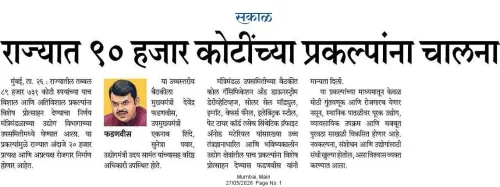
CM Fadnavis Hails Rs 733 Cr Centre Grant for Maharashtra Police
Synopsis
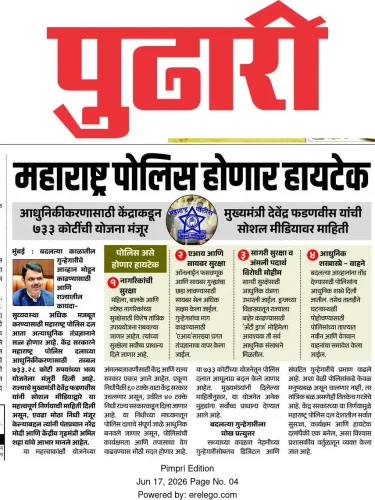
Chief Minister Devendra Fadnavis announced on June 16, 2026, that the Centre has approved Rs 733.28 crore for Maharashtra Police modernisation under a 60:40 funding split, covering maritime security, AI, cyber tools, anti-drugs operations, and new weapons and vehicles.
Key Takeaways
The central government has approved a Rs 733.28 crore modernisation scheme for Maharashtra Police .
Funding is split 60 per cent Centre and 40 per cent state government .
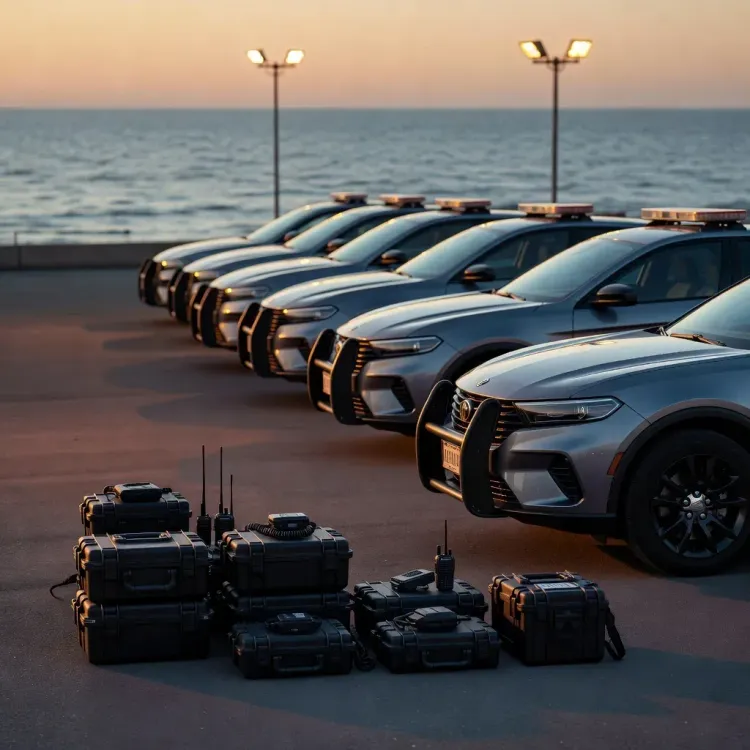
Key areas covered include maritime security , anti-drugs operations , cyber security , AI integration , modern weapons, and vehicles.
CM Devendra Fadnavis publicly credited PM Narendra Modi and Home Minister Amit Shah for the sanction.
The funds flow through the Modernisation of Police Forces (MPF) scheme , a long-standing central programme under the Ministry of Home Affairs.
Phased disbursement and procurement timelines by Maharashtra Police will determine the pace of on-ground implementation.
Maharashtra Chief Minister Devendra Fadnavis on Tuesday, June 16, 2026, announced that the central government has approved a Rs 733.28 crore modernisation plan for the Maharashtra Police, with 60 per cent of the funds to be borne by the Centre and the remaining 40 per cent by the state government. Fadnavis publicly thanked Prime Minister Narendra Modi and Union Home Minister Amit Shah for sanctioning what he called a landmark outlay for the state's police force.
Context
Posting in Marathi on X, Fadnavis described the development as 'aanandachi batmi' — 'joyful news'. He stated that the approved scheme would enable Maharashtra Police to be better equipped across several critical areas: maritime security, an anti-drugs campaign, cyber security, greater use of artificial intelligence, citizen safety, and the procurement of modern weapons and vehicles. The post was directed at @DGPMaharashtra, signalling the announcement was also addressed to the force's leadership.
Policy Backdrop
The funding flows under the Modernisation of Police Forces (MPF) scheme, a long-standing central programme administered by the Ministry of Home Affairs that has been in operation since the 1960s and has undergone several revisions over the decades. The scheme provides grants to states for upgrading police equipment, technology platforms, mobility assets, and physical infrastructure. Under successive NDA governments, the programme has placed increasing emphasis on technology integration — including AI-driven tools and cyber-crime capabilities — alongside specialised domains such as maritime security and narcotics interdiction. The 60:40 Centre-state funding ratio announced by Fadnavis reflects a cost-sharing model that has been applied to multiple states under this framework.
Stakeholders and Impact
Maharashtra Police, one of India's largest state police forces, is responsible for law and order across a state with a long coastline, major urban centres including Mumbai, and significant exposure to cyber crime and narcotics trafficking. The sanctioned funds are expected to benefit frontline personnel through better equipment and vehicles, while residents — particularly in coastal districts — stand to gain from enhanced maritime surveillance. The anti-drugs and cyber security components are especially relevant given the state's profile as a hub for both digital commerce and, historically, narcotics movement through its ports. Maharashtra Police personnel and urban and coastal communities are the primary direct beneficiaries.
What's Next
The immediate focus will shift to the Ministry of Home Affairs releasing funds in tranches and Maharashtra Police initiating procurement processes for weapons, vehicles, AI systems, and cyber tools. Phased disbursement timelines and tender procedures will determine how quickly the modernisation translates into operational capability on the ground. Fadnavis's public acknowledgment of Modi and Shah also underscores the political significance of central funding for state policing ahead of ongoing governance priorities in Maharashtra, and observers will watch whether similar tranches are extended to other large states under the same scheme.
Point of View
Arriving at a time when coastal and cyber threats have become central to internal security discourse. The 60:40 funding model reinforces the Centre's leverage over state policing priorities, nudging Maharashtra toward AI and maritime capabilities that align with the NDA government's broader security modernisation agenda. Fadnavis's effusive public thanks to Modi and Shah is also a political choreography — tying a state governance win to the central leadership ahead of future electoral cycles. The real test will be in procurement speed and operational deployment, where past MPF tranches have often faced delays at the state level.
NationPress
22 Sept 2026
Frequently Asked Questions
What is the Rs 733.28 crore Maharashtra Police modernisation scheme about?
The central government has approved Rs 733.28 crore to modernise the Maharashtra Police force, covering maritime security, anti-drugs operations, cyber security, AI technology, and the procurement of modern weapons and vehicles, under a 60:40 Centre-state funding split.
Who approved the Maharashtra Police modernisation funds?
The central government, under Prime Minister Narendra Modi and Union Home Minister Amit Shah, approved the scheme. Maharashtra CM Devendra Fadnavis announced and acknowledged the sanction on June 16, 2026.
What is the Modernisation of Police Forces (MPF) scheme?
The MPF scheme is a central programme run by the Ministry of Home Affairs that provides grants to state governments for upgrading police equipment, technology, vehicles, and infrastructure. It has been in operation since the 1960s with periodic revisions.
How will the Rs 733 crore be split between Centre and Maharashtra?
The Centre will contribute 60 per cent of the total Rs 733.28 crore, while the Maharashtra state government will fund the remaining 40 per cent.
What areas will Maharashtra Police improve with this funding?
The funds are earmarked for maritime security, anti-drugs campaigns, cyber security, greater use of artificial intelligence, citizen safety measures, and procurement of modern weapons and vehicles for Maharashtra Police.