Mahua Moitra: ECI Has No Record of Post-5 PM Votes in 200 Seats
Synopsis
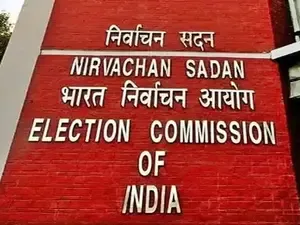
TMC MP Mahua Moitra has alleged that the Election Commission of India holds no record of voters who cast ballots after 5 PM in 200 seats across three states during the 2024 elections, calling it 'Vote Chori' and demanding accountability from ECI.
Key Takeaways
Mahua Moitra alleged on 19 November 2026 that ECI has no record of post-5 PM voter turnout in 200 seats spanning assembly and parliamentary constituencies across 3 states in the 2024 elections.
Recording time-stamped turnout data at multiple intervals is a mandatory ECI standard operating procedure at polling stations.
The allegation is part of a broader, ongoing opposition campaign questioning the completeness and timeliness of ECI-released 2024 election turnout data.
Moitra used the phrase 'Vote Chori' (vote theft), framing the missing data as evidence of systemic electoral irregularity rather than administrative error.
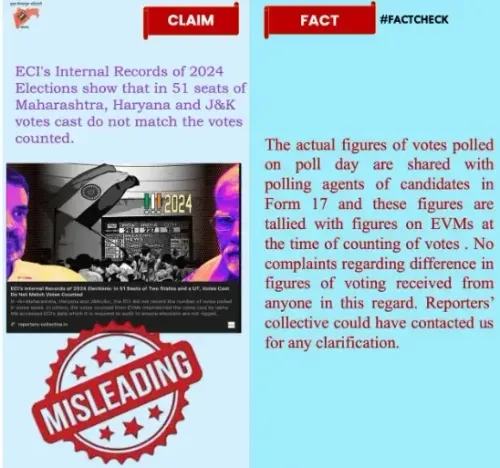
The ECI has not publicly responded to this specific claim; the figures cited by Moitra have not been independently verified from public ECI records.
The issue is likely to be raised in Parliament's upcoming winter session through formal questions or motions.
A data gap at the heart of India's largest democracy — that is the charge TMC MP Mahua Moitra levelled on Thursday, 19 November 2026, alleging that the Election Commission of India (ECI) holds no record of how many citizens voted after 5 PM across 200 seats — a mix of assembly and parliamentary constituencies — spanning three states during the 2024 general and assembly elections.
Moitra's post, addressed directly to @ecisveep — the ECI's official handle for its Systematic Voters' Education and Electoral Participation programme — frames the missing data not as a clerical oversight but as evidence of systematic irregularity, coining the phrase 'Vote Chori' (vote theft) to describe what she calls a pattern being 'discovered every day.'
What the ECI is mandated to record — and what is allegedly missing
Under the ECI's own standard operating procedures, polling-station officials are required to report turnout figures at multiple time intervals throughout voting day, including a final count after polls close. The post-5 PM window is critical: in many constituencies, a significant share of voters arrive in the final hours, making that data essential for validating total turnout figures.
Moitra's allegation is that for 200 seats across three states, that mandatory time-stamped record simply does not exist in ECI's archives. The specific states and seat names have not been named in the post, and the precise figures she cites are drawn from her own claimed findings — NationPress cannot independently verify them from publicly available ECI disclosures.
A pattern of post-2024 turnout disputes
Moitra's allegation is not an isolated one. Since the conclusion of the 2024 Lok Sabha elections — conducted across seven phases between April and June 2024 to constitute the 18th Lok Sabha — opposition parties have repeatedly flagged anomalies in ECI-published voter turnout data. The core concern: final turnout figures in several constituencies were reported significantly higher than the numbers recorded at the last officially announced time-stamp during voting day, with no clear accounting of votes cast in the intervening period.
The ECI has defended its processes, but demands for granular, time-indexed, polling-booth-level data have persisted. For critics, the gap is not merely administrative — it goes to the credibility of the final vote count itself. For the Commission, releasing disaggregated real-time data while protecting the secrecy of the ballot presents a genuine operational challenge. The debate has never been conclusively resolved.
Parliament's winter session looms as the pressure point
With Parliament's winter session approaching, Moitra's post signals that electoral data transparency is being readied as an opposition talking point on the floor of the House. As a sitting Lok Sabha MP and a consistent voice on institutional accountability, she has the platform to escalate the demand into formal parliamentary questions or an adjournment motion.
The ECI has not yet publicly responded to this specific allegation. Any formal clarification — or continued silence — will itself become part of the political record heading into the session.
India's elections are the world's largest democratic exercise. When the body entrusted with running them cannot — or does not — produce a time-stamped record of how many people voted, the question is no longer procedural. It is fundamental.
Point of View
Yet sweeping enough to indict the system. If proven, it would represent a serious institutional failure; if disproven, it would test the opposition's credibility on electoral integrity. Either way, the ECI's silence is becoming its own political liability. The winter session of Parliament is shaping up as the arena where this confrontation will be forced into the public record.
NationPress
19 Nov 2026
Frequently Asked Questions
What is Mahua Moitra's allegation about the 2024 elections?
Mahua Moitra has alleged that the Election Commission of India has no record of how many citizens voted after 5 PM in 200 assembly and parliamentary seats across three states during the 2024 elections, which she calls 'Vote Chori' or vote theft.
Is the ECI required to record time-stamped voter turnout data?
Yes. Under ECI standard operating procedures, polling officials are mandated to report voter turnout at multiple intervals during the day, including final figures after polls close. Missing post-5 PM data would represent a lapse in this mandatory process.
What is 'Vote Chori' that Mahua Moitra mentions?
'Vote Chori' literally means 'vote theft' in Hindi. Moitra uses the term to describe what she characterises as systematic irregularities in voter turnout records from the 2024 elections, suggesting votes may have been added without corresponding verified records.
Has the Election Commission responded to allegations about missing 2024 turnout data?
The ECI has not publicly responded to this specific allegation by Mahua Moitra. The Commission has previously defended its election management processes, but demands for granular time-indexed data have remained unresolved since 2024.
What is SVEEP, which Moitra tagged in her post?
SVEEP stands for Systematic Voters' Education and Electoral Participation — the ECI's programme for promoting voter awareness and participation. Moitra tagged its official handle to directly address the Election Commission's accountability arm.