Mahua Moitra invokes Faiz's 'Hum Dekhenge' in defiant post
Synopsis
TMC MP Mahua Moitra on 25 July 2026 quoted the opening line of Faiz Ahmed Faiz's iconic resistance poem 'Hum Dekhenge' on X, closing with 'Jai Hind' — a pointed literary signal of democratic dissent from the Krishnanagar MP.
Key Takeaways
TMC MP Mahua Moitra posted on X on 25 July 2026 quoting Faiz Ahmed Faiz's nazm 'Hum Dekhenge' .
The line 'Laazim hai ki hum bhi dekhenge' translates to 'It is certain that we too shall witness [the day].' Faiz Ahmed Faiz wrote the poem in 1979 as resistance to General Zia-ul-Haq 's martial law in Pakistan.
Moitra paired the Urdu verse with 'Jai Hind' , framing the dissent within constitutional Indian patriotism.
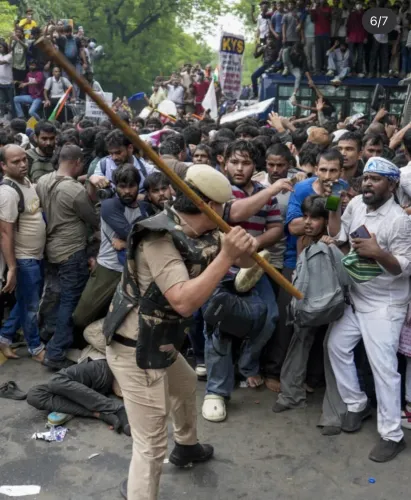
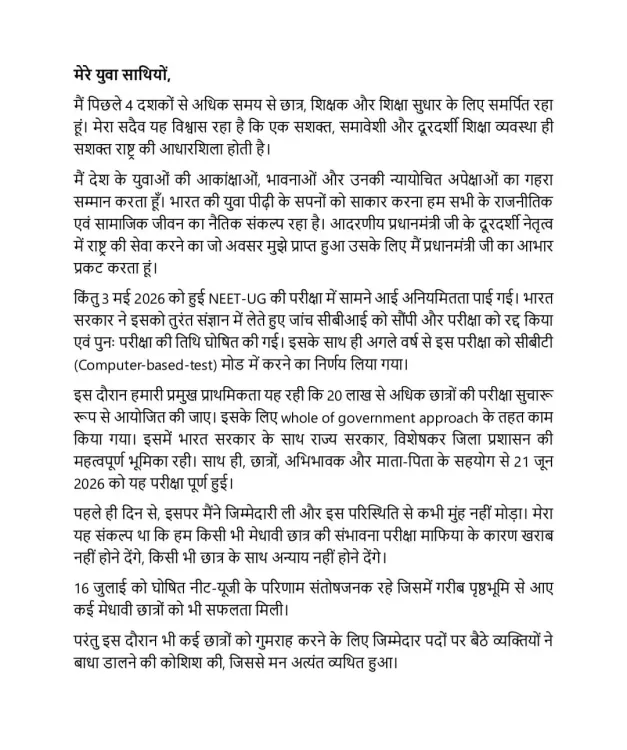
The post carried two images and was published without naming a specific political target or event.
Indian opposition politicians have a documented pattern of invoking progressive Urdu poetry during periods of political contestation.
TMC MP Mahua Moitra on Saturday, 25 July 2026, posted a charged political message on X, quoting the opening line of Faiz Ahmed Faiz's celebrated Urdu nazm 'Hum Dekhenge' and closing with a declaration of 'Jai Hind' — a pairing that signals democratic dissent wrapped in constitutional patriotism.
Context
Moitra's post reads: 'Laazim hai ki hum bhi dekhenge…. Jai Hind!' — translating roughly to 'It is certain that we too shall witness [the day]… Long live India!' The line is drawn from Faiz Ahmed Faiz's 1979 nazm 'Hum Dekhenge' ('We Shall Witness'), written as a cry of resistance against General Zia-ul-Haq's martial law regime in Pakistan. The poem has since transcended its original context and been invoked across South Asia whenever political voices seek to articulate hope amid repression.
The Krishnanagar MP accompanied the post with two images, the contents of which are not described in available metadata. Moitra is known for sharp parliamentary interventions and pointed social-media commentary, making such literary references a consistent part of her political voice.
Policy Backdrop
Indian politicians across the spectrum have periodically invoked progressive Urdu poetry in public statements to signal dissent or democratic aspiration. Faiz's verse in particular carries a layered resonance: composed under authoritarian conditions, it has been recited at protests, cultural gatherings, and parliamentary corridors alike. By appending 'Jai Hind', Moitra anchors the sentiment firmly within the frame of Indian constitutional patriotism, deflecting any reading that might associate the Pakistani poet's work with anti-national sentiment — a charge that has been levelled in the past against those who cite Faiz publicly in India.
The broader pattern is well established: opposition MPs and civil society voices have used such references during periods of heightened parliamentary or street-level political contestation, treating Urdu literary tradition as a shared democratic inheritance rather than a partisan or foreign artefact.
Stakeholders and Impact
For the All India Trinamool Congress and allied opposition formations, the post reinforces a narrative of principled resistance — without naming a specific adversary or policy, it invites supporters to read the context themselves. Civil society groups and literary communities that have long championed Faiz's legacy in India are likely to amplify the reference. Critics from the ruling dispensation may contest the appropriateness of citing a Pakistani poet, a debate that has recurred in Indian public discourse since at least 2019, when the poem gained renewed circulation during widespread protests.
For Moitra personally, the post continues a pattern of high-visibility social-media engagement that keeps her profile prominent between parliamentary sessions.
What's Next
The specific political trigger for this post — if any — has not been confirmed in available reporting. Observers will watch for follow-up remarks in parliament or at public events that may clarify the immediate provocation. TMC state-level messaging in West Bengal could echo the sentiment, particularly if the reference is tied to an ongoing legislative or electoral flashpoint. The post's resonance will ultimately depend on whether a concrete event crystallises around it in the coming days, transforming a literary invocation into a sustained political campaign line.
Point of View
If any, Moitra chooses to link it to in subsequent communications.
NationPress
25 Jul 2026
Frequently Asked Questions
What does 'Laazim hai ki hum bhi dekhenge' mean?
It is a line from Urdu poet Faiz Ahmed Faiz's nazm 'Hum Dekhenge,' meaning 'It is certain that we too shall witness [the day]' — an expression of defiant hope that justice or change will come.
Why did Mahua Moitra quote Faiz Ahmed Faiz?
Moitra quoted Faiz on 25 July 2026 as a signal of political dissent, following a pattern among Indian opposition politicians of using progressive Urdu poetry to articulate democratic aspiration without naming a specific target.
Who is Faiz Ahmed Faiz?
Faiz Ahmed Faiz was a Pakistani Urdu poet who wrote 'Hum Dekhenge' in 1979 during protests against General Zia-ul-Haq's military regime. The poem has since become one of the most cited verses of resistance in South Asian political discourse.
Why do Indian politicians quote Faiz Ahmed Faiz?
Indian politicians, particularly from opposition parties, have long cited Faiz to invoke a shared South Asian literary heritage of resistance. The practice signals democratic values and solidarity with civil society without requiring explicit policy language.
What is Mahua Moitra known for?
Mahua Moitra is the Trinamool Congress Lok Sabha MP from Krishnanagar, West Bengal, known for combative parliamentary speeches, sharp social-media commentary, and high-profile legal and political battles.