CM Sai's Swasth Bastar Abhiyan lifts maternal care in Naxal zones
Synopsis
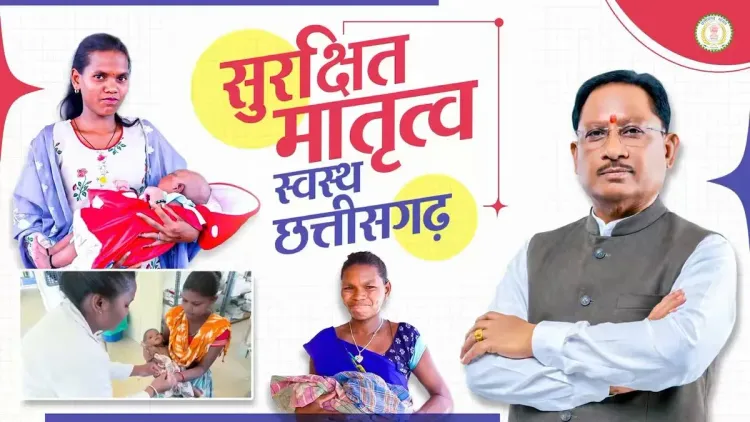
The Chhattisgarh CMO says Chief Minister Vishnu Deo Sai's Mukhyamantri Swasth Bastar Abhiyan is ensuring safe deliveries for women in Bastar — once inaccessible due to Naxal violence — with Sukma district reporting a 98.6 per cent institutional delivery rate.
Key Takeaways
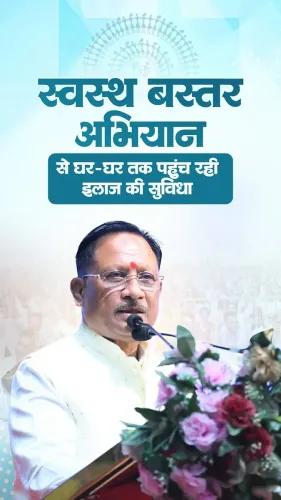
The Mukhyamantri Swasth Bastar Abhiyan is providing free ambulances, antenatal check-ups and institutional delivery access to pregnant women across the Bastar division .
Sukma district — one of Chhattisgarh's most Naxal-affected areas — has recorded a reported institutional delivery rate of 98.6 per cent under the scheme.
Chief Minister Vishnu Deo Sai , in office since December 2023 , has positioned the Abhiyan as a flagship welfare initiative under his 'Sushasan Sarkar' governance agenda.
The campaign builds on earlier foundations including the Mitanin community health worker programme (2002) and the Janani Suraksha Yojana under the National Rural Health Mission (2005).
Eight Bastar-division districts — including Dantewada , Bijapur , Narayanpur , Kanker and Kondagaon — are covered by the initiative.
Updated maternal mortality ratio data for Bastar districts is awaited to fully assess the scheme's public-health impact.
The Chief Minister's Office of Chhattisgarh announced on Saturday, 25 July 2026 that the Mukhyamantri Swasth Bastar Abhiyan is delivering safe deliveries and maternal healthcare to women in the Bastar region — districts where Naxal violence once made basic medical access nearly impossible. The post credited Chief Minister Vishnu Deo Sai with driving the initiative, citing a reported institutional delivery rate of 98.6 per cent in Sukma district.
Context
The CMO's post stated in Hindi: 'जहाँ कभी नक्सल भय से चिकित्सीय सुविधाएं पाना भी मुश्किल था' — 'where once even accessing medical facilities was difficult due to fear of Naxals.' The Bastar division, comprising districts such as Sukma, Dantewada, Bijapur, Kanker, Kondagaon, Narayanpur and Bastar itself, has for decades been the epicentre of Left Wing Extremism in central India. Routine health outreach — including antenatal check-ups and skilled birth attendance — was severely disrupted in the most conflict-affected blocks.
Under the Abhiyan, pregnant women are being provided timely health check-ups, free ambulance services, and access to institutional delivery facilities, according to the CMO. The campaign operates under the broader governance banner of Sushasan Sarkar (good governance government), a framing the Sai administration has used consistently since taking office in December 2023.
Policy Backdrop
The Mukhyamantri Swasth Bastar Abhiyan builds on a layered foundation of earlier health programmes. Chhattisgarh's Mitanin programme, launched in 2002, trained local women as community health workers to extend maternal care into remote tribal hamlets — a model that proved critical in areas where formal health infrastructure was sparse. The National Rural Health Mission, rolled out from 2005, subsequently introduced the Janani Suraksha Yojana, which incentivised institutional deliveries and strengthened ambulance networks in high-burden districts across the country.
State governments across the so-called Red Corridor have increasingly paired security operations against Naxal groups with targeted welfare delivery. Maternal health metrics — particularly institutional delivery rates — have emerged as visible indicators of restored state presence in districts that were once effectively outside government reach. Sukma, among the most conflict-affected of these districts, has become a focal point for demonstrating this convergence of security and social policy.
Stakeholders and Impact
The primary beneficiaries are pregnant women and tribal communities across the eight Bastar-division districts tagged in the CMO post. For families in remote forest villages, the combination of free ambulances and assured institutional delivery addresses two of the most acute barriers to safe motherhood: distance and cost. Community health workers from the Mitanin network continue to serve as the first link in identifying high-risk pregnancies and facilitating referrals.
The 98.6 per cent institutional delivery figure for Sukma — if borne out by district health society data — would represent a dramatic shift in a district where home deliveries without skilled attendance were once the norm. Analysts tracking Left Wing Extremism-affected districts regard such metrics as evidence that restored security conditions are translating into measurable welfare gains for the most marginalised populations.
What's Next
Attention will now turn to whether the state releases updated maternal mortality ratio data for Bastar-division districts, which would provide a fuller picture of the Abhiyan's health impact beyond delivery venue. Observers will also watch for any formal extension of the Swasth Bastar model to additional blocks within the division or to tribal districts in neighbouring states facing similar access challenges. The Women and Child Development Department of Chhattisgarh, also tagged in the CMO post, is expected to play a coordinating role in sustaining outreach as security conditions continue to evolve across the region.
Point of View
Reinforcing the Sai administration's dual narrative of anti-Naxal success and tribal development. Maternal health metrics are particularly potent in this context because they are both verifiable and emotionally resonant, making them ideal markers of restored state presence in districts long written off as ungovernable. The Mukhyamantri Swasth Bastar Abhiyan fits a broader pattern visible across Red Corridor states, where health and education outcomes are increasingly cited alongside security data to demonstrate that counter-insurgency gains are being converted into tangible citizen welfare. Whether the momentum holds will depend on the release of independent district health data, particularly maternal mortality ratios, which are harder to move and less susceptible to short-term campaign effects.
NationPress
25 Jul 2026
Frequently Asked Questions
What is the Mukhyamantri Swasth Bastar Abhiyan?
The Mukhyamantri Swasth Bastar Abhiyan is a Chhattisgarh state health campaign led by Chief Minister Vishnu Deo Sai that provides pregnant women in the Bastar region with free ambulances, timely antenatal check-ups and access to institutional delivery facilities — services that were previously difficult to access due to Naxal violence in the area.
What is the institutional delivery rate in Sukma under this scheme?
According to the Chief Minister's Office of Chhattisgarh, Sukma district has achieved an institutional delivery rate of 98.6 per cent under the Mukhyamantri Swasth Bastar Abhiyan, a significant rise for a district historically among the most Naxal-affected in the state.
Which districts are covered under the Swasth Bastar Abhiyan?
The scheme covers the eight districts of the Bastar division in southern Chhattisgarh: Bastar, Sukma, Dantewada, Bijapur, Narayanpur, Kanker, Kondagaon and Bijapur, all of which have historically faced Left Wing Extremism-related disruptions to healthcare delivery.
How does the Swasth Bastar Abhiyan relate to earlier health programmes?
The Abhiyan builds on Chhattisgarh's Mitanin community health worker programme launched in 2002 and the national Janani Suraksha Yojana introduced under the National Rural Health Mission from 2005, both of which laid the groundwork for maternal care outreach in remote tribal areas.
Who is Vishnu Deo Sai and when did he become Chief Minister of Chhattisgarh?
Vishnu Deo Sai is the Chief Minister of Chhattisgarh, having assumed office in December 2023. His administration has focused on tribal welfare and development schemes, including the Mukhyamantri Swasth Bastar Abhiyan targeting maternal health in the Bastar region.