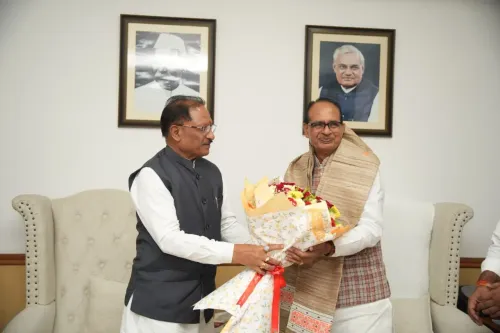
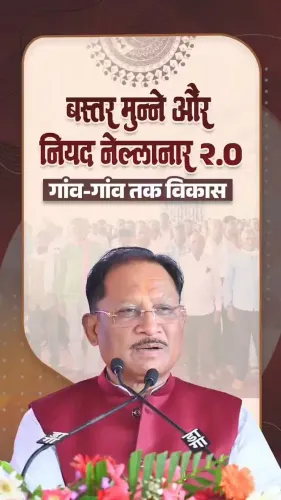
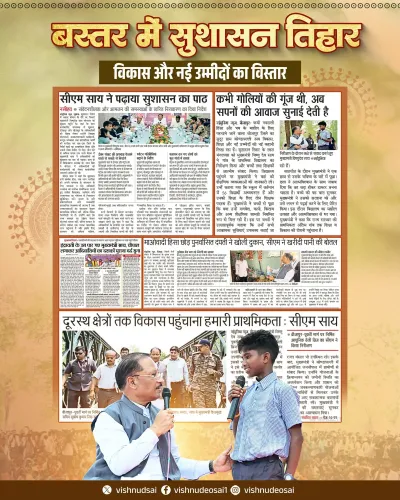
CM Sai, Amit Shah Guide Bastar Toward Peace via PMAY Homes

Synopsis
The Chhattisgarh CMO says Bastar is moving toward peace and development under Union Home Minister Amit Shah and CM Vishnu Deo Sai, with PMAY delivering permanent homes to returning tribal families as part of a coordinated security-and-welfare strategy.
Key Takeaways
The Chhattisgarh CMO announced on 8 July 2026 that Bastar is entering a new era of peace, security, and development.
Union Home Minister Amit Shah and Chief Minister Vishnu Deo Sai are credited with guiding the region's transformation.
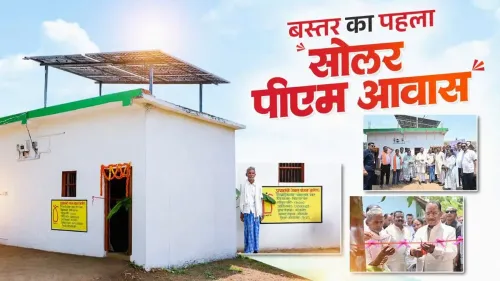
The Pradhan Mantri Awas Yojana (PMAY) , launched in 2015 , is being used to provide permanent homes to families returning from Naxal-affected villages.
The state government frames welfare delivery as inseparable from security success, following a dual-track national policy in Left Wing Extremism districts.
Primary beneficiaries are tribal families and returning migrants who had previously fled their villages under Naxal pressure.
Bastar's model of integrating security gains with housing welfare mirrors similar approaches in Jharkhand and Odisha .
The Chief Minister's Office of Chhattisgarh declared on Wednesday, 8 July 2026 that Bastar is advancing toward a new era of peace, security, and development under the guidance of Union Home Minister Amit Shah and the leadership of Chief Minister Vishnu Deo Sai, with the Pradhan Mantri Awas Yojana (PMAY) now delivering permanent homes to families returning to the region.
Context
Bastar, a division in southern Chhattisgarh, has for decades been among the most severely Left Wing Extremism-affected zones in India. The CMO's post, shared in Hindi, states: 'Suraksha ki safalta tab sarthak hoti hai, jab uske saath vikas bhi ghar-ghar pahunche' ('Security success becomes meaningful only when development too reaches every home'). The message signals that the state government views welfare delivery as inseparable from its counter-insurgency gains.
Families who had previously fled Naxal-affected villages are now being resettled, and the state has framed PMAY as the primary instrument for turning that resettlement into durable rehabilitation. The post emphasises that returning families' aspirations are being 'realised in permanent homes' through the scheme.
Policy Backdrop
The Pradhan Mantri Awas Yojana was launched in 2015 as a flagship rural and urban housing programme under the NDA government, targeting the rural and urban poor including residents of conflict-affected districts. In Chhattisgarh, the scheme has been extended to cover rehabilitation packages for families returning from Naxal-affected interiors, with the 2023-24 period seeing fresh state-level announcements on such packages.
The dual-track approach — intensified security operations alongside accelerated welfare delivery — has been a consistent feature of central policy in Left Wing Extremism (LWE) districts since 2014. Bastar's trajectory mirrors similar programmes in Jharkhand and Odisha, where housing and connectivity schemes have been used to consolidate security gains on the ground.
Stakeholders and Impact
The primary beneficiaries are tribal families and returning migrants who had abandoned their villages under Naxal pressure. For these households, a PMAY-sanctioned pucca house represents not just shelter but a formal acknowledgement of their resettlement and a stake in the mainstream economy. Community ties, land rights, and access to government services typically follow once a permanent address is established.
Union Home Minister Amit Shah has been the principal architect of the national anti-Naxal strategy, while Chief Minister Vishnu Deo Sai, who took office in December 2023, has prioritised translating security dividends into visible welfare outcomes. The CMO's framing credits both leaders, signalling a coordinated centre-state approach.
What's Next
Attention will now turn to official progress reports on PMAY house completions across Bastar's districts, and whether the state budget sessions announce additional rehabilitation or infrastructure packages for returning families. The pace of construction and beneficiary verification in remote tribal areas will be key indicators of whether the policy integration is translating into on-ground outcomes.
If Bastar sustains its current trajectory, it could serve as a replicable model for other LWE-affected regions — demonstrating that lasting peace requires welfare delivery to follow security operations with equal urgency.
Point of View
Crediting both the central and state leadership in a single breath — a pattern typical of BJP-governed states seeking to demonstrate the 'development dividend' of anti-Naxal operations. By anchoring the message in PMAY house delivery rather than security metrics alone, the government is signalling a shift in how it wants Bastar's story told: less about conflict, more about normalisation. This aligns with the centre's long-standing effort to rebrand LWE-affected districts as 'aspirational' zones ripe for investment and welfare convergence. The real test will be independent verification of PMAY completion rates and beneficiary satisfaction in Bastar's remote interior blocks.
NationPress
7 Oct 2026
Frequently Asked Questions
What is the Pradhan Mantri Awas Yojana and how does it apply to Bastar?
The Pradhan Mantri Awas Yojana (PMAY) is a central government scheme launched in 2015 to provide permanent pucca houses to the rural and urban poor. In Bastar, it is being used to rehabilitate tribal families returning from Naxal-affected villages by giving them a permanent home as a foundation for resettlement.
Who is responsible for Bastar's development and security push?
The Chhattisgarh CMO credits Union Home Minister Amit Shah for national-level guidance on security policy and Chief Minister Vishnu Deo Sai, who has led the state government since December 2023, for executing development initiatives on the ground.
Why are families returning to Bastar and what support are they getting?
Families had previously fled villages in Bastar due to Left Wing Extremism. As security conditions have improved, they are returning, and the state government is providing PMAY-sanctioned permanent houses as part of rehabilitation packages announced from 2023-24 onward.
How does Bastar's approach compare to other Naxal-affected states?
Bastar's integration of security operations with welfare delivery mirrors approaches used in Jharkhand and Odisha, where housing and connectivity schemes have been deployed to consolidate gains from anti-Naxal operations — a pattern consistent with central government policy since 2014.
What should we watch for next in Bastar's development story?
Key indicators to track include official PMAY house completion figures across Bastar's districts, new rehabilitation or infrastructure packages in state budget sessions, and independent assessments of whether returning families are receiving full benefits on the ground.