CM Sai Joins Solar-Powered PMAY Home Ceremony in Bastar
Synopsis
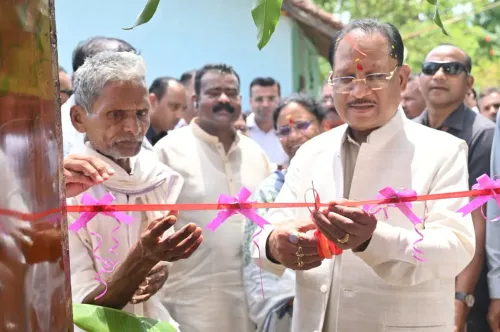
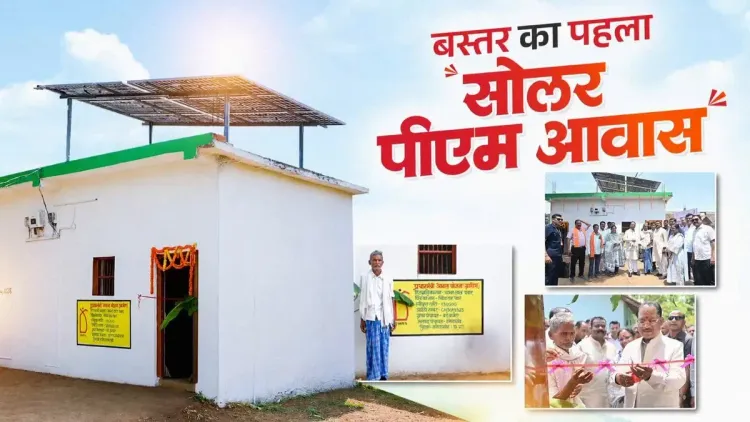
Chief Minister Vishnu Dev Sai joined the housewarming of Chaman Lal in Kondagaon, whose home under PMAY has become the first solar-powered PMAY house in Bastar division, combining central housing and rooftop solar schemes during the Sushasan Tihar programme.
Key Takeaways
Chaman Lal of Badekanera village, Kondagaon received a permanent house under PMAY and a rooftop solar system under PM Surya Ghar Yojana .
The home is described as the first solar-powered PMAY house in Bastar division , southern Chhattisgarh.
Chief Minister Vishnu Dev Sai personally attended the grihapravesh ceremony on 1 June 2026 .
The event was held under the Sushasan Tihar outreach programme of the Chhattisgarh state government.
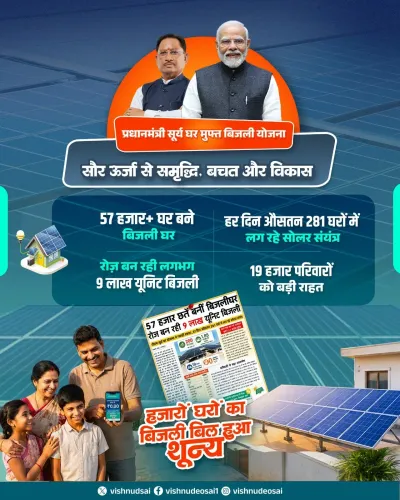
PM Surya Ghar Muft Bijli Yojana , announced in Union Budget 2024-25, targets rooftop solar on 1 crore households nationally.
The convergence of two central schemes in a single Bastar household is being positioned as a model for sustainable rural welfare delivery.
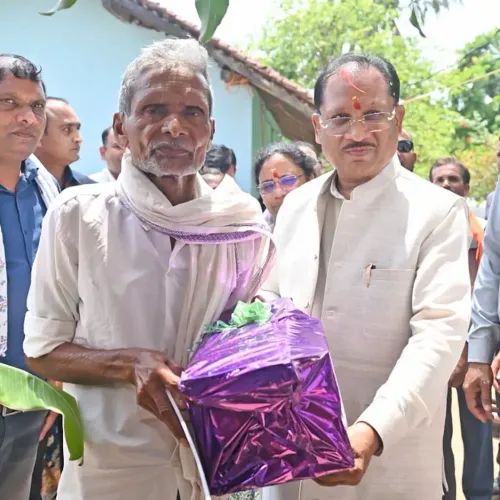
The Chief Minister's Office of Chhattisgarh announced on 1 June 2026 that a home in Badekanera village, Kondagaon district, has become the first Pradhan Mantri Awas Yojana (PMAY) house in Bastar division to be powered by solar energy. Chief Minister Vishnu Dev Sai personally participated in the grihapravesh (housewarming) ceremony with the beneficiary, Chaman Lal, as part of the ongoing Sushasan Tihar outreach programme.
Context
The post states that Chaman Lal received a pucca (permanent) house under PMAY and a rooftop solar installation under the Pradhan Mantri Surya Ghar Yojana. Chief Minister Sai is quoted as having 'shared the joy of the housewarming and congratulated him on the new home.' The convergence of two central government schemes in a single household is being highlighted by the state government as a model of welfare delivery.
Kondagaon district falls within Bastar division, a region in southern Chhattisgarh with a predominantly tribal population and a long history of left-wing extremist activity. The state government has placed particular emphasis on visible welfare delivery in Bastar following security improvements in the region over the past decade.
Policy Backdrop
Pradhan Mantri Awas Yojana was launched in 2015 with the objective of constructing 2 crore rural houses for eligible poor families, with subsequent extensions broadening its reach. The scheme provides financial assistance and technical support for construction of permanent dwellings.
The PM Surya Ghar Muft Bijli Yojana was announced in the Union Budget 2024-25, targeting rooftop solar installations on 1 crore households across India with subsidies and provisions for free electricity units. Central policy has increasingly sought to converge housing schemes with renewable energy components to promote sustainable rural infrastructure.
Sushasan Tihar — meaning 'Good Governance Festival' — is a state government outreach programme under the Vishnu Dev Sai administration, designed to publicise and directly deliver the benefits of welfare schemes to citizens. The BJP government in Chhattisgarh, formed after the December 2023 state elections, has positioned Bastar development as a priority area.
Stakeholders and Impact
The primary beneficiary is Chaman Lal of Badekanera village, whose household now has both a permanent structure and a source of clean electricity — a combination that remains uncommon in remote parts of Bastar. Rural tribal households across the division stand to benefit if the convergence model is replicated at scale.
For the state government, the event serves as a tangible illustration of central scheme implementation reaching one of India's more historically underserved regions. The Chief Minister's direct participation in the ceremony signals the political importance the administration attaches to welfare delivery in Bastar.
What's Next
Attention will now turn to whether the state government announces district-level targets for additional PMAY-solar convergence households during subsequent phases of Sushasan Tihar. Officials and observers will watch for data on how many PMAY beneficiaries in Bastar and other divisions are being enrolled simultaneously under the PM Surya Ghar Yojana.
If the convergence model scales, it could position Chhattisgarh as an early example of integrated housing-and-energy delivery under two flagship central programmes — a template other states may look to replicate in tribal and remote geographies.
Point of View
Turning routine scheme disbursement into media-friendly events. The Bastar focus is particularly pointed — development visibility in a former insurgency belt carries electoral and governance weight that goes well beyond a single housewarming.
NationPress
16 Oct 2026
Frequently Asked Questions
What is Sushasan Tihar in Chhattisgarh?
Sushasan Tihar, meaning 'Good Governance Festival', is a state government outreach programme in Chhattisgarh under Chief Minister Vishnu Dev Sai, designed to publicise and directly deliver welfare scheme benefits to citizens across the state.
What is PM Surya Ghar Yojana and who is eligible?
PM Surya Ghar Muft Bijli Yojana is a central government scheme announced in Union Budget 2024-25 that provides subsidies for rooftop solar installations on households and offers free electricity units; it targets 1 crore households across India, with rural and low-income families among the intended beneficiaries.
What is Pradhan Mantri Awas Yojana (PMAY)?
Pradhan Mantri Awas Yojana is a central housing scheme launched in 2015 to provide financial assistance for construction of permanent pucca houses to eligible poor families in rural and urban areas, with an initial target of 2 crore rural homes.
Why is Bastar significant for welfare schemes in Chhattisgarh?
Bastar division in southern Chhattisgarh has a predominantly tribal population and was long affected by left-wing extremism, making it one of India's most underserved regions; the current state government has prioritised visible welfare delivery there following security improvements over the past decade.
Who is Vishnu Dev Sai and when did he become Chief Minister of Chhattisgarh?
Vishnu Dev Sai is the Chief Minister of Chhattisgarh from the BJP, sworn in after the party's victory in the December 2023 state assembly elections.