CM Sai Attends Griha Pravesh at Solar-Enabled PMAY Home in Kondagaon
Synopsis
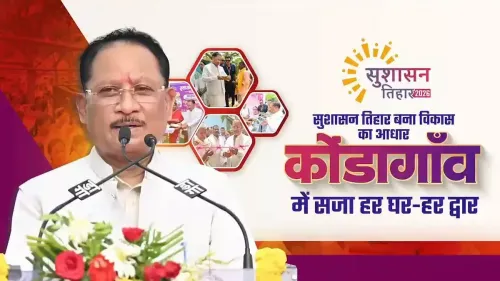
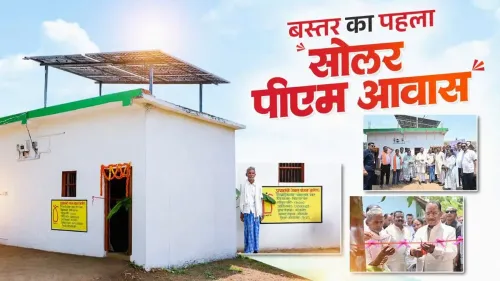
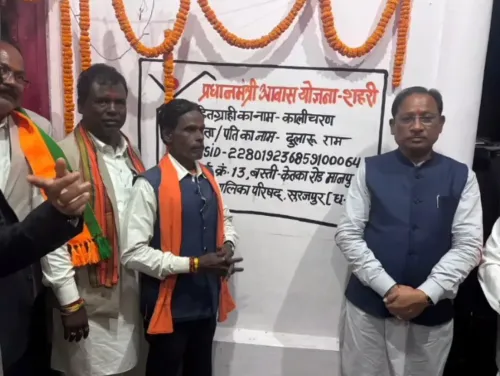
Chief Minister Vishnu Deo Sai performed the griha pravesh at a PMAY home in Kondagaon's Badekaner village on June 1 during Sushasan Tihar 2026. The unit is described as Bastar division's first PMAY home equipped with a rooftop solar system under PM Surya Ghar Muft Bijli Yojana, combining rural housing and energy self-reliance.
Key Takeaways
CM Vishnu Deo Sai personally conducted the griha pravesh ceremony at the home of PMAY beneficiary Chaman Lal in village Badekaner, Kondagaon on June 1, 2026 .
The home is described as the first PMAY unit in Bastar division to be equipped with a solar system under PM Surya Ghar Muft Bijli Yojana .
The visit was part of Sushasan Tihar 2026 , a Chhattisgarh initiative for direct on-ground delivery of welfare schemes.
PM Surya Ghar Muft Bijli Yojana provides eligible households up to 300 units of free electricity monthly through rooftop solar installations.
Kondagaon is a predominantly tribal district in Bastar division , a region prioritised for PMAY saturation due to historical development gaps.
The state government has positioned this unit as a replicable model of rural development, energy self-reliance, and good governance.
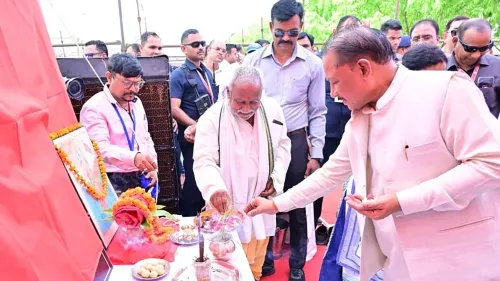
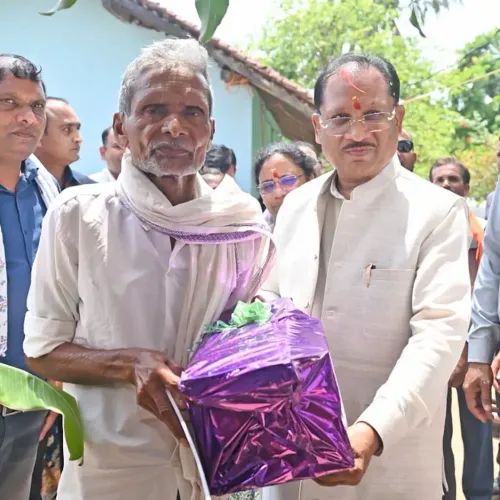
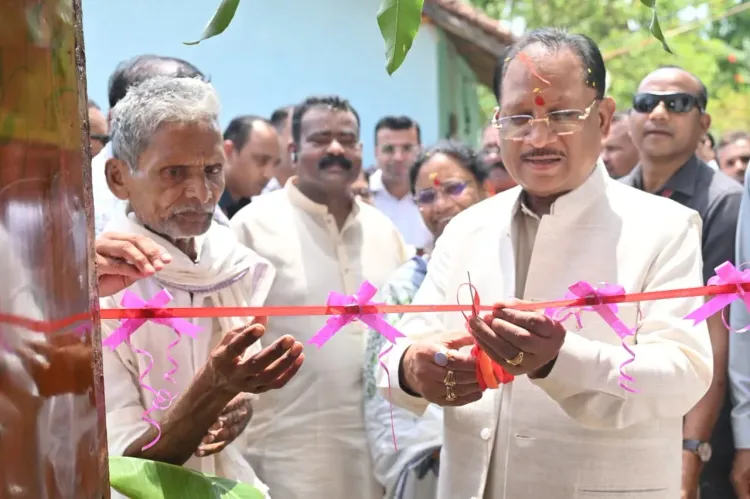
The Chief Minister's Office of Chhattisgarh announced on Monday, June 1, 2026, that Chief Minister Vishnu Deo Sai visited the newly constructed home of Pradhan Mantri Awas Yojana beneficiary Chaman Lal in village Badekaner, district Kondagaon, performing the griha pravesh ceremony alongside the family during the ongoing Sushasan Tihar event.
Context
The Chief Minister's Office shared that upon seeing CM Sai at their doorstep, the entire family was moved to tears — 'unki aankhon mein khushi ke aansu chhalak pade' (tears of joy welled up in their eyes). The visit was part of Sushasan Tihar 2026, a Chhattisgarh state initiative designed for direct, on-ground delivery of government schemes and grassroots grievance redressal.
The post described the occasion as 'sapnon ke ghar mein khushiyon ka pravesh' — 'happiness entering the house of dreams' — reflecting the emotional weight such housing deliveries carry for rural families in the region.
Policy Backdrop
The Pradhan Mantri Awas Yojana (PMAY), launched in 2015, aims to provide pucca (permanent) housing to rural and urban poor households across India. The scheme has been a central plank of welfare delivery in Bastar division, a region historically marked by development gaps in former Left-Wing Extremism-affected areas.
What distinguishes this particular unit, according to the post, is the installation of a solar system under the PM Surya Ghar Muft Bijli Yojana — the central rooftop solar programme that provides eligible households up to 300 units of free electricity monthly. The post states this makes the home the first PMAY unit in Bastar division to carry such a solar installation, presenting it as a model of rural development, energy self-reliance, and good governance.
The PM Surya Ghar Muft Bijli Yojana is part of India's broader push under the National Solar Mission, which has sought to scale rooftop solar capacity since 2010, with renewed urgency in recent years as rural electrification targets have been integrated with housing schemes.
Stakeholders and Impact
The primary beneficiary is the family of Chaman Lal in Badekaner village, Kondagaon district — a predominantly tribal district in Bastar division. For households in this region, a pucca home paired with a rooftop solar unit represents a compound improvement: structural security and reduced energy expenditure in a single intervention.
Broader stakeholders include the rural tribal population of Bastar division, where PMAY saturation has been a stated priority. The convergence of a housing entitlement with a clean energy benefit signals an administrative effort to layer multiple central schemes onto a single beneficiary unit, maximising welfare impact per household.
The Sushasan Tihar format — which involves senior officials and the Chief Minister personally visiting beneficiaries — is designed to build visible accountability between the state government and scheme recipients at the village level.
What's Next
The Chhattisgarh government's framing of this unit as a replicable model suggests an intent to expand solar-integrated PMAY homes to other districts, particularly within Bastar division. How quickly this convergence model scales — and whether saturation targets under both schemes are met across remaining Sushasan Tihar events — will be a measure of the administration's delivery capacity in the state's most underserved tribal belts.
Point of View
Where development optics carry particular weight. Sushasan Tihar as a format institutionalises this visibility, creating recurring moments of direct contact between elected leadership and beneficiaries ahead of future electoral cycles. The 'first in Bastar' framing, if it holds, would mark a meaningful milestone in the region's energy transition narrative.
NationPress
21 Oct 2026
Frequently Asked Questions
What is Sushasan Tihar in Chhattisgarh?
Sushasan Tihar is a Chhattisgarh government initiative for direct, on-ground delivery of welfare schemes and grassroots grievance redressal, during which senior officials and the Chief Minister personally visit beneficiaries across the state.
What is PM Surya Ghar Muft Bijli Yojana?
PM Surya Ghar Muft Bijli Yojana is a central government rooftop solar programme that provides eligible households up to 300 units of free electricity per month through solar panel installations on their homes.
What is Pradhan Mantri Awas Yojana and who is eligible?
Pradhan Mantri Awas Yojana (PMAY), launched in 2015, is a central scheme providing financial assistance for pucca (permanent) housing to rural and urban poor households across India, with a focus on homeless and kutcha-house dwellers.
Where is Kondagaon district located?
Kondagaon is a district in Bastar division of Chhattisgarh, with a predominantly tribal population and a focus on rural development under various central and state government schemes.
Why is the Badekaner PMAY home significant for Bastar?
According to the Chhattisgarh Chief Minister's Office, the home in Badekaner village, Kondagaon, is described as the first PMAY unit in Bastar division to also have a rooftop solar system installed under PM Surya Ghar Muft Bijli Yojana, combining housing and clean energy benefits for a tribal family.