CM Sai Attends PMAY-G Griha Pravesh in Kondagaon During Sushasan Tihar
Synopsis
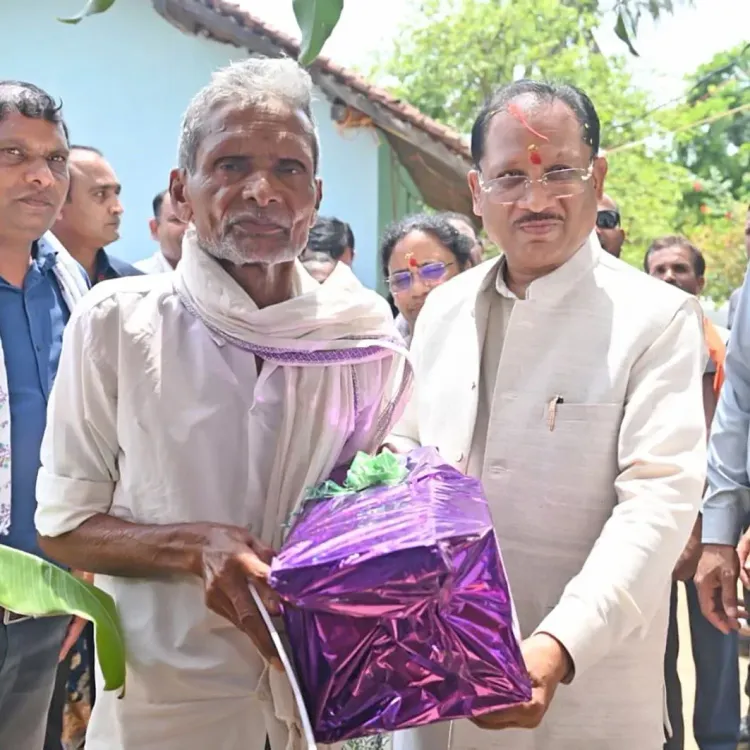
Chhattisgarh Chief Minister Vishnu Deo Sai attended a griha pravesh ceremony for PMAY-G beneficiary Chaman Lal Pawar in Kondagaon's Badekaner village on 1 June 2026 during Sushasan Tihar 2026, highlighting the scheme's role in providing dignity and solar-powered homes to tribal rural families.
Key Takeaways
Chief Minister Vishnu Deo Sai attended a PMAY-G griha pravesh in Gram Panchayat Badekaner, Kondagaon district on 1 June 2026 .
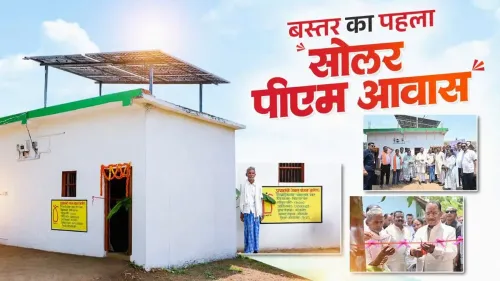
The beneficiary, Chaman Lal Pawar , received a new pucca house equipped with solar energy facilities .
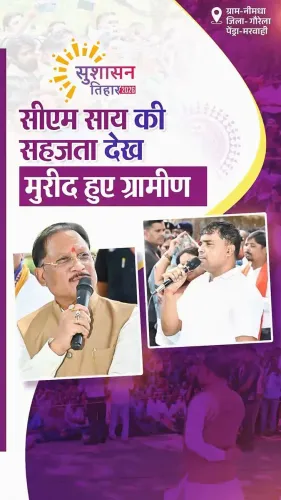
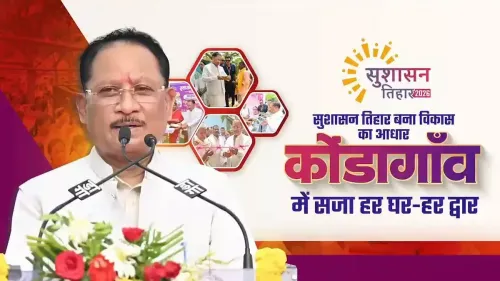
The event was part of Sushasan Tihar 2026 , the Chhattisgarh government's annual governance outreach programme.
Pradhan Mantri Awas Yojana (Gramin) was launched in 2015 to provide permanent housing with basic amenities to eligible rural households.
Kondagaon is a tribal-majority district in northern Chhattisgarh where durable housing access has historically been limited.
CM Sai described the scheme as a means of providing 'security, dignity, and the confidence of a better life' beyond just a roof.
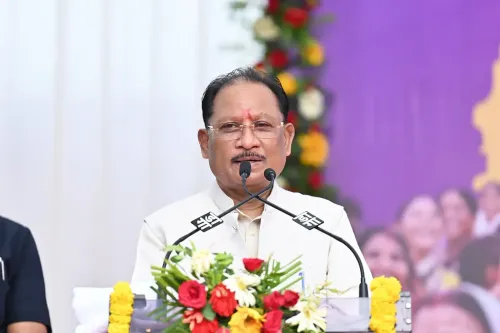
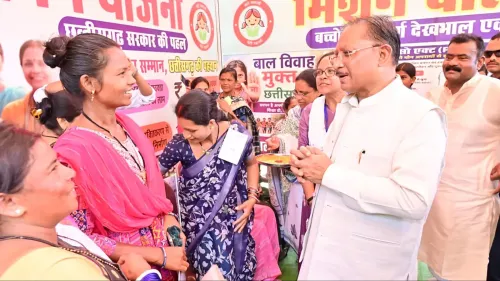
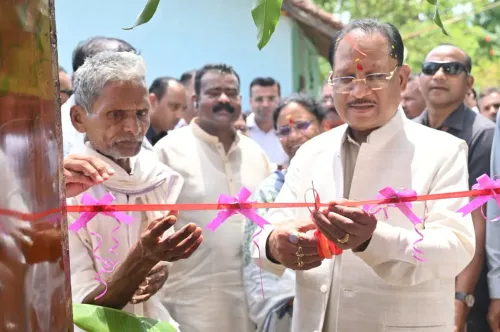
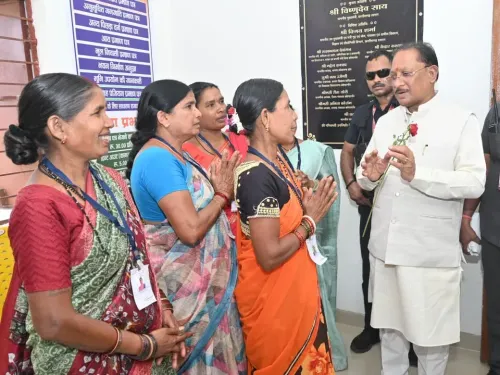
Chhattisgarh Chief Minister Vishnu Deo Sai on Monday, 1 June 2026, participated in a 'griha pravesh' ceremony for a newly constructed pucca house under the Pradhan Mantri Awas Yojana (Gramin) in Gram Panchayat Badekaner, Kondagaon district, as part of the ongoing Sushasan Tihar 2026 governance outreach programme. The beneficiary, Chaman Lal Pawar, received the keys to a solar-power-equipped permanent home, marking a visible milestone in the state's rural housing push.
Context
Chief Minister Sai shared the occasion on social media, writing in Hindi: 'Sapnon ke ghar mein khushiyon ka pravesh' ('Joy enters the house of dreams'). He described the happiness, confidence, and contentment visible on the faces of the family standing at the threshold of their new home, noting that the sight filled him with deep satisfaction. The ceremony took place during the Sushasan Tihar 2026 event, an annual governance outreach drive organised by the Chhattisgarh government to demonstrate and publicise welfare delivery at the grassroots level.
Kondagaon is a tribal-majority district in northern Chhattisgarh, a region where access to durable housing has historically lagged. The district-level event signals the state administration's effort to bring scheme benefits to some of its most underserved communities.
Policy Backdrop
The Pradhan Mantri Awas Yojana (Gramin), launched in 2015, aims to provide pucca houses with basic amenities to eligible rural households across India. The scheme's original deadline of 2022 was subsequently extended to address the remaining backlog of beneficiaries. Each sanctioned unit includes provisions for toilets, cooking gas connections, and, increasingly, solar power — as seen in the Pawar family's new home.
CM Sai emphasised in his post that PMAY-G is 'not merely a scheme to provide a permanent roof, but a means of giving needy families security, dignity, and the confidence of a better life.' The solar energy component, he noted, represents 'a positive step towards self-reliant and modern rural living' — language that aligns directly with the scheme's stated objectives of holistic upliftment beyond construction alone.
Stakeholders and Impact
Rural households in tribal and economically weaker belts of Chhattisgarh are the primary beneficiaries of this push. Saturation drives under PMAY-G, often combined with rural electrification and solar programmes, have been a recurring feature of state-level implementation across India. For families like the Pawars of Badekaner, the transition from a kutcha to a pucca structure carries implications for safety during monsoons, health outcomes, and long-term economic stability.
The Sushasan Tihar format — where senior officials and the Chief Minister personally attend beneficiary handovers — is designed to create accountability at the district level and signal political commitment to last-mile delivery. Such events also serve as a feedback loop, allowing the administration to surface implementation gaps in real time.
What's Next
The state government is expected to hold further Sushasan Tihar 2026 events across other districts in the coming weeks. State-level PMAY-G completion figures for 2025-26 will be a key indicator of how far Chhattisgarh has progressed toward housing saturation, particularly in its tribal heartland. CM Sai's direct participation in ground-level ceremonies suggests the administration intends to keep rural housing delivery at the centre of its governance narrative ahead of future political cycles. True development, as Sai put it, 'is realised when a needy family receives a permanent roof, the assurance of security, and the confidence of a better future.'
Point of View
A framing the BJP has consistently deployed nationally. The Sushasan Tihar format amplifies this by creating media moments around last-mile delivery, countering narratives of welfare leakage or bureaucratic distance. Embedding solar power in rural housing also ties the state's welfare story to the broader national self-reliance arc, broadening the scheme's political valence. With state-level completion figures for 2025-26 pending, events like this serve as qualitative proof-of-delivery while quantitative data is still consolidating.
NationPress
25 Sept 2026
Frequently Asked Questions
What is Pradhan Mantri Awas Yojana Gramin?
Pradhan Mantri Awas Yojana (Gramin), or PMAY-G, is a central government scheme launched in 2015 to provide pucca houses with basic amenities — including toilets, cooking gas, and electricity — to eligible rural households across India. Its original 2022 deadline has since been extended.
What is Sushasan Tihar in Chhattisgarh?
Sushasan Tihar is an annual governance outreach programme organised by the Chhattisgarh government. It involves senior officials and the Chief Minister visiting districts to oversee and publicise the delivery of welfare schemes directly to beneficiaries at the grassroots level.
Who is Vishnu Deo Sai?
Vishnu Deo Sai is the Chief Minister of Chhattisgarh and a senior BJP leader. He assumed office in December 2023 and has focused on tribal welfare and central scheme implementation as key pillars of his administration.
Where is Kondagaon district in Chhattisgarh?
Kondagaon is a tribal-majority district located in northern Chhattisgarh. It is part of the Bastar region, historically characterised by limited access to infrastructure and government services, making it a priority area for rural housing and welfare programmes.
Does PMAY-G include solar power for rural homes?
Yes, recent PMAY-G units in several states, including Chhattisgarh, are being built with solar energy facilities as part of efforts to align rural housing with electrification and self-reliance goals. The house handed over to beneficiary Chaman Lal Pawar in Kondagaon included a solar power connection.