PM Modi Speaks With Tajikistan's President Rahmon, Eyes Deeper Ties
Synopsis
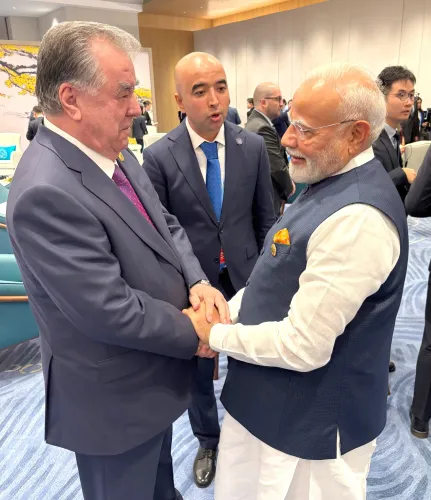
Prime Minister Narendra Modi held a conversation with Tajikistan President Emomali Rahmon on September 1, 2026, signalling India's intent to deepen ties across sectors. The exchange fits India's broader Central Asia outreach under the SCO and Connect Central Asia frameworks.
Key Takeaways
PM Modi spoke with Tajikistan President Emomali Rahmon on September 1, 2026 .
Both sides expressed intent to boost cooperation 'across diverse sectors.' Tajikistan borders Afghanistan , giving it strategic weight in India's extended neighbourhood policy.
India has been a full member of the Shanghai Cooperation Organisation since 2017 , providing a regular platform for India-Tajikistan engagement.
Cooperation typically covers counter-terrorism, military training, and connectivity — areas where India seeks to offset China and Russia 's dominant regional presence.
The next SCO summit or bilateral Joint Commission meeting will be the key moment to watch for any concrete follow-up agreements.
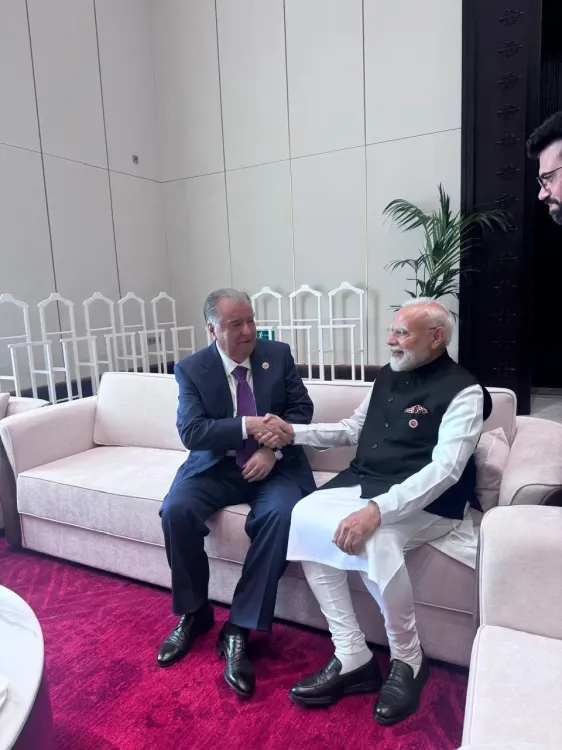
A phone call between two leaders — and a signal about where India is looking next. Prime Minister Narendra Modi held a conversation with Tajikistan President Emomali Rahmon on Tuesday, September 1, 2026, with both sides expressing intent to deepen bilateral cooperation across multiple sectors.
Modi shared the update on X, writing: 'Great conversation with Mr. Emomali Rahmon, the President of Tajikistan. India looks forward to boosting cooperation with Tajikistan across diverse sectors.'
Why Tajikistan Matters to New Delhi
Tajikistan is not a headline country — but it sits at a strategic crossroads. The landlocked Central Asian republic shares a border with Afghanistan, placing it squarely inside India's extended neighbourhood calculus. For New Delhi, maintaining a foothold in Central Asia is less about trade volumes and more about strategic depth — counter-terrorism coordination, military training partnerships, and connectivity corridors that reduce dependence on Pakistan-controlled land routes. President Rahmon has led Tajikistan since 1994, making him one of the longest-serving heads of state in the post-Soviet space and a consistent interlocutor for India's Central Asia outreach.The SCO Thread Running Through This
India's engagement with Tajikistan has a structural backbone: the Shanghai Cooperation Organisation, which India joined as a full member in 2017. The SCO has provided a regular, institutionalised platform for India-Central Asia contact — including with Dushanbe — that did not exist before. Bilateral meetings on the SCO sidelines have become a reliable rhythm for reviewing cooperation in defence, trade, and energy. The broader 'Connect Central Asia' framework has guided India's approach to the region, with cooperation typically spanning counter-terrorism intelligence sharing, military training programmes, and limited but growing trade and energy projects. The region is one where China and Russia hold far stronger geographic and economic leverage — making every Indian engagement a deliberate act of presence.What Comes After a Phone Call
A leader-level conversation of this nature typically sets the table for follow-up at the official level — a Joint Commission meeting, a defence dialogue, or a sideline meeting at the next SCO summit. Whether this call translates into concrete deliverables will become clear at those next touchpoints. For now, the signal from New Delhi is unambiguous: India's Central Asia pivot is active, and Tajikistan is on the board.Point of View
And leader-level calls like this one are how that leverage gets exercised incrementally. The emphasis on 'diverse sectors' is diplomatically broad, but the subtext is strategic: India needs partners along the Afghanistan periphery, and Tajikistan — under Rahmon's three-decade rule — offers stability and continuity. Watch for whether this call accelerates a Joint Commission meeting or produces a defence training announcement at the next SCO gathering.
NationPress
16 Oct 2026
Frequently Asked Questions
Why did PM Modi speak with the President of Tajikistan?
PM Modi spoke with Tajikistan President Emomali Rahmon to discuss boosting bilateral cooperation across multiple sectors, as part of India's ongoing engagement with Central Asian nations.
What is India's relationship with Tajikistan?
India and Tajikistan cooperate on counter-terrorism, military training, and connectivity. India has engaged Tajikistan through the Shanghai Cooperation Organisation, of which it became a full member in 2017.
Who is Emomali Rahmon?
Emomali Rahmon has been the President of Tajikistan since 1994, making him one of the longest-serving leaders in the post-Soviet world and a key figure in India-Central Asia diplomacy.
What is the SCO and why does it matter for India-Tajikistan ties?
The Shanghai Cooperation Organisation is a Eurasian political and security bloc. India joined as a full member in 2017, giving it a regular platform to engage Tajikistan and other Central Asian states on security and trade.
What should we watch for after the Modi-Rahmon conversation?
The next SCO summit or a bilateral Joint Commission meeting will be the key moment to watch for any announced agreements or follow-up actions stemming from this call.