Mahua Moitra Pushes Back on BJP Over Suhrawardy Avenue Row
Synopsis
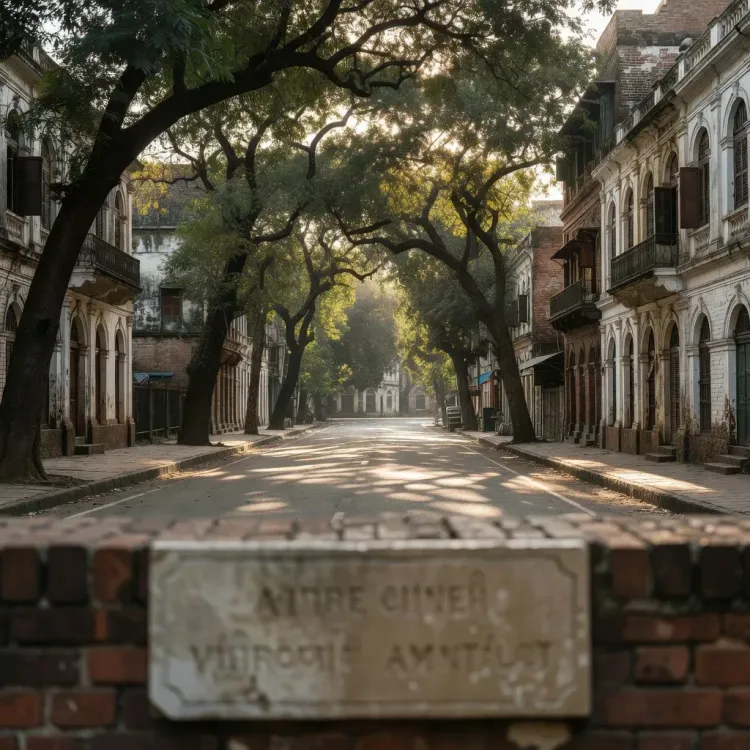
TMC MP Mahua Moitra on June 21, 2026 challenged the BJP's political framing of Suhrawardy Avenue in Kolkata, asserting the street was named after Hassan Suhrawardy, who served as Calcutta University Vice Chancellor before Syama Prasad Mookerjee, and questioned whether Bengalis were accepting the BJP's narrative.
Key Takeaways
Mahua Moitra publicly challenged the BJP on June 21, 2026 over the historical framing of Suhrawardy Avenue in Kolkata .
Hassan Suhrawardy served as Vice Chancellor of Calcutta University before Syama Prasad Mookerjee , according to university records from the 1930s .
Moitra accused the BJP of scoring 'cheap political points' by misrepresenting the avenue's origins.
Street and institution naming has become a recurring political flashpoint in West Bengal , especially ahead of state elections.
The BJP has consistently used Syama Prasad Mookerjee's legacy as a mobilisation tool in West Bengal .
With 2026 West Bengal assembly elections approaching, the dispute signals intensifying competition over historical narratives.
TMC MP Mahua Moitra on Sunday, June 21, 2026 challenged the Bharatiya Janata Party over what she called cheap political point-scoring around Suhrawardy Avenue in Kolkata, questioning whether Bengali voters were accepting the party's framing of the street's history.
Posting on X, Moitra stated that Suhrawardy Avenue was named after Hassan Suhrawardy, who served as Vice Chancellor of Calcutta University before Syama Prasad Mookerjee — a fact she implied the BJP was deliberately obscuring. 'What cheap political points is BJP trying to score? And Bengalis are buying this?' she wrote.
Context
Hassan Suhrawardy was a medical professional and academic who held the position of Vice Chancellor of Calcutta University in the early 20th century. His tenure preceded that of Syama Prasad Mookerjee, whose vice-chancellorship in the 1930s is well-documented in university records. Mookerjee later went on to found the Bharatiya Jana Sangh, a political predecessor of the present-day BJP.
Moitra's post implies that the BJP has been invoking Mookerjee's legacy in connection with Suhrawardy Avenue — either to advocate for renaming it or to cast the existing name as historically or politically problematic. The exact trigger for the BJP's remarks could not be independently confirmed.
Policy Backdrop
Street and institution naming has become a recurring flashpoint in West Bengal politics, where competing narratives around pre- and post-independence figures frequently surface in electoral rhetoric. The BJP has consistently sought to foreground figures associated with Hindu nationalism — including Mookerjee — in the state's public discourse, while the ruling Trinamool Congress has positioned itself as a defender of existing local historical nomenclature.
This pattern mirrors wider national trends in which public spaces — roads, stadiums, universities — become arenas for historical reinterpretation. In West Bengal, such disputes carry added electoral weight given the state's distinct cultural identity and its long history of contested political memory.
Stakeholders and Impact
Bengali voters, particularly in urban Kolkata, are the primary audience Moitra appears to be addressing. Her framing — 'And Bengalis are buying this?' — is a direct appeal to Bengali pride and historical awareness, suggesting the BJP's narrative misrepresents the avenue's origins. The Kolkata Municipal Corporation and the West Bengal state government, both under TMC control, would be the institutional actors in any formal renaming process.
For the BJP, the Mookerjee association is a long-standing mobilisation tool in the state. Any perception that the party is rewriting or selectively presenting history could prove counterproductive among educated urban Bengali constituencies that take historical accuracy seriously.
What's Next
With West Bengal assembly elections on the horizon in 2026, disputes over historical figures and public nomenclature are likely to intensify. A formal response from the BJP on Moitra's claim, or any statement from the Kolkata Municipal Corporation on the status of Suhrawardy Avenue, will indicate whether this exchange escalates into a sustained political controversy or remains a social-media skirmish. Moitra's intervention signals that the TMC intends to contest the BJP's historical framing aggressively in the lead-up to the polls.
Point of View
Where the BJP has steadily invested in Syama Prasad Mookerjee as a symbol of Bengali Hindu identity. By foregrounding Hassan Suhrawardy's academic credentials and his chronological precedence over Mookerjee at Calcutta University, she shifts the framing from political symbolism to verifiable institutional history. The appeal — 'And Bengalis are buying this?' — is designed to activate Bengali intellectual pride against what she frames as historical revisionism. This exchange fits a broader TMC strategy of contesting BJP's cultural terrain rather than ceding it.
NationPress
21 Jun 2026
Frequently Asked Questions
Who is Hassan Suhrawardy and why is Suhrawardy Avenue named after him?
Hassan Suhrawardy was a medical professional and academic who served as Vice Chancellor of Calcutta University in the early 20th century, before Syama Prasad Mookerjee. Suhrawardy Avenue in Kolkata is named in his honour.
What did Mahua Moitra say about Suhrawardy Avenue?
Mahua Moitra stated on X on June 21, 2026 that Suhrawardy Avenue was named after Hassan Suhrawardy, who was Vice Chancellor of Calcutta University before Syama Prasad Mookerjee, and accused the BJP of scoring cheap political points over the street's name.
What is the BJP's connection to Syama Prasad Mookerjee and West Bengal?
Syama Prasad Mookerjee served as Vice Chancellor of Calcutta University in the 1930s and later founded the Bharatiya Jana Sangh, a political predecessor of the BJP. The party has long invoked his legacy as part of its outreach to Bengali voters.
Is there a proposal to rename Suhrawardy Avenue in Kolkata?
No verified proposal to rename Suhrawardy Avenue has been confirmed. Mahua Moitra's post suggests the BJP raised the avenue's name in a political context, but the exact nature of the BJP's remarks could not be independently confirmed.
Why do street names become political issues in West Bengal?
West Bengal has a long history of competing political narratives around pre- and post-independence figures. With the TMC and BJP holding sharply different views on historical icons, public spaces such as streets and institutions frequently become symbols in electoral contests.