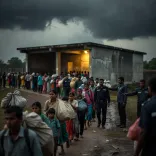
CM Majhi: Odisha Rescue Ops on War Footing

Synopsis
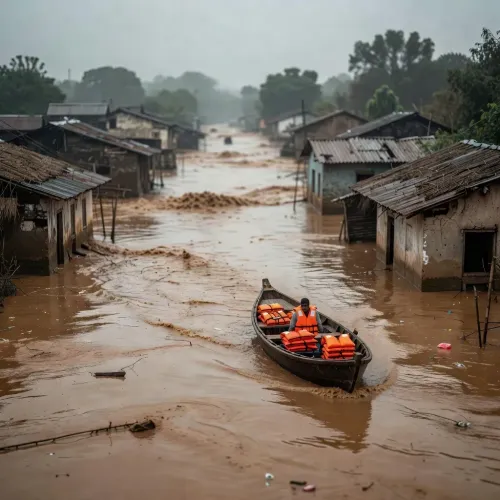
Odisha Chief Minister Mohan Charan Majhi declared on 2 November 2026 that rescue and relief operations are running on a war footing across affected areas, with food, drinking water, and shelter being supplied to displaced residents through coordinated state efforts.
Key Takeaways
CM Mohan Charan Majhi confirmed on 2 November 2026 that rescue and relief operations are underway on a 'war footing' in affected areas of Odisha.
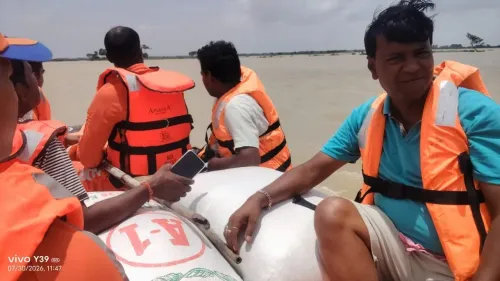
Priority has been placed on evacuating people from hazardous zones to safe locations.
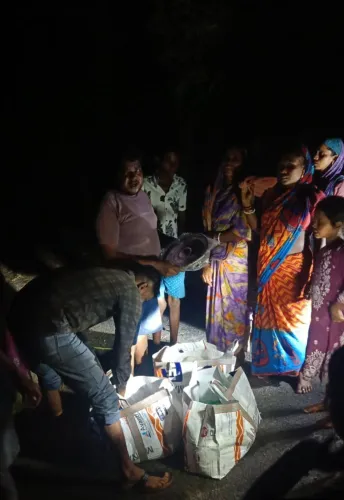
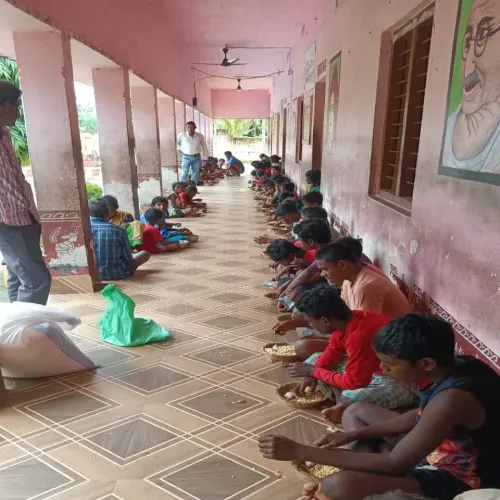
Essential supplies — food, drinking water, and shelter — are being provided at relief camps through coordinated efforts.
The post was bilingual (Odia and English), signalling communication aimed at both local communities and a national audience.
Odisha's disaster-response infrastructure traces back to institutional reforms following the catastrophic 1999 Super Cyclone .
The specific disaster, affected districts, casualty figures, and scale of displacement have not yet been officially confirmed.
Somewhere in Odisha, people are being moved to safety — and Chief Minister Mohan Charan Majhi wants the state to know that every arm of the government is mobilised. On Monday, 2 November 2026, Majhi posted on X that rescue and relief operations are underway on a 'war footing' across affected areas, with food, drinking water, and shelter being provided to displaced residents through coordinated efforts.
Posting in both Odia and English, the Chief Minister wrote: 'Rescue and relief operations are underway on a war footing, with priority given to the safety of people. Essential assistance, including food, drinking water and shelter, is being provided to those affected through coordinated efforts.'
Evacuation first, essentials second
The statement signals a two-track response: moving people out of hazardous zones and simultaneously stocking relief shelters with basic necessities. The phrase ସୁରକ୍ଷାକୁ ସର୍ବୋଚ୍ଚ ପ୍ରାଥମିକତା ('safety as the highest priority') anchors the Odia text, and the bilingual format suggests the communication is aimed at both local communities and a broader national audience.
While the post does not name the specific disaster, affected districts, or scale of displacement, the language of coordinated multi-agency deployment points to an active emergency that has triggered state-level command protocols.
Odisha's long disaster-response playbook
Odisha is no stranger to large-scale emergencies. The devastating 1999 Super Cyclone — one of the deadliest in Indian history — prompted the state to build the Odisha State Disaster Management Authority and invest heavily in early-warning systems, pre-positioned relief stockpiles, and mass evacuation infrastructure. That institutional muscle has since been tested and refined through repeated cyclones, floods, and storm surges along its long coastline.
The phrase 'war footing' is itself a fixture of Odisha's official disaster vocabulary — used by successive administrations, regardless of party, to signal maximum urgency and whole-of-government coordination. CM Majhi, who assumed office in 2024 after the BJP's state election victory, is now deploying that same vocabulary during his watch.
Central support and scale: the numbers still coming
What remains unconfirmed — and what will define the full picture — is the extent of displacement, whether National Disaster Response Force teams have been deployed, and whether the state has formally requested central government assistance. Those figures, when they emerge, will tell the real story of this emergency's severity.
For now, the signal from the Chief Minister's office is unambiguous: the state is in emergency mode, and the machinery built over two decades of hard lessons is running at full capacity.
Point of View
Authoritative, and calibrated to project state competence at the height of an emergency. It continues a bipartisan tradition in Odisha where the phrase 'war footing' serves as a public-trust signal, not just an operational order. For the BJP administration, which came to power in 2024 partly on a governance credibility pitch, a visible and decisive disaster response carries political weight beyond the immediate crisis. The missing details — scale of displacement, NDRF deployment, central assistance requests — will ultimately determine whether the ground reality matches the messaging.
NationPress
2 Nov 2026
Frequently Asked Questions
What disaster is Odisha responding to in November 2026?
Chief Minister Mohan Charan Majhi confirmed on 2 November 2026 that rescue and relief operations are underway on a war footing, but the post did not name the specific disaster or affected districts.
What relief is being provided to affected people in Odisha?
The state government is providing food, drinking water, and shelter to displaced residents through coordinated efforts, while simultaneously evacuating people from hazardous zones.
Who is Mohan Charan Majhi?
Mohan Charan Majhi is the Chief Minister of Odisha and a BJP leader who assumed office in 2024 after the party won the state assembly elections.
How is Odisha equipped to handle major disasters?
Following the devastating 1999 Super Cyclone, Odisha established the Odisha State Disaster Management Authority and built robust early-warning systems, evacuation infrastructure, and pre-positioned relief stockpiles that have been refined through successive emergencies.
Has the National Disaster Response Force been deployed in Odisha?
CM Majhi's post did not confirm NDRF deployment; further official updates on the scale of operations and central assistance are awaited.