Ahmedabad book-reading assault: Congress demands right to read protection

Synopsis
A public reading of 'I Am Malala' at Ahmedabad's AUDA Garden turned violent when roughly 20 people allegedly confronted participants — three were arrested, 18 more booked. The incident, set against a school's removal of Yousafzai's book from its compulsory list, has drawn a sharp constitutional response from the Congress, making it a test case for the right to read in public spaces.
Key Takeaways
Violence broke out on 27 August at AUDA Garden, Vastrapur, Ahmedabad during a reading of 'I Am Malala' and 'The Diary of a Young Girl' .
Three people were arrested and approximately 20 booked under Bharatiya Nyaya Sanhita provisions including unlawful assembly, rioting, and assault.
Two participants sustained minor injuries; six suspects identified via CCTV so far.
GPCC spokesperson Dr Manish Doshi cited Article 19(1)(a) and alleged involvement of people linked to Bajrang Dal and VHP .
The reading session was organised after a local school removed Yousafzai's and Anne Frank's books from its compulsory reading list following right-wing protests.
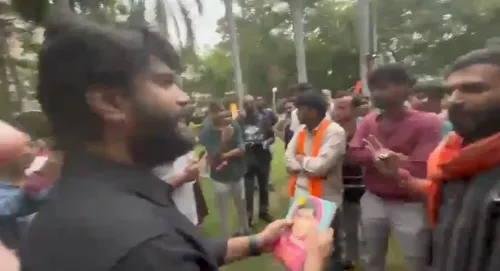
The Gujarat Pradesh Congress Committee (GPCC) on Saturday, 30 August 2025, condemned the alleged assault on participants of a book-reading session at AUDA Garden in Ahmedabad's Vastrapur area, demanding that citizens' right to read, discuss and express views peacefully in public spaces be upheld. The condemnation came a day after Ahmedabad Police arrested three people and booked approximately 20 others in connection with violence that erupted during the session on Thursday, 27 August.
What Happened at AUDA Garden
Participants had gathered at the garden to read 'I Am Malala' by Nobel Peace Prize laureate Malala Yousafzai, 'The Diary of a Young Girl' by Anne Frank, and works by other writers. According to police, around 20 people confronted the group over the reading of Yousafzai's book, after which an altercation broke out. Two people sustained minor injuries.
The session itself was organised in the backdrop of a controversy at a local school, where books by Yousafzai and Anne Frank had been removed from the compulsory reading list following protests by right-wing groups. The school subsequently made both books optional.
Police Action and Investigation
An FIR was registered against two named accused and approximately 18 unidentified individuals under multiple provisions of the Bharatiya Nyaya Sanhita (BNS), including sections relating to unlawful assembly, rioting, and assault. Police Inspector Gita Chaudhary confirmed that investigators are examining CCTV footage and recording statements. Six people had been identified through footage so far, and further investigation is under way.
What the Congress Said
GPCC media convener and spokesperson Dr Manish Doshi criticised the alleged confrontation, saying people linked to the Bajrang Dal and Vishwa Hindu Parishad (VHP) were reportedly involved. He argued the incident was not merely a law-and-order matter but raised deeper concerns about freedom of thought and expression.
'Reading a book is not a crime, thinking is not a crime and asking questions is not sedition. Disagreements in a democracy should be addressed through discussion,' Doshi said. He added, 'A book should be answered with a book, an idea with an idea and a difference of opinion with discussion, not with sticks and mob rule.'
Doshi invoked Article 19(1)(a) of the Constitution, which guarantees freedom of speech and expression, and alleged that the RSS-BJP ideology is being deployed for what he described as 'ideological policing.' He claimed opposition to public reading ultimately reflects an anxiety about citizens questioning authority.
Broader Context
The Vastrapur incident is part of a wider pattern of contestation over school curricula and public intellectual spaces in Gujarat. The removal of Yousafzai's and Anne Frank's books from a local school's compulsory list had already drawn national attention before Thursday's confrontation escalated the dispute into a criminal matter. Notably, this is not the first time public readings or literary events in India have drawn organised opposition from groups opposed to specific texts or authors.
With the investigation still active and multiple unidentified accused yet to be traced, the case is likely to remain a flashpoint in Gujarat's political discourse in the days ahead.
Point of View
Then a public reading in response is met with violence. That sequence — institutional retreat followed by street enforcement — is the real story. The Congress's invocation of Article 19 is politically useful, but the accountability question is narrower and more urgent: who organised the counter-gathering, and were any of them acting in coordination with institutional actors? The investigation's answer to that will determine whether this is an isolated altercation or evidence of a more structured suppression of public intellectual life in Gujarat.
NationPress
29 Aug 2026
Frequently Asked Questions
What happened at the book-reading session in Ahmedabad's Vastrapur?
On 27 August, participants gathered at AUDA Garden in Vastrapur, Ahmedabad, to read 'I Am Malala' by Malala Yousafzai and 'The Diary of a Young Girl' by Anne Frank. Around 20 people allegedly confronted them over the reading, leading to an altercation in which two participants sustained minor injuries.
How many people were arrested and what charges were filed?
Ahmedabad Police arrested three people and booked approximately 20 others. An FIR was filed against two named accused and around 18 unidentified individuals under Bharatiya Nyaya Sanhita provisions covering unlawful assembly, rioting, and assault.
Why was the book-reading session organised in the first place?
The session was a direct response to a local school removing 'I Am Malala' and 'The Diary of a Young Girl' from its compulsory reading list after protests by right-wing groups. The school subsequently made both books optional, prompting participants to organise a public reading in protest.
What did the Congress say about the Ahmedabad book-reading violence?
GPCC media convener Dr Manish Doshi condemned the alleged assault, invoking Article 19(1)(a) of the Constitution and calling for protection of the right to read and discuss in public spaces. He alleged involvement of people linked to the Bajrang Dal and VHP, and described the incident as 'ideological policing.'
What is the current status of the police investigation?
As of 30 August, six suspects had been identified through CCTV footage. Police Inspector Gita Chaudhary confirmed that investigators are recording statements and examining footage to establish the roles of all those allegedly involved. The investigation is ongoing.