Is Mamata's Sudden Religious Realignment a Political Strategy?
Synopsis
Mamata Banerjee's recent temple projects in West Bengal are raising eyebrows as political maneuvers aimed at reshaping her image ahead of the state elections. With critics accusing her of minority favoritism, will these efforts resonate with voters or backfire?
Key Takeaways
Mamata Banerjee's temple initiatives aim to reshape her electoral image.
Durga Angan project celebrates Durga Puja as a cultural heritage.
Criticism revolves around balancing Hindu and Muslim voter bases.
Upcoming elections could be influenced by these religious strategies.
Former MLA Humayun Kabir's actions add complexity to the political landscape.
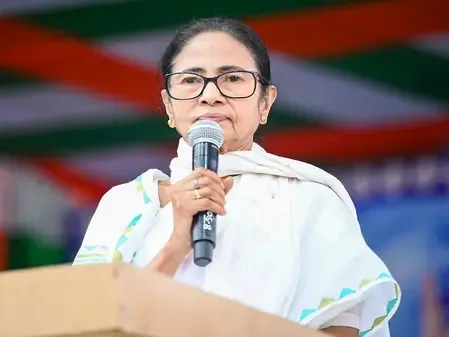
New Delhi, Jan 16 (NationPress) The recent foundation-stone laying ceremony for a vast Mahakal temple complex in Siliguri by West Bengal Chief Minister Mamata Banerjee is perceived as an effort to reshape her image from 'minority appeasement' ahead of the forthcoming state Assembly elections.
The leader of the Trinamool Congress has faced longstanding criticism for her welfare initiatives, which detractors argue have favored Muslim communities disproportionately.
This has made her a target for the state's main opposition party, the Bharatiya Janata Party (BJP), which accuses her of consistently launching programs designed to attract Muslim voters, who account for over 30% of the electorate.
The construction of significant temples has thus become a focal point of interest.
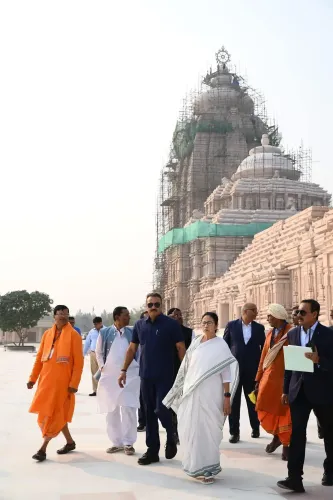
The Jagannath Temple in Digha, located in Purba Medinipur district, has been constructed at an estimated cost of Rs 250 crore and has transformed into an essential spiritual and tourist destination capable of hosting large gatherings and important rituals like the Rath Yatra and Pushpa Abhishek.
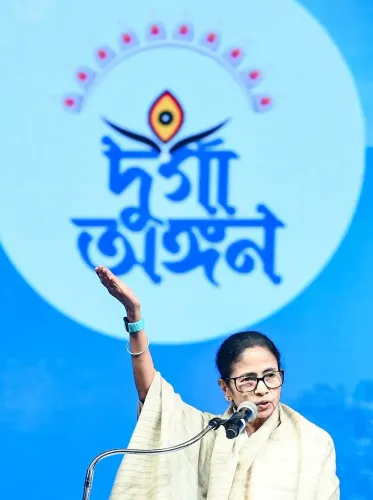
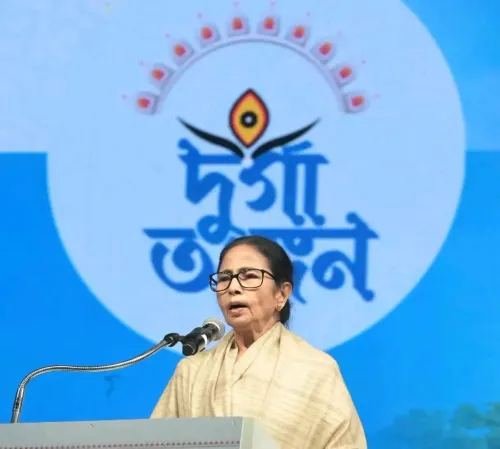
In late 2025, Banerjee also laid the groundwork for the Durga Angan project in Kolkata, costing Rs 262 crore. This initiative celebrates the recognition of Durga Puja as a cultural heritage site by UNESCO.
This complex is envisioned as a cultural and religious hub that will honor Durga Puja while promoting Bengali art, crafts, and community activities.
Spanning 17 acres, it will feature temples, museums, and cultural spaces. Supported administratively as part of the cultural infrastructure of the state, Durga Angan aims to enhance local tourism, support artisans, and provide residents with a civic venue for festivals and cultural exchanges.
Earlier in 2025, the Chief Minister announced an increase in government funding for Durga Puja committees, raising the grant from Rs 85,000 to Rs 1.10 lakh for each of the 40,000 organizers.
Moreover, taxes and service fees for these committees have also been waived.
The Mahakal temple complex is being interpreted as a political maneuver through religion in North Bengal, where Banerjee's Trinamool Congress faces substantial electoral challenges from the BJP.
This initiative carries political implications, signaling an investment in religious and cultural infrastructure ahead of the elections.
The spurt in activity preceding the elections, following various minority-focused schemes, is viewed by some as a strategic dual approach to consolidate minority votes while countering the BJP's Hindutva narrative.
Additionally, the Gangasagar Bridge Project, while infrastructural, has strong religious significance by linking pilgrims to a sacred site.
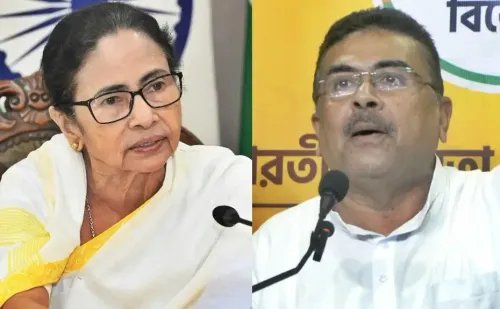
Critics have also pointed out the timing of former Trinamool Congress MLA Humayun Kabir's announcement to build a replica of the Babri Masjid in Murshidabad as being suspiciously aligned.
His claim that he aims to be a kingmaker following the upcoming elections has raised eyebrows, suggesting a tacit understanding, albeit unverified.
While Banerjee's recent actions may cause discomfort among her traditional support base, a potential consolidation of Muslim support behind Kabir could facilitate a coalition post-elections.
This balancing act carries risks of alienating both communities—Muslims might feel overlooked, while Hindus may view her outreach as disingenuous, which could ultimately lead to unrest.
Although Mamata Banerjee has accused the BJP of backing Humayun Kabir against her in Muslim-majority areas, she has not taken vigorous administrative measures to counter his sudden and enigmatic attempts before the elections, further fueling speculation.
Point of View
Mamata Banerjee's recent religious initiatives appear to be a calculated strategy to realign her political image amidst rising challenges from opposition parties. While these moves may serve to consolidate her voter base, they also carry the risk of alienating key demographics, illustrating the complexities of navigating electoral politics in a diverse state like West Bengal.
NationPress
20 Sept 2026
Frequently Asked Questions
What is the significance of the Mahakal temple complex?
The Mahakal temple complex is seen as a strategic move by Mamata Banerjee to reshape her political image ahead of the state elections, moving away from perceptions of minority favoritism.
How much is being invested in the Durga Angan project?
The Durga Angan project in Kolkata is being developed with an investment of Rs 262 crore and aims to celebrate Durga Puja as a cultural heritage.
What are critics saying about Mamata Banerjee's recent initiatives?
Critics argue that Banerjee's recent temple constructions are an attempt to garner Hindu votes while still maintaining support from Muslim communities, pointing to a complex balancing act.
What impact could these moves have on the upcoming elections?
These initiatives may either consolidate her voter base or risk alienating communities, potentially impacting her electoral performance.
Is there a connection to the former MLA Humayun Kabir?
Yes, some view Kabir's proposal to build a Babri Masjid replica as part of a broader political strategy that coincides with Banerjee's temple initiatives, suggesting a potential for political alliances post-elections.