CM Himanta Shares Manas Rhino's Three-Generation Story
Synopsis
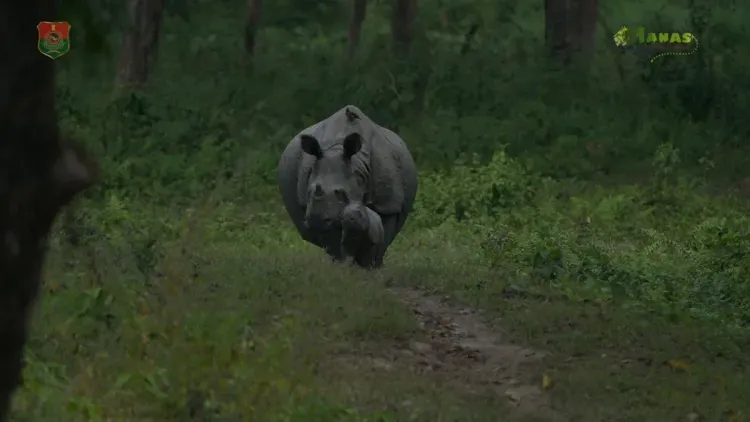
A rhino calf born at Manas National Park to Ganga-A — daughter of flood-rescued rhino Ganga — marks three generations from a single rescued animal, a milestone Assam CM Himanta Biswa Sarma called a living definition of conservation success.
Key Takeaways
Assam CM Himanta Biswa Sarma announced on 31 October 2026 that a rhino calf has been born at Manas National Park .
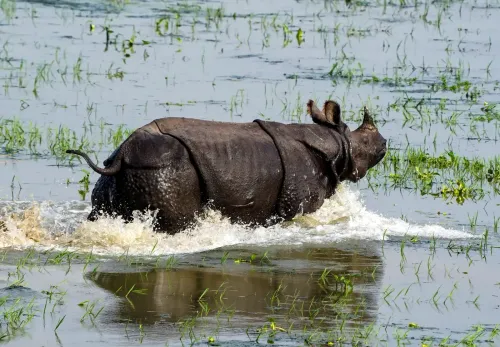
The calf is the offspring of Ganga-A , herself the daughter of Ganga , a greater one-horned rhinoceros rescued from Brahmaputra floods .
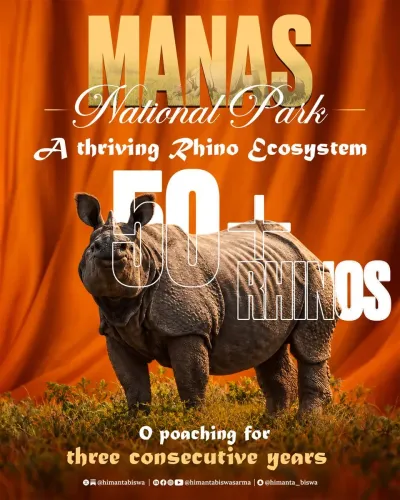
Manas National Park is a UNESCO World Heritage Site whose rhino population was locally extinct before reintroduction efforts began under Indian Rhino Vision 2020 .
Translocations from Kaziranga National Park to Manas started in 2008 as part of a plan to create a second viable rhino population in Assam.
Manas was removed from the UNESCO World Heritage in Danger list in 2011 following improved protection and habitat recovery.
The birth signals a self-sustaining breeding population at Manas — the deeper goal of the range-expansion programme.
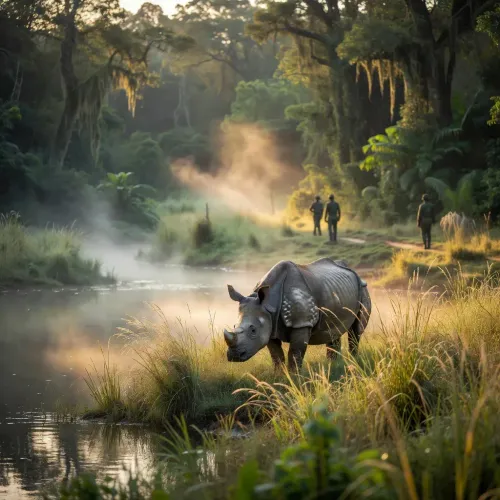
A rhino rescued from Brahmaputra floodwaters has become a grandmother — and Assam Chief Minister Himanta Biswa Sarma wants the world to know it. On Saturday, 31 October 2026, the Chief Minister shared the news that Ganga-A, daughter of the flood-rescued rhino Ganga, has given birth to a calf at Manas National Park, completing what he called three generations thriving in the wild from a single rescued animal.
From Floodwaters to a Family of Three
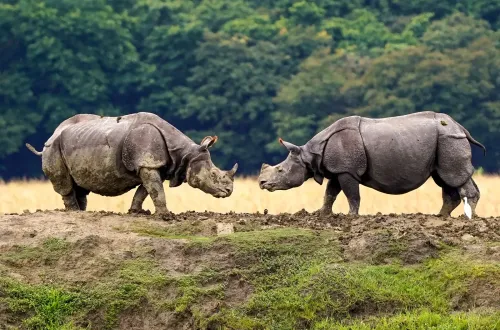
The story begins with Ganga, a greater one-horned rhinoceros rescued from the Brahmaputra floods — one of the most dramatic images of wildlife caught in Assam's annual deluge. That rescue, rather than being a footnote, became the seed of a lineage. Ganga went on to produce Ganga-A, who has now delivered a calf of her own at Manas. 'One rescued rhino has become three generations thriving in the wild,' Sarma wrote. 'That's what conservation looks like.'
Why Manas Is the Right Place for This Milestone
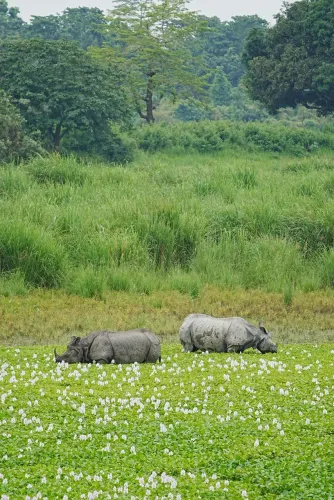
Manas National Park, a UNESCO World Heritage Site in Assam, once had its rhinoceros population driven to local extinction by decades of poaching and insurgency. The park was placed on the UNESCO World Heritage in Danger list — a designation it shed only in 2011, after improved protection and habitat recovery began to show results. The rhinos that now walk its grasslands are there because of a deliberate, years-long effort to rebuild what was lost.
That effort has a formal name: the Indian Rhino Vision 2020, launched in 2005 by the Assam government alongside WWF-India and partner organisations. Its goal was to grow the greater one-horned rhinoceros population to 3,000 and distribute it across multiple protected areas — reducing the catastrophic concentration risk of having nearly all of India's rhinos in a single park. Translocations from Kaziranga National Park to Manas began in 2008, and Manas has since become the flagship site for that second viable population.
What Ganga's Grandcalf Means for Assam's Rhino Numbers
A birth at Manas is not routine good news — it is evidence that the translocated population is self-sustaining. Every calf born in the wild at Manas, rather than translocated from Kaziranga, represents the programme reaching its deeper ambition: a genuinely independent breeding population. The Assam Forest Department, working alongside conservation NGOs, has combined anti-poaching enforcement and community engagement with these targeted translocations to make that possible.
For Sarma, who has frequently highlighted Assam's conservation credentials as a political and governance achievement, the three-generation arc — rescue, birth, grandcalf — offers a rare, human-scale story in a space usually dominated by population counts and policy documents. The kicker is in the numbers: one rescued animal, one flood, one act of intervention, and now a family of three in the wild.
The next milestone to watch: official confirmation from the Assam Forest Department on the calf's health and survival, and whether Manas's growing rhino population triggers further range-expansion surveys across Assam's protected areas.
Point of View
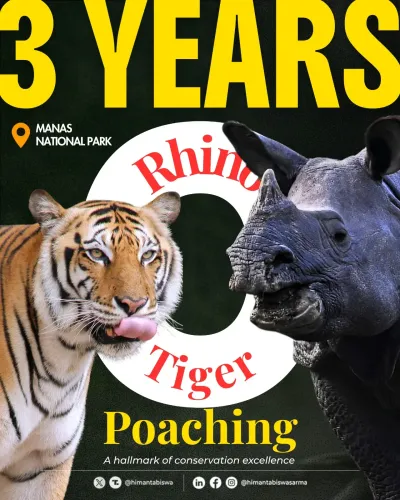
Not just translocated numbers. For CM Sarma, amplifying this narrative serves a dual purpose: it reinforces Assam's conservation governance credentials on a national and international stage, and it humanises complex policy work through a single, compelling animal story. The broader arc — Manas off the danger list, rhinos breeding independently, flood rescues paying generational dividends — positions Assam as a model for how states can reverse wildlife collapse through combined enforcement, translocation, and community engagement.
NationPress
31 Oct 2026
Frequently Asked Questions
Who is Ganga the rhino and why was she rescued?
Ganga is a greater one-horned rhinoceros rescued from the Brahmaputra floods in Assam. Her rescue became the starting point of a three-generation family now thriving at Manas National Park.
Where is Manas National Park and why is it significant for rhinos?
Manas National Park is a UNESCO World Heritage Site in Assam, India. Its rhinoceros population was locally extinct due to poaching and insurgency before reintroduction efforts began in 2008 under the Indian Rhino Vision 2020 programme.
What is Indian Rhino Vision 2020?
Indian Rhino Vision 2020 is a conservation initiative launched in 2005 by the Assam government with WWF-India and partners, aimed at growing the greater one-horned rhinoceros population to 3,000 and spreading it across multiple protected areas to reduce concentration risk.
Why were rhinos translocated from Kaziranga to Manas?
Kaziranga National Park holds the largest concentration of greater one-horned rhinos in the world. Translocations to Manas, starting in 2008, were designed to establish a second viable, independent breeding population and reduce the risk of a single catastrophic event wiping out the species in India.
What does a rhino birth at Manas mean for conservation?
A calf born in the wild at Manas — rather than translocated from another park — signals that the population there is genuinely self-sustaining, which is the core ambition of the range-expansion programme under Indian Rhino Vision 2020.